Briefly
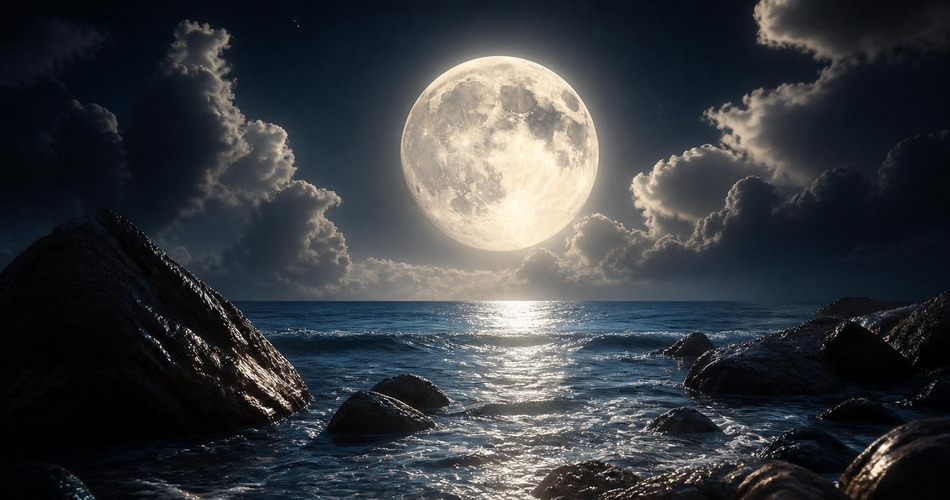
The Full Moon, appearing when the Moon is fully illuminated by the Sun as seen from Earth, is a powerful symbol of completion, culmination, and clarity. Across cultures, this lunar phase has been linked to intense emotions, supernatural motifs, and the completion of cycles. Its bright, round disk evokes notions of wholeness, while its connection to the night gives it an air of mystery and introspection. The Full Moon also marks key points in agricultural and religious calendars, making it a symbol of abundance and renewal.
What Does the Full Moon Symbolize?
The Full Moon primarily symbolizes completion and the peak of a cycle. Just as the moon reaches its fullest illumination, this phase represents the moment when something comes to fruition — whether a project, a relationship, or a personal goal. It also represents clarity, as its bright light dispels darkness and reveals what was hidden.
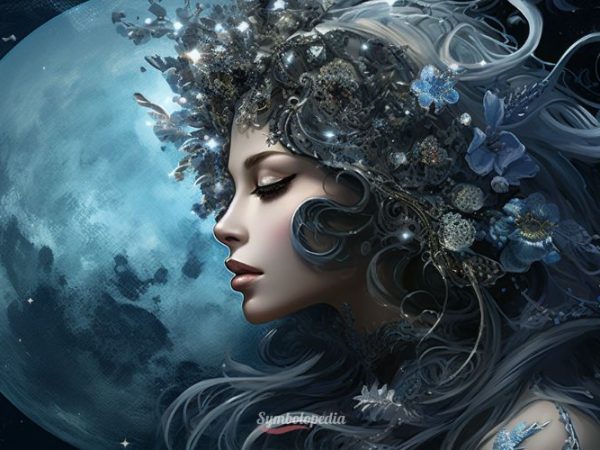
Across various traditions, the Full Moon is tied to femininity, intuition, and the subconscious. Its regular monthly cycle mirrors the menstrual cycle, strengthening its association with fertility and the divine feminine. The Full Moon also embodies duality — it is both a celestial body and a mirror reflecting the Sun’s light, reminding us that light can emerge from darkness.
Emotionally, the Full Moon is often associated with increased sensitivity, passion, and occasional restlessness. The word “lunatic” derives from the Latin luna (moon), reflecting ancient beliefs that the Full Moon could trigger madness or erratic behavior.
Positive and Negative Meanings
Positive associations: The Full Moon is widely seen as a symbol of abundance, harvest, and successful completion. It represents the reward of hard work, as seen in the Harvest Moon of autumn. It also stands for clarity, intuition, and spiritual illumination, making it a favored time for meditation and setting intentions. In many cultures, the Full Moon is a time for celebration, community gatherings, and expressing gratitude.
Negative meanings: Conversely, the Full Moon has long been associated with chaos, madness, and supernatural activity. Folklore links it to werewolves, vampires, and heightened criminal behavior. It can symbolize emotional overload, sleeplessness, and irrationality. Some traditions view the Full Moon as a time when the veil between worlds is thin, inviting both spiritual insight and potential danger.
History and Origins of Full Moon Symbolism
Human observation of lunar cycles dates back to the Paleolithic era, as evidenced by carved bones and cave markings thought to track moon phases. The Full Moon’s regular appearance made it a natural timekeeper for early agricultural societies. Many ancient calendars, including the Babylonian, Chinese, and Hebrew, were based on lunar months, with the Full Moon marking important festivals and rituals.
In ancient Greece and Rome, the Full Moon was dedicated to goddesses such as Selene, Artemis (Diana), and Hecate, who presided over the night, the hunt, and magic. The Greek philosopher Plutarch wrote about the moon’s influence on tides and living beings, ideas that persisted through the Middle Ages. During the Renaissance, the Full Moon became a symbol in alchemy and astrology, representing the feminine principle and the stage of albedo (whitening) in the Great Work.
By the 18th and 19th centuries, the Full Moon was firmly entrenched in folklore and superstition, particularly regarding lunacy. The term “lunatic” was legally used in English law until 1930 to describe individuals thought to be affected by the moon.
Full Moon Symbolism in Different Cultures
Chinese culture celebrates the Mid-Autumn Festival (Zhongqiu Jie) at the Harvest Full Moon, a time for family reunions and moon gazing. The roundness of the moon symbolizes unity and completeness, and mooncakes are eaten as a symbol of togetherness.
Native American tribes gave distinct names to each Full Moon, such as the Wolf Moon (January), Strawberry Moon (June), and Harvest Moon (September). These names tracked seasonal changes and guided agricultural and hunting activities.
In Hinduism, the Full Moon (Purnima) holds religious significance, with many festivals (such as Guru Purnima and Kartik Purnima) occurring on this day. It is considered an auspicious time for fasting, meditation, and worship.
Buddhist traditions observe Uposatha days on the Full Moon, when monks gather for confession and laypeople engage in intensified practice. The Vesak festival, celebrating the Buddha’s birth, enlightenment, and death, falls on the Full Moon in May.
In Western occult traditions, the Full Moon is considered a peak time for spellwork, particularly rituals involving divination, love, and protection. It is also a key phase in Wiccan Esbats.
Spiritual Meaning of the Full Moon
Spiritually, the Full Moon often signals a period of increased energy and awareness. It is seen as a moment to harvest the fruits of one’s spiritual practice and to release what no longer serves. Many people perform “full moon rituals” involving journaling, meditation, or charging crystals under the moonlight.
The Full Moon is also linked in some systems to the third eye chakra, which is thought to enhance psychic awareness and intuition. In yogic philosophy, moon energy (Chandra) is cooling and calming, but the Full Moon can also amplify emotions and bring subconscious patterns to the surface, offering an opportunity for healing and transformation.
Full Moon in Myths and Folklore
The Full Moon appears prominently in global myths and folklore. In Greek mythology, Selene drives her silver chariot across the night sky during the Full Moon. The myth of Endymion, a mortal shepherd loved by Selene, explains the moon’s face as Selene’s longing gaze.
Werewolf lore is perhaps the most famous Full Moon myth. The belief that humans transform into wolves under the Full Moon originates from ancient European folklore and was popularized in medieval romances and later in modern horror films such as The Wolf Man (1941).
Japanese folklore tells of the Rabbit in the Moon (Tsuki no Usagi), who pounds mochi (rice cakes) — a story similar to the Hindu tale of the hare that sacrificed itself and was placed on the moon by Indra. In both traditions, the Full Moon’s dark patches are interpreted as a rabbit or hare.
African and Caribbean folklore often portrays the Full Moon as a time when spirits walk the earth. In some traditions, the moon is a female deity who protects women and children, while in others, it is a trickster figure.
Full Moon in Dreams
Dreaming of a Full Moon often symbolizes completion, emotional clarity, or the culmination of a situation. The intensity of the moon’s light in the dream can indicate how conscious or aware the dreamer is of their own emotions. A bright, serene Full Moon may represent peace and fulfillment, while a stormy or red moon might indicate emotional turmoil or hidden fears.
The Full Moon in dreams can also relate to femininity, motherhood, or nurturing aspects. For some, it signals a time of heightened intuition and psychic awareness in waking life.
Common Dream Scenarios
- Dreaming of a bright, giant Full Moon — often indicates a period of emotional intensity or a major life event approaching completion. It may also represent a desire for clarity.
- Dreaming of a blood-red Full Moon — can symbolize anger, danger, or a transformative crisis. It may reflect suppressed emotions that are about to surface.
- Dreaming of the Full Moon falling from the sky — suggests a fear of loss, instability, or a significant change that feels overwhelming.
- Dreaming of two Full Moons — may represent a dilemma, a choice between two paths, or an exaggerated sense of emotional pressure.
- Dreaming of the Full Moon reflected in water — points to introspection, self-reflection, and the need to explore one’s subconscious mind.
Full Moon in Superstitions and Omens
Superstitions surrounding the Full Moon are abundant and varied. In many cultures, it is believed that the Full Moon can influence human behavior — causing an increase in births, accidents, crimes, and emergency room visits, though scientific studies have generally not found consistent evidence for these claims.
Common superstitions include:
- Cutting hair during a Full Moon is said to make it grow thicker and faster.
- Planting crops under a Full Moon is thought to improve growth, especially for above-ground plants.
- Proposing marriage under a Full Moon is considered lucky in some traditions.
- Some believe that sleeping in direct moonlight can cause mental disturbance or sleepwalking.
- In West African traditions, the Full Moon is a time when curses are more potent, so protective measures are taken.
Full Moon in Art and Literature
The Full Moon has inspired countless artists and writers. In literature, the poem “The Moon” by Robert Louis Stevenson (from A Child’s Garden of Verses) playfully describes the moon’s light and its effect on the world. In science fiction, Robert A. Heinlein’s novel The Moon Is a Harsh Mistress (1966) uses the Full Moon as a backdrop for a lunar colony’s revolution, emphasizing the moon’s role as both a symbol of hope and a harsh environment.
In visual art, Japanese ukiyo-e master Utagawa Hiroshige created the print “The Moon at Shinagawa” (from his series One Hundred Famous Views of Edo), featuring a large, glowing Full Moon over a nighttime scene. The painting Moonlight by Albert Cuyp (c. 1650) bathes a river landscape in the cool light of a Full Moon, capturing its serene beauty. In film, Georges Méliès’s A Trip to the Moon (1902) famously depicts a bullet-shaped spaceship lodging in the eye of a personified Full Moon, blending science fiction with surreal humor.
Full Moon Tattoo Meaning
Full Moon tattoos are popular for their aesthetic appeal and layered symbolism. They often represent mystery, femininity, cycles, and connection to the night. A Full Moon tattoo can signify a person who embraces introspection, intuition, and the darker aspects of life. Combined with elements like wolves, trees, or stars, the Full Moon accentuates themes of freedom, transformation, and wildness.
Some people choose Full Moon tattoos as a symbol of personal growth — having gone through a dark phase and emerged into the light. In spiritual circles, such tattoos may represent alignment with lunar cycles and nature.
Frequently Asked Questions
Q: What does it mean when you see a Full Moon in your dream?
A: Dreaming of a Full Moon typically symbolizes completion, emotional clarity, or the culmination of an event. It may also reflect heightened intuition or unresolved emotional intensity.
Q: Is the Full Moon associated with good or bad luck?
A: Both; it depends on the culture and context. In many agricultural traditions, the Full Moon is lucky for planting and harvesting. In folklore, it is often linked to supernatural mischief and madness.
Q: Why is the Full Moon called the Harvest Moon?
A: The Harvest Moon is the Full Moon closest to the autumnal equinox. Its bright light historically allowed farmers to work late into the evening bringing in the harvest.
Q: Does the Full Moon affect human behavior?
A: While many people report feeling more energetic or emotional during a Full Moon, scientific studies have not found consistent evidence for significant behavioral changes. The belief persists largely through cultural tradition.
Related Symbols
- New Moon — represents beginnings, darkness, and potential
- Crescent Moon — symbolizes growth, change, and divine femininity
- Sun — duality with the moon, representing masculine energy and consciousness
- Stars — often accompany the moon in celestial symbolism
- Werewolf — mythological creature directly tied to the Full Moon
- Moon Phases — the cycle of waxing and waning symbolizes time and transformation