Briefly
The Evil Eye is a powerful symbol with a dual nature: it represents both a curse believed to be cast by a malevolent glare and a protective talisman used to ward off that curse. Across many cultures, the Evil Eye is associated with envy, jealousy, and misfortune, but also with safeguarding, good luck, and spiritual defense. Its meaning is deeply rooted in the human fear of being harmed by the envy of others and the desire for protection against such harm.
What Does the Evil Eye Symbolize?
The Evil Eye symbolizes the destructive power of envy and jealousy. It is believed that a person can harm others simply by looking at them with envious intent, causing bad luck, illness, or even death. At the same time, the symbol of the Evil Eye—often depicted as a stylized eye—serves as a protective amulet that reflects the curse back to the sender. Thus, the Evil Eye embodies the tension between vulnerability and protection, malice and goodwill.
Positive and Negative Meanings
Positive associations: The Evil Eye is widely used as a protective symbol. Amulets and jewelry featuring the Evil Eye are worn to deflect envy and negative energy, bringing good luck, health, and safety to the wearer. In many traditions, it is a sign of spiritual vigilance and divine guardianship.
Negative meanings: The Evil Eye itself is a curse. It represents the harmful effects of jealousy, resentment, and ill will. Being the target of the Evil Eye is believed to cause misfortune, financial loss, relationship problems, or physical ailments. The symbol thus also carries connotations of fear and vulnerability.
History and Origins of the Evil Eye Symbolism
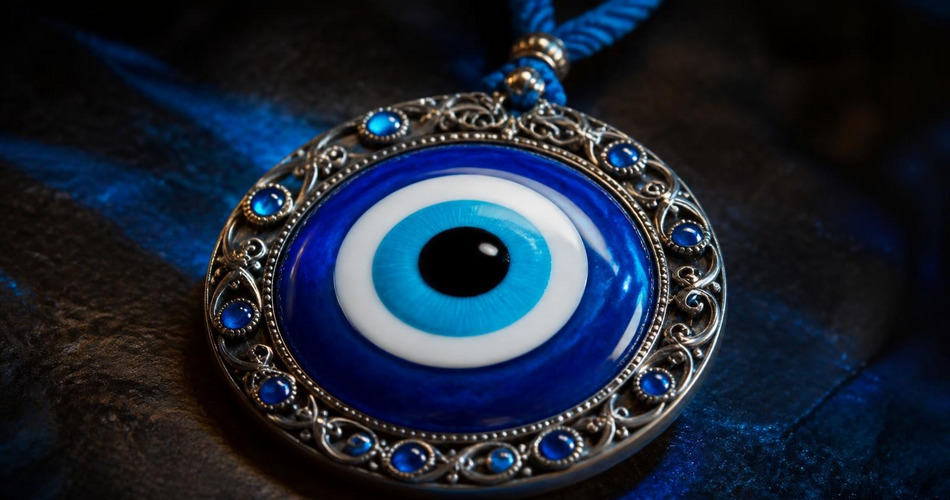
The concept of the Evil Eye dates back thousands of years, with origins in ancient Mesopotamia, Egypt, Greece, and Rome. The earliest known references appear in Sumerian texts from around 3000 BCE. In ancient Greece, the Evil Eye was called baskania, and philosophers like Plutarch wrote about its power. The symbol spread through the Mediterranean, Middle East, and into Europe, evolving into various forms such as the Turkish nazar—a blue glass amulet with concentric circles representing an eye. The widespread belief in the Evil Eye reflects a universal human concern about envy and the need for protection.
Evil Eye Symbolism in Different Cultures
In Turkish culture, the nazar is a ubiquitous protective charm, often hung in homes, cars, and worn as jewelry. It is typically blue and white, representing the eye of a jealous person. In Greek tradition, the mati (eye) is used similarly, and people often say “ftou, ftou, ftou” (spitting) to ward off the Evil Eye. In Jewish folklore, the ayin hara (evil eye) is feared, and protective measures include wearing a red thread or reciting specific prayers. In Islamic cultures, the Evil Eye is mentioned in the Quran, and wearing a nazar or reciting protective verses is common. In Latin America, the mal de ojo is believed to cause illness, especially in children, and amulets like the ojo de venado (deer eye) are used for protection. Despite regional variations, the core symbolism remains consistent: the Evil Eye is both a threat and a shield.
Spiritual Meaning of the Evil Eye
Spiritually, the Evil Eye represents the power of intention and the energy of the gaze. Many believe that a person’s eyes can transmit spiritual energy—both positive and negative. The Evil Eye amulet is thought to act as a spiritual mirror, reflecting harmful intentions back to the source. In this sense, it symbolizes spiritual awareness, the need for energetic boundaries, and the importance of protecting one’s soul from external negativity. Some traditions also associate the Evil Eye with the concept of karma: what you send out comes back to you.
Evil Eye in Myths and Folklore
Myths and folklore about the Evil Eye are abundant. In Greek mythology, the Gorgon Medusa had the power to turn people to stone with her gaze—a form of the Evil Eye. In Norse mythology, the god Odin’s eye was sacrificed for wisdom, but the evil gaze of giants and trolls was feared. In many folktales, witches and sorcerers are said to possess the Evil Eye. The common thread is that the eye is a conduit for both power and danger. Protective rituals, such as spitting, making hand gestures (like the mano cornuta or horned hand), or wearing amulets, are widespread in folklore to counteract the Evil Eye.
Evil Eye in Dreams
Dreaming of the Evil Eye can have various interpretations. It may reflect feelings of being watched, judged, or envied in waking life. Such dreams might indicate anxiety about others’ opinions or fear of success attracting jealousy. Alternatively, dreaming of an Evil Eye amulet could suggest a need for protection or a reminder to guard against negative influences. The context of the dream—whether the eye is threatening or protective—determines its meaning.
Common Evil Eye Dream Scenarios
- Receiving the Evil Eye: You dream that someone gives you a malicious glare. This may symbolize a real-life situation where you feel targeted by envy or criticism.
- Wearing an Evil Eye amulet: You dream of wearing or holding an Evil Eye talisman. This often represents your subconscious desire for protection or your awareness of needing to shield yourself from negativity.
- Breaking an Evil Eye object: Dreaming of a broken Evil Eye charm might indicate that your defenses are down or that you have overcome a period of vulnerability.
- Giving the Evil Eye: You dream of casting the Evil Eye on someone else. This could reflect your own feelings of jealousy or resentment toward that person.
Evil Eye in Superstitions and Omens
Superstitions surrounding the Evil Eye are deeply ingrained in many cultures. Common beliefs include:
- Praising someone too much can attract the Evil Eye, so people often say “touch wood” or spit to avert it.
- Wearing a blue Evil Eye amulet (nazar) protects against envy and brings good luck.
- If a child suddenly becomes fussy or ill, it may be due to the Evil Eye, and a ritual of “cleaning” with an egg or oil is performed.
- In some traditions, a sudden headache or yawning is a sign that you have been affected by the Evil Eye.
- Hanging an Evil Eye charm at the entrance of a home or business is believed to keep negative energy away.
Evil Eye Tattoo Meaning
Evil Eye tattoos are popular for their protective symbolism. People choose this design to ward off negativity and envy, and to invite good fortune. The tattoo often features the classic blue eye motif, sometimes combined with other symbols like the Hamsa hand, crescent moon, or geometric patterns. The placement is usually on visible areas like the wrist, neck, or behind the ear, serving as a constant guardian. The Evil Eye tattoo is also a statement of cultural heritage, especially for those of Mediterranean or Middle Eastern descent.
Meanings of Different Types, Colors, or Variations of the Evil Eye
The Evil Eye symbol comes in various colors and styles, each with distinct meanings:
- Blue Evil Eye: The most common color, blue is associated with protection, calm, and the sky. It is believed to be especially effective against envy.
- Red Evil Eye: Red symbolizes strength, courage, and energy. A red Evil Eye is used for protection in matters of love and passion.
- Green Evil Eye: Green represents growth, prosperity, and health. A green Evil Eye is often used to attract success and abundance.
- Yellow or Gold Evil Eye: Yellow signifies wealth, power, and confidence. It is worn to enhance personal strength and financial luck.
- White Evil Eye: White stands for purity, clarity, and spiritual protection. It is used to cleanse negative energy.
- Black Evil Eye: Black is a color of mystery and grounding. A black Evil Eye can be used for protection against deep spiritual attacks.
Frequently Asked Questions about the Evil Eye
Q: What does the Evil Eye symbolize?
A: The Evil Eye symbolizes both a curse of envy and a protective talisman against that curse. It represents the fear of being harmed by others’ jealousy and the desire for safeguarding.
Q: Is the Evil Eye good or bad?
A: The Evil Eye is dual-natured. As a curse, it is negative; as a protective amulet, it is positive. The symbol itself is neutral, but its use determines its meaning.
Q: How do you protect yourself from the Evil Eye?
A: Common methods include wearing an Evil Eye amulet (like a nazar), using protective hand gestures, reciting prayers, spitting, or performing rituals with eggs or oil.
Q: What does an Evil Eye tattoo mean?
A: An Evil Eye tattoo is a symbol of protection against negativity and envy. It is also a cultural emblem and a statement of personal strength.
Q: What is the difference between the Evil Eye and the Hamsa?
A: The Evil Eye is a curse or a protective eye symbol, while the Hamsa is a hand-shaped amulet that also offers protection. They are often combined for enhanced defense.
Related Symbols
- Hamsa – A hand-shaped amulet that provides protection against the Evil Eye and negative energy.
- Nazar – The Turkish blue glass eye charm specifically designed to ward off the Evil Eye.
- Eye of Horus – An ancient Egyptian symbol of protection, royal power, and good health, similar in protective function.
- Mano Cornuta – A hand gesture (horned hand) used to avert the Evil Eye in many cultures.
- Red Thread – In Jewish tradition, a red string tied around the wrist is believed to protect against the Evil Eye.