
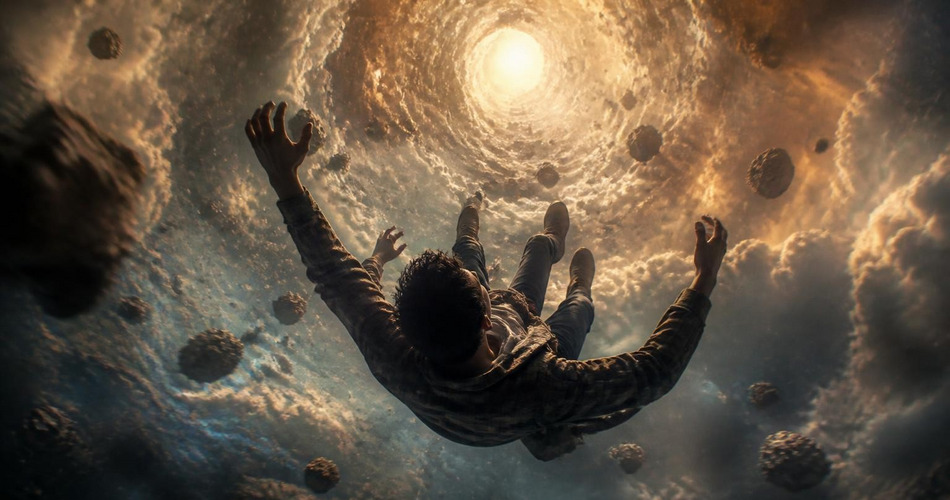
Briefly
Falling is a powerful universal symbol that often represents a loss of control, a transition, or a descent into the unknown. It can signify failure, a fall from grace, or the release of burdens. At the same time, falling can symbolize surrender, letting go, and the beginning of transformation. In dreams, falling is one of the most common experiences, frequently linked to feelings of insecurity or major life changes.
What Does Falling Symbolize?
At its core, falling symbolizes a loss of stability and control. It often represents a sudden change—whether positive or negative—that disrupts the normal flow of life. Falling can be a metaphor for failure, such as losing one’s status, reputation, or confidence. It also embodies the concept of descent, whether into the subconscious, into chaos, or into a new phase of existence.
On a deeper level, falling can symbolize surrender and the willingness to let go of attachments. In many spiritual traditions, the act of falling is associated with ego dissolution and the release of pride. It can mark the beginning of a transformative journey, where one must hit bottom before rising again.
Positive and Negative Meanings
Positive associations: Falling can represent a necessary release—letting go of control, pride, or old patterns to make way for growth. It may symbolize the courage to surrender to the unknown, leading to spiritual awakening or emotional healing. In some contexts, falling is a prelude to flight, as in the myth of Icarus, where the fall teaches a lesson about hubris and humility.
Negative meanings: More commonly, falling signifies fear, anxiety, and loss of power. It is associated with failure, downfall, and disgrace—whether in a career, relationship, or personal life. The sensation of falling often triggers a primal fear of death or injury, making it a potent symbol of vulnerability and helplessness.
History and Origins of Falling Symbolism
The symbolism of falling is rooted in human evolution. The fear of falling is an innate survival mechanism, present from infancy, which explains why falling dreams are so universal. Ancient cultures interpreted falling as a message from the gods or a sign of impending doom. In early mythology, falls often punished hubris—the overreaching of human ambition against divine order.
In Western thought, the concept of the “fall” is central to the Judeo-Christian narrative: the Fall of Man from Eden and the fall of Lucifer from Heaven. These stories established falling as a moral and spiritual descent, linking it to sin, pride, and exile. Over time, the symbol expanded to include psychological and existential dimensions, especially in modern literature and dream analysis.
Falling Symbolism in Different Cultures
In Greek mythology, the fall of Icarus is a classic cautionary tale about ambition and disobedience. Icarus falls into the sea after flying too close to the sun, symbolizing the consequences of overreaching. Similarly, the story of Phaeton, who loses control of the sun chariot and plummets to earth, reinforces the theme of hubris leading to destruction.
In Christian tradition, the fall of Lucifer (often called the “fall from heaven”) represents pride and rebellion against God. The Fall of Man—Adam and Eve’s expulsion from the Garden of Eden—symbolizes the loss of innocence and the beginning of human suffering. These narratives have deeply influenced Western art, literature, and moral symbolism.
In Norse mythology, the concept of falling appears in the story of the god Baldr, whose death is precipitated by a mistletoe dart, leading to his descent into the underworld. While not a literal fall, it represents a tragic descent from light into darkness. In Eastern traditions, falling is often seen as a metaphor for the cycle of rebirth—falling into lower realms due to karma, but also the potential for rising again through spiritual practice.
Spiritual Meaning of Falling
Spiritually, falling can symbolize the ego’s descent—a necessary step in the process of surrender and transformation. In many mystical traditions, the “dark night of the soul” is a period of falling into confusion and despair before spiritual illumination. Falling represents the stripping away of false identities and attachments, leading to a more authentic self.
In some interpretations, falling is a call to trust the universe. The act of letting go—allowing oneself to fall without resistance—can be a profound act of faith. This is reflected in practices like trust falls or the concept of “surrender” in 12-step programs, where admitting powerlessness is the first step toward recovery.
Falling in Myths and Folklore
Myths and folklore are rich with stories of falling that carry moral and symbolic weight. The Greek myth of Icarus is perhaps the most famous: his fall from the sky after his wax wings melt serves as a warning against excessive ambition. The fall of Phaeton similarly underscores the dangers of youthful recklessness.
In Judeo-Christian lore, the fall of Lucifer is a central myth about pride and rebellion. The Book of Isaiah and the Book of Revelation describe Satan’s expulsion from heaven, a fall that transforms an angel into a demon. The Fall of Man in Genesis is another foundational story, where Adam and Eve’s disobedience leads to their expulsion from paradise—a fall from grace that introduces sin and mortality into the world.
In Japanese folklore, the story of the crane wife involves a fall from grace when a man breaks a promise, leading to the loss of his magical wife. While not a physical fall, it symbolizes a moral descent. In many cultures, falling in folklore often accompanies a lesson about humility, respect, or the consequences of breaking taboos.
Falling in Dreams
Falling is one of the most common dream themes worldwide. Dream analysts often interpret falling as a reflection of anxiety, insecurity, or a feeling of being out of control in waking life. It may occur during periods of transition—such as starting a new job, ending a relationship, or facing a major decision. The sensation of falling can also signal a fear of failure or a loss of status.
Some interpretations suggest that falling dreams occur when the body is actually relaxing into sleep, and the brain misinterprets the sensation as falling. This “hypnic jerk” is a natural phenomenon, but the symbolic meaning remains potent. In Jungian psychology, falling can represent a descent into the unconscious, confronting shadow aspects of the self.
Common Dream Scenarios
- Falling from a great height: Often symbolizes a major life change or fear of losing control. The height may represent the stakes involved.
- Falling into water: Water often represents the unconscious or emotions. This scenario can indicate a plunge into deep feelings or a need for emotional cleansing.
- Falling endlessly: Suggests a prolonged period of uncertainty or anxiety. The lack of landing may reflect a feeling that the situation will never resolve.
- Falling and waking up before hitting the ground: Common in dreams where the body jerks awake. It may indicate that the dreamer is avoiding a confrontation or that the fear is not yet fully realized.
- Falling slowly or in slow motion: Can represent a gradual loss of control or a drawn-out process of change. It may also symbolize a desire to prolong a transition.
Falling in Art and Literature
Falling has been a powerful motif in art and literature for centuries. In John Milton’s epic poem Paradise Lost, the fall of Satan and the fall of man are central themes, exploring pride, rebellion, and redemption. The poem’s vivid descriptions of falling through chaos have influenced countless works.
In Lewis Carroll’s Alice’s Adventures in Wonderland, Alice’s fall down the rabbit hole is a descent into a surreal world of logic and nonsense. This fall symbolizes a transition from the ordinary to the extraordinary, a journey into the subconscious. It is one of the most iconic falling scenes in literature.
In visual art, Pieter Bruegel the Elder’s painting Landscape with the Fall of Icarus depicts Icarus’s fall as a small, almost unnoticed event in a vast landscape, emphasizing human indifference to individual tragedy. More recently, the film The Fall (2006) uses falling as a narrative device to explore storytelling and escape from reality.
In modern literature, the concept of “falling” appears in titles like The Fall by Albert Camus, where the protagonist’s moral descent is examined through a monologue. The symbol of falling continues to resonate as a metaphor for existential crisis, loss, and transformation.
Falling Tattoo Meaning
Falling tattoos often symbolize overcoming fear, embracing change, or commemorating a period of personal downfall that led to growth. Common designs include a figure falling through the air, a feather drifting downward, or an hourglass with sand falling. These tattoos can represent the wearer’s journey through hardship and their resilience in rising again.
For some, a falling tattoo is a reminder to let go of control and trust the process of life. It may also symbolize a fall from grace—either as a cautionary tale or as a badge of survival. The imagery of falling can be combined with elements like wings, water, or light to convey transformation and hope.
Meanings of Different Types of Falling
- Falling from a height: Often symbolizes a loss of status, pride, or security. The height represents the level of achievement or risk.
- Falling into water: Represents a plunge into emotions or the unconscious. It can signify cleansing, rebirth, or confronting deep fears.
- Falling slowly or in slow motion: Indicates a gradual process of change or a prolonged period of uncertainty. It may also suggest a desire to savor the transition.
- Falling and landing safely: Can symbolize a positive outcome from a risky situation, or the realization that fears are unfounded.
- Falling in love: A metaphorical fall that represents surrender to emotion, vulnerability, and the beginning of a relationship.
Frequently Asked Questions
Q: What does falling symbolize in dreams?
A: Falling in dreams often symbolizes a loss of control, anxiety, or a major life transition. It can reflect feelings of insecurity or fear of failure.
Q: Is falling always a negative symbol?
A: No, falling can also have positive meanings such as surrender, release, and transformation. In spiritual contexts, it can represent the ego’s descent necessary for growth.
Q: What is the most famous myth about falling?
A: The myth of Icarus, who falls into the sea after flying too close to the sun, is one of the most famous. It warns against hubris and overreaching ambition.
Q: Why do I dream about falling so often?
A: Falling dreams are extremely common and often occur during periods of stress, change, or when you feel a lack of control in your life. They may also be triggered by the natural hypnic jerk as you fall asleep.
Related Symbols
- Flight – The opposite of falling; represents freedom, ambition, and transcendence.
- Descent – A broader concept of moving downward, often into the unconscious or underworld.
- Gravity – The force that pulls things down; symbolizes inevitability and grounding.
- Surrender – The act of letting go, closely related to the positive aspect of falling.
- Abyss – A deep, bottomless void; represents the unknown, chaos, or the unconscious.