Briefly
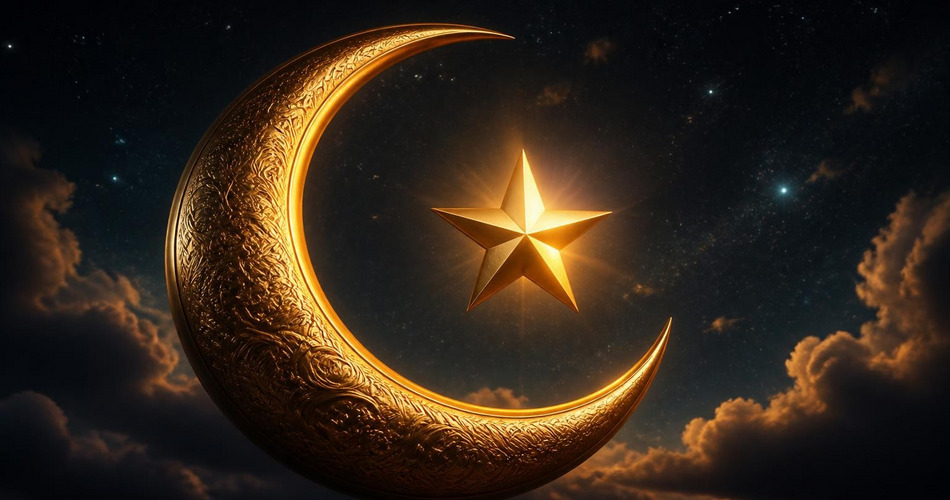
The crescent and star is a powerful emblem that pairs the moon’s crescent shape with a star, often representing guidance, protection, and divine light. Historically, it has been associated with various cultures and faiths, particularly Islamic civilization, where it adorns flags and mosques. The symbol also carries meanings of rebirth and transition, reflecting the lunar cycle’s constant change, and can signify hope and unity.
What Does the Crescent And Star Symbolize?
The crescent and star is most widely recognized as a symbol of Islam, appearing on the flags of many Muslim-majority countries such as Turkey, Pakistan, Malaysia, and Algeria. Beyond its religious connotation, the symbol generally represents heavenly guidance and the bond between earthly life and the celestial realm. The crescent itself is a symbol of change and renewal, as the moon grows and wanes, while the star often stands for light and knowledge, guiding travelers and believers alike.
In a broader secular context, the symbol can also denote progress and forward movement, inspired by the phrase “the crescent of a new moon” that heralds a fresh start. Its historical usage in the Ottoman Empire linked it to imperial power and sovereignty, and today it continues to be a sign of national pride and identity for many people.
Positive and Negative Meanings of the Crescent And Star
Positive associations: The crescent and star is seen as a beacon of hope, spiritual enlightenment, and divine protection. It symbolizes faith, unity among believers, and the promise of a new beginning inspired by the lunar cycle. In many cultures, it also represents fertility and abundance, tied to the moon’s influence on tides and agriculture.
Negative meanings: Because of its strong link with the Ottoman Empire and certain political movements, the crescent and star has sometimes been perceived as a symbol of conquest or expansionism. In some contexts, it may evoke negative associations with religious extremism or ancient conflicts, though these interpretations are not inherent to the symbol itself. Additionally, its widespread use in flags can lead to over-simplified cultural generalizations.
History and Origins of the Crescent And Star Symbolism
The crescent and star motif has ancient roots, predating Islam by centuries. Archaeological evidence shows its use in the ancient Near East, notably on coins from the Hellenistic period, such as those of the Kingdom of Pontus and later the Byzantine Empire. The symbol was associated with the moon goddesses like Artemis and with protective deities in Greek and Roman cultures.
It gained prominent political significance when the Ottoman Empire adopted it as an official emblem, reportedly because it appeared on the battlefield during a decisive victory. After the fall of Constantinople, the symbol became a key heraldic device for the empire. Its adoption by modern Muslim states began in the 19th and 20th centuries, cementing its place as a universally recognized cultural and religious icon.
Crescent And Star Symbolism in Different Cultures
In Islamic culture, the crescent and star is a symbol of the faith and is often displayed on mosques, minarets, and religious texts. It marks the beginning and end of the holy month of Ramadan, as the sighting of the crescent moon determines the Islamic calendar. In this context, the star is sometimes interpreted as the guidance of the Prophet Muhammad.
In Turkish culture, the crescent and star on the national flag is a direct inheritance from the Ottoman period and represents both independence and the people’s devotion to Islam. Similarly, in Pakistan, the green field with a white crescent and star stands for the nation’s Islamic heritage and its commitment to progress.
Outside the Islamic world, the symbol appears in ancient Mesopotamian art where the crescent was associated with the moon god Sin, and the star with the goddess Ishtar. In European heraldry, a crescent and star sometimes represented a lunar symbol or a badge of Byzantine influence.
Spiritual Meaning of the Crescent And Star
Spiritually, the crescent and star is seen as a reminder of the continuous cycle of life and the eternal nature of the soul. The crescent moon’s waxing and waning phases symbolize transformation and spiritual growth, while the star acts as a fixed point of light, representing divine truth and inner guidance.
In meditation and mystical traditions, the image may be used to focus on one’s connection to the cosmos and the divine. It evokes a sense of serenity and surrender to a higher power, encouraging believers to seek harmony between the material and spiritual worlds.
Crescent And Star in Myths and Folklore
In Turkish folklore, the crescent and star is linked to a mythical story of the founding of the Ottoman Empire. Legend says that the founder, Osman I, saw a crescent-shaped moon reflecting on the water along with a star, which he interpreted as a divine sign to establish a great empire. This vision later inspired the imperial emblem.
The motif also appears in Greek mythology, where the crescent was associated with Hecate, the goddess of magic and crossroads, and stars were thought to be the eyes of the gods watching over mortals. However, these ancient associations are distinct from the later Islamic interpretation.
Crescent And Star in Dreams
Seeing a crescent and star in a dream is often interpreted as a positive omen, suggesting spiritual guidance and protection. The dream may indicate that the dreamer is being led toward a new phase in life, similar to the lunar cycle moving toward fullness.
Dream analysts traditionally view the moon as a symbol of the subconscious and emotions, while the star represents hope and aspirations. Together, the crescent and star can reflect a harmonious balance between inner feelings and outer goals.
Common Dream Scenarios of the Crescent And Star
- A bright crescent and star in a clear sky: This scenario often symbolizes clarity of purpose, spiritual awakening, and a period of personal growth.
- A dim or fading crescent and star: May indicate confusion, loss of faith, or a need to reconnect with one’s spiritual or emotional compass.
- A crescent and star on a flag or banner: Suggests national pride or a desire to belong to a larger community or cause.
- A crescent and star that transforms into another shape: Points to major life changes or the merging of different aspects of the dreamer’s identity.
Crescent And Star in Superstitions and Omens
In many Islamic cultures, seeing the new crescent moon is considered a blessing, and people say a special prayer to mark the moment. The crescent and star motif is sometimes used as a protective talisman, especially in jewelry, to ward off the evil eye and bring good fortune.
In some folk traditions, the appearance of a crescent moon with a visible star nearby is interpreted as a sign of good weather or a successful harvest. Conversely, a crescent moon that appears unusually red or obscured may be seen as an omen of conflict or change, though these beliefs vary widely.
Crescent And Star in Art and Literature
The crescent and star appears in the poetry of Rumi and other Sufi mystics as a metaphor for divine love and the soul’s journey toward enlightenment. In modern literature, it features in works such as Orhan Pamuk’s “My Name Is Red,” where the symbol reflects Ottoman culture and tension between tradition and modernity.
In visual art, the motif is ubiquitous in Islamic geometric patterns and calligraphy, often adorning mosque domes and manuscripts. The Ottoman miniature paintings frequently depicted the crescent and star on banners and shields as markers of identity and power.
Crescent And Star Tattoo Meaning
A crescent and star tattoo is often chosen to express religious faith, cultural heritage, or a connection to the spiritual world. It can also symbolize a transformative period in the wearer’s life, mirroring the moon’s cycles. However, because of its strong political and religious associations, it may be worn with awareness of its regional significance.
Frequently Asked Questions About the Crescent And Star
Q: Is the crescent and star only an Islamic symbol?
A: While it is most commonly associated with Islam today, its origins date back to ancient pagan cultures in the Mediterranean and Near East.
Q: What does the crescent and star on a flag represent?
A: On national flags, it typically signifies the country’s Islamic heritage, unity, and independence, though specific meanings vary by country.
Q: Can the crescent and star be used in jewelry?
A: Yes, it is a popular motif in necklaces, earrings, and rings, often valued for its aesthetic appeal and protective symbolism.
Related Symbols
- Moon crescent – Represents the lunar cycle, femininity, and change.
- Star (pentagram) – Symbolizes divine light, guidance, and the five elements.
- Sunburst – A symbol of energy, life, and kingship, often paired with celestial motifs.
- Hilal (Islamic crescent) – Specifically the sighted new moon used in Islamic calendar.
- Ottoman coat of arms – Incorporates the crescent and star along with other imperial symbols.