Briefly
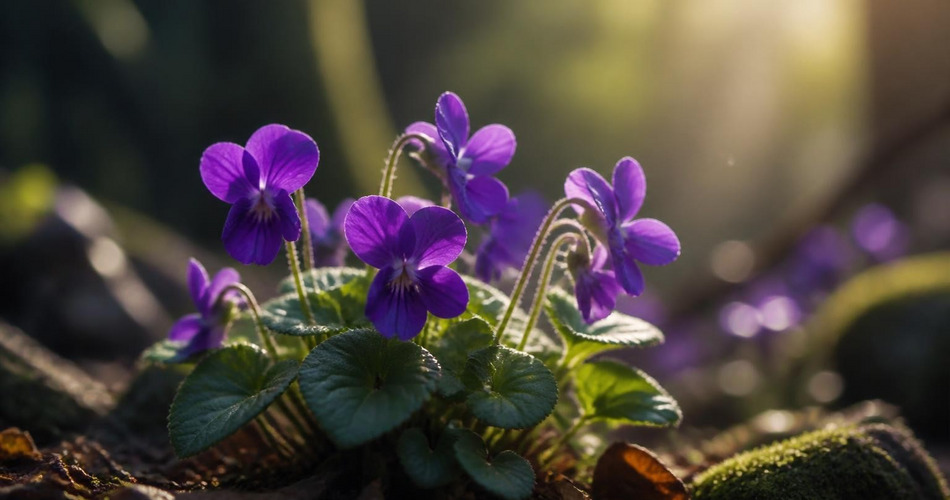
Violet, a delicate purple flower, is primarily a symbol of modesty, faithfulness, and spiritual wisdom. Its association with humility and virtue has made it a recurring motif in religious art, love poetry, and heraldic emblems. In contrast, the flower’s short bloom period has also linked it to themes of transience and early death. Across cultures, the violet’s shy, nodding habit and subtle fragrance have reinforced its enduring reputation as a flower of quiet dignity and inner worth.
What Does Violet Symbolize?
At its core, the violet symbolizes modesty and humility. Its small size and tendency to bloom in shaded, unassuming places give it a natural association with quiet virtue rather than flashy display. This flower also represents faithfulness and loyalty, especially in the context of romantic or spiritual devotion. In Christian symbolism, the violet is linked to the Virgin Mary, embodying her humility and purity.
Additionally, violets carry meanings of spiritual insight and deep thought. Their purple hue connects them to the crown chakra and higher consciousness in esoteric traditions. The flower’s brief flowering period in early spring also makes it a symbol of life’s brevity and the fleeting nature of beauty.
Positive and Negative Meanings
Positive associations: Violets are linked to modesty, humility, fidelity, and spiritual wisdom. They represent quiet strength, inner beauty, and devotion—qualities that are admired but not ostentatiously displayed.
Negative meanings: Due to their short bloom time and tendency to hide in shady spots, violets can also symbolize shyness, timidity, or a withdrawn personality. In some contexts, they have been associated with early death or premature loss, particularly in Victorian flower language where a single violet denoted a love cut short.
History and Origins of Violet Symbolism
The symbolic meaning of violets dates back to ancient Greece, where the flower was sacred to Io, a priestess of Hera, and later linked to the goddess Aphrodite. The Greeks used violets in love potions and to scent their baths. The Roman poet Ovid wrote that violets sprang from the blood of Attis, a consort of Cybele, giving the flower an association with tragic love and rebirth.
In the medieval Christian era, violets became a symbol of the Virgin Mary’s humility and modesty. The flower’s habit of bowing its head was seen as a lesson in humility before God. Monks and nuns often planted violets in monastery gardens as a daily reminder of these virtues.
During the Elizabethan era in England, violets were a popular emblem in courtly love poetry, where they signified faithful, though often secret, affection. Shakespeare references violets in several plays, most notably in “Hamlet,” where they represent faithfulness that fades too soon.
Violet Symbolism in Different Cultures
In Western culture, violets have long been associated with modesty, innocence, and early love. In Victorian England, the language of flowers (floriography) assigned violets several meanings: a white violet meant “let’s take a chance on happiness,” while a blue violet conveyed “I’ll always be true.”
In France, the violet became a symbol of the Napoleonic era. Napoleon’s wife Josephine, who adored violets, had them planted all over the grounds of Malmaison. After Josephine’s death, Napoleon picked violets from her grave and placed them in a locket he wore until his own exile. Consequently, violets became an emblem of loyalty and remembrance among Bonapartists.
In ancient Rome, violets were strewn on graves during the festival of the dead (Parentalia), linking them to remembrance and the afterlife. The Romans also used violets in wine and as a medicinal herb for headaches and insomnia.
Spiritual Meaning of Violet
In spiritual contexts, the violet is associated with the crown chakra, located at the top of the head and linked to divine wisdom and enlightenment. Meditating on a violet or its color purple is believed to open this chakra, facilitating a connection to higher states of consciousness and spiritual insight.
Violets also represent the virtue of humility in Christian mysticism. Saint Bernard of Clairvaux compared the Virgin Mary to a violet, emphasizing her quiet, hidden virtue and obedience. Many mystical texts describe the violet as a flower that teaches the soul to seek God in obscurity and silence.
In contemporary New Age thought, the violet flame (a spiritual energy associated with the color purple) is said to transform negative karma and bring about spiritual purification—a concept rooted in theosophy and popularized by the Church Universal and Triumphant.
Violet in Myths and Folklore
In Greek mythology, the violet is tied to the story of Io, a mortal woman loved by Zeus. To protect her from Hera’s jealousy, Zeus turned Io into a white heifer, and violets sprang up from the ground on which she grazed, providing her with sweet-scented food. The flower thus became a symbol of transformation and divine protection.
In another Greek myth, violets were said to have been created by the goddess Persephone as she gathered flowers in a meadow before being abducted by Hades. The violet, therefore, also carries undertones of the cycle of death and rebirth, as Persephone’s annual return from the underworld heralds spring.
In European folklore, violets were sometimes believed to have magical properties, such as the power to protect against evil spirits or to attract love when worn as a charm. In some regions, it was thought that picking a violet would cause it to rain—an indication of the flower’s association with moisture and the arrival of spring rains.
Violet in Dreams
Dreaming of violets often reflects themes of modesty, hidden beauty, or a quiet emotional truth. The dream may be encouraging the dreamer to recognize their own gentle virtues or to pay attention to a subtle, unspoken message in their waking life. Fragrant violets in a dream might suggest pleasant but fleeting experiences, while wilted violets can indicate lost innocence or forgotten promises.
Common Dream Scenarios
- Picking violets: May indicate the discovery of a hidden talent or a new, modest love interest.
- A field of violets: Suggests abundance of gentle blessings, contentment, or spiritual peace.
- Wilted or dead violets: Often represents fading affection, unfulfilled promises, or a reminder of mortality.
- Receiving a bouquet of violets: Signals a gesture of faithful friendship or unspoken romantic interest.
Violet in Superstitions and Omens
- In some European folk traditions, carrying a violet near the skin was believed to ward off evil spirits and ensure fidelity in marriage.
- Finding a violet in bloom on Good Friday was considered a good omen, promising a year of spiritual blessing and protection.
- On the other hand, accidentally crushing a violet underfoot was thought to bring bad luck in love—a sign of carelessness that could damage a romantic bond.
- It was also believed that picking violets after sunset could anger woodland spirits, who would then cause the picker to lose their way, linking violets to fairy lore.
Violet in Art and Literature
Violets appear notably in William Shakespeare’s “Hamlet” (c. 1600). When the mad Ophelia distributes flowers, she says, “I would give you some violets, but they withered all when my father died”—using the violet as a symbol of faithfulness that has perished with loss. In “A Midsummer Night’s Dream,” the love-in-idleness flower (identified by some as a violet) is used to control affection, emphasizing the flower’s connection to love and magic.
The 19th-century English poet William Wordsworth in his poem “She Dwelt among the Untrodden Ways” describes the subject as “a violet by a mossy stone / Half hidden from the eye!”—using the flower to epitomize quiet beauty and unacknowledged virtue. Similarly, American poet Emily Dickinson wrote several poems about violets, often equating them with meekness and the soul’s humble connection to nature.
In painting, violets are frequently included in depictions of the Virgin Mary’s garden (hortus conclusus), such as in works by Stefan Lochner (15th century) and Martin Schongauer, where the flower underscores Mary’s modesty. The French painter Pierre-Auguste Renoir created a painting titled “A Violets” (c. 1873), showing a young woman with a corsage of violets, capturing the flower’s association with feminine grace and fleeting youth.
Meanings of Different Colors of Violets
- Blue/purple violets: The most common variety, these represent faithfulness, devotion, and spiritual love.
- White violets: Symbolize purity, innocence, and a desire to “take a chance on happiness”—often associated with new beginnings.
- Yellow violets: Represent rural happiness and simple, unpretentious joy—they are rarely found in florist shops but carry an earthier, humble meaning.
Frequently Asked Questions
Q: What does a violet symbolize in the language of flowers?
A: In Victorian floriography, a blue violet means “I’ll always be true” (faithfulness), a white violet means “let’s take a chance on happiness,” and a yellow violet suggests rustic, simple joy.
Q: Why is the violet a symbol of modesty?
A: The violet’s small size, its habit of blooming in shaded, hidden places, and its nodding head give it a natural visual association with humility and quiet virtue, a symbolism reinforced in religious art and poetry.
Q: Are violets associated with death?
A: Yes, in some contexts—particularly in ancient Roman funerary rites and in Shakespeare’s “Hamlet”—violets symbolize early death, lost love, or the brevity of life, as they bloom only briefly in spring.
Related Symbols
- Purple: The color of violets, royalty, and spirituality
- Pansy: A close relative of the violet, symbolizing thoughtfulness and remembrance
- Rose: Contrasts with violet; represents passionate love versus modest love
- Lily: Another flower of purity and the Virgin Mary
- Crown chakra: The spiritual energy center linked to the violet color