
Briefly
Curtains are more than mere window coverings; they are powerful symbols of concealment and revelation. They mark the boundary between the private and the public, the seen and the unseen. In their ability to open and close, curtains represent transition, anticipation, and the power to control what is revealed. This duality gives curtains a rich symbolic life across cultures, art, and dreams.
What Does Curtain Symbolize?
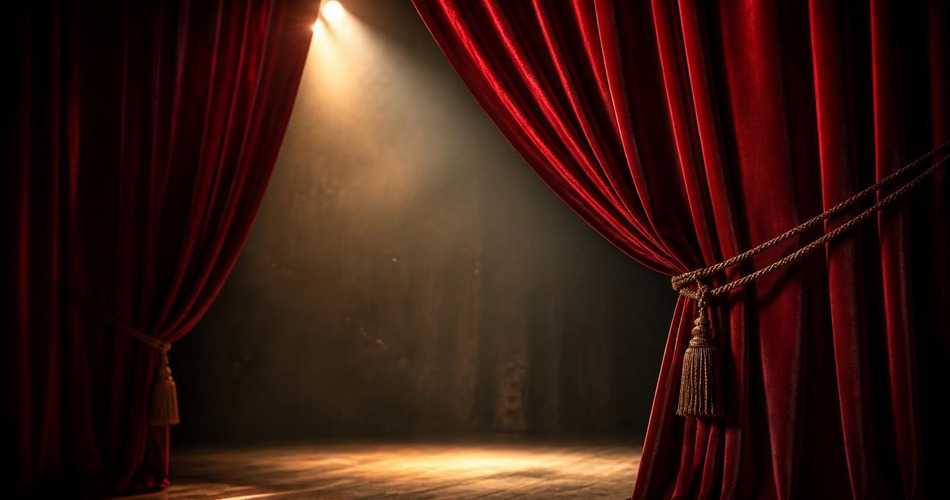
At its core, the curtain symbolizes the threshold between two states. In a theater, the curtain separates the audience from the performers, and its rise signals the beginning of a story. In a home, curtains provide privacy and protection, creating a safe interior space. The curtain can also symbolize mystery, as it hides what lies behind it, inviting curiosity. When drawn open, it reveals; when closed, it conceals. This dual function makes the curtain a potent symbol for secrets, revelation, and the boundaries we erect in our lives.
Positive and Negative Meanings of Curtains
Positive associations: Curtains are often linked to comfort, privacy, and security. They allow individuals to control their environment and create a sense of home. In a theatrical context, the curtain represents anticipation and the magic of performance. The act of drawing a curtain can symbolize the beginning of something new or the unveiling of truth.
Negative meanings: Curtains can also represent deception and hidden agendas. The phrase “behind the curtain” implies that things are not as they seem. A closed curtain can signify exclusion, secrecy, or a barrier to understanding. In some contexts, curtains are associated with illusion, as they can hide unpleasant realities.
History and Origins of Curtain Symbolism
The use of curtains dates back to ancient civilizations. In ancient Egypt, curtains were used in temples to separate sacred spaces. The Romans used curtains (vela) in theaters and amphitheaters to provide shade and mark entrances. The word “curtain” itself comes from the Latin “cortina”, which originally referred to a round vessel but later came to mean a hanging. In medieval times, curtains were used in castles for warmth and privacy, and their symbolic role grew. The theatrical curtain became a powerful symbol during the Renaissance, with the rise of proscenium stages. The curtain’s ability to create a boundary between reality and fiction became central to Western theater.
Curtain Symbolism in Different Cultures
In many cultures, the curtain or veil serves as a symbol of the sacred. In Jewish and Christian traditions, the veil of the Temple separated the holy of holies from the rest. In Islam, the hijab can be seen as a form of curtain that preserves modesty and privacy. In Japanese culture, the noren curtain at the entrance of shops and homes marks a transition from the outside world to the interior. In Indian culture, curtains (purdah) have been used to segregate women, symbolizing protection and modesty. In each case, the curtain represents a boundary that defines space and identity.
Spiritual Meaning of Curtains
Spiritually, the curtain is often seen as a veil between the physical and spiritual realms. Many traditions speak of “lifting the veil” to gain spiritual insight. The curtain can represent the illusion of the material world, which when drawn aside, reveals a higher truth. In meditation and mystical practices, the curtain symbolizes the ego or the mind that separates the individual from the divine. The act of parting a curtain can signify a spiritual awakening or the revelation of hidden knowledge.
Curtains in Dreams
In dream interpretation, curtains often represent hidden aspects of the self or secrets that are yet to be revealed. A curtain that opens in a dream may indicate a forthcoming revelation or a new phase in life. A curtain that closes might suggest the end of a period or the concealment of something. The condition of the curtain—whether it is clean, torn, or heavy—can add layers of meaning. Dreams about curtains often occur during times of transition or when the dreamer is grappling with issues of privacy and disclosure.
Common Curtain Dream Scenarios
- A curtain being drawn open: may symbolize a revelation, the unveiling of truth, or a new beginning.
- A curtain closing: could represent the end of an era, a desire for privacy, or the hiding of something.
- Being behind a curtain: might indicate observing without being seen, or feeling hidden and protected.
- A torn or dirty curtain: could symbolize neglected secrets, a breakdown of privacy, or hidden problems coming to light.
- Choosing a curtain: may represent making a decision about what to reveal or conceal in one’s life.
Curtains in Art and Literature
Curtains appear in many notable works of art and literature, often carrying symbolic weight. In Shakespeare’s Hamlet, the curtain (arras) behind which Polonius hides becomes a symbol of deception and fatal misunderstanding. In L. Frank Baum’s The Wonderful Wizard of Oz, the man behind the curtain is a powerful metaphor for illusion and the revelation of truth. Agatha Christie’s novel Curtain: Poirot’s Last Case uses the title to evoke the final act of a detective’s career. In visual art, curtains are frequently used to frame scenes or to suggest a glimpse into a private world, as seen in the works of Johannes Vermeer, where curtains often draw the viewer into an intimate interior. In theater, the curtain is an essential element, representing the boundary between reality and performance, and its rise or fall marks the emotional arc of the play.
Meanings of Different Types, Colors, or Variations of Curtains
The color and style of a curtain can influence its symbolic meaning. Red curtains are often associated with drama, passion, and luxury, commonly seen in theaters and grand interiors. White curtains symbolize purity, simplicity, and freshness, often used in bedrooms and bathrooms to create a clean, serene atmosphere. Black curtains can represent mystery, elegance, or mourning, and are used to block out light completely. Sheer curtains allow light to filter through, symbolizing transparency and a gentle boundary. Heavy, velvet curtains suggest opulence, protection, and a sense of permanence. In different contexts, the material and design of a curtain can add layers of meaning, from the practical to the symbolic.
Frequently Asked Questions about Curtain Symbolism
Q: What does a curtain symbolize in literature?
A: In literature, curtains often symbolize concealment, revelation, transition, or the boundary between reality and illusion. They can be used to create suspense or to signify a change in circumstances.
Q: What does it mean when a curtain is drawn in a dream?
A: Drawing a curtain in a dream can symbolize a desire for privacy, a need to hide something, or the end of a phase. It may also represent the act of closing off a part of one’s life.
Q: Are there negative meanings associated with curtains?
A: Yes, curtains can symbolize secrecy, deception, and hidden truths. They can represent barriers that prevent understanding or connection, and the phrase “behind the curtain” often implies hidden agendas.
Q: How is the curtain used in theater symbolism?
A: In theater, the curtain symbolizes the boundary between the audience and the performance. Its rise marks the beginning of the story, and its fall signals the end. It also represents the magic and illusion of the stage.
Symbols Related to Curtains
- Veil: a similar symbol of concealment and revelation, often used in spiritual and marital contexts.
- Door: represents a threshold or transition between spaces, similar to the curtain’s function.
- Window: a boundary that allows light and view, often paired with curtains.
- Stage: the curtain is a key element of the stage, symbolizing performance and illusion.
- Screen: a modern equivalent that can hide or reveal information, like a digital curtain.
