Briefly
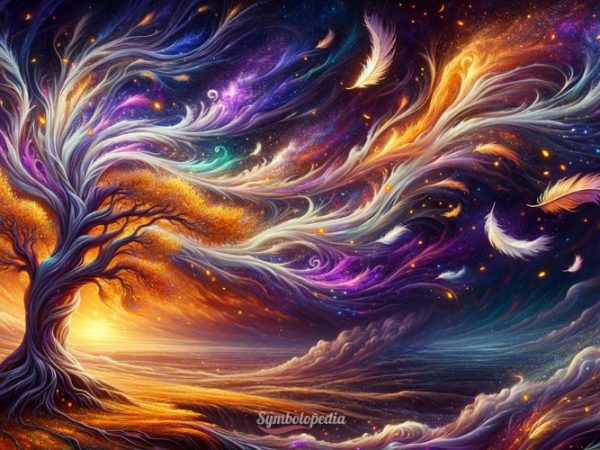
A whirlwind is a rapidly rotating column of air that appears suddenly and often disappears just as quickly, leaving a powerful impression wherever it touches. As a symbol, the whirlwind represents abrupt and unstoppable change, the raw energy of nature, and forces beyond human control. It can signify divine intervention, chaos, transformation, or the clearing away of the old to make room for the new. Its dual nature makes it both a harbinger of destruction and a catalyst for renewal.
What Does the Whirlwind Symbolize?
The whirlwind primarily symbolizes sudden upheaval and the unpredictable power of natural or spiritual forces. In many traditions, it is seen as a direct manifestation of a god’s presence or will, often delivering judgment or delivering a message. Because a whirlwind moves without warning and can sweep away everything in its path, it also represents the impermanence of material things and the swiftness of fate. On a personal level, the whirlwind may reflect internal turmoil, rapid shifts in perspective, or the arrival of a life-changing event that demands immediate response. Its circular motion can also suggest cycles of creation and destruction, as well as the idea of being caught in a situation that feels both compelling and dangerous.
Positive and Negative Meanings of the Whirlwind
Positive associations: The whirlwind can symbolize the clearing of obstacles, the arrival of necessary change, and the energy needed to break through stagnation. In spiritual contexts, it represents the wind of the spirit, divine communication, and the power to transform one’s life. The whirlwind’s force can be seen as a purifying agent that sweeps away corruption and prepares the ground for fresh growth.
Negative meanings: More commonly, the whirlwind is feared as a destructive, chaotic force that brings loss, injury, and upheaval. It symbolizes uncontrollable anger, sudden disaster, and the overwhelming power of nature that humans cannot tame. In psychological terms, it can represent a state of mental confusion, overwhelming stress, or a crisis that spins a person out of control.
History and Origins of Whirlwind Symbolism
The whirlwind has been a potent symbol for millennia, appearing in some of the oldest recorded texts. In the Hebrew Bible, a whirlwind is the vehicle through which the prophet Elijah is taken up to heaven, and God speaks to Job from the midst of a whirlwind, emphasizing divine power and mystery. Ancient Mesopotamian myths describe the god Enlil using whirlwinds as weapons. In many early agricultural societies, whirlwinds were seen as both destructive storms and as signs of the earth’s living spirit. The word itself comes from Middle English whirlewind, combining “whirl” (to spin) and “wind,” capturing the visual and kinetic essence of the phenomenon. Across cultures, the whirlwind has consistently been linked to the elemental force of wind, often personified as a deity or spirit.
Whirlwind Symbolism in Different Cultures
In Native American traditions, the whirlwind is often regarded as a powerful spiritual entity. The Navajo people associate it with the “whirlwind man” or “whirlwind woman,” figures that can bring both blessings and illness. Among the Plains tribes, whirlwinds are considered the homes of wandering spirits and are treated with respect and caution. In African diaspora religions such as Vodou and Santería, the whirlwind is linked to the god Shango, a deity of thunder and lightning who rides a whirlwind, symbolizing justice and raw masculine power. In Chinese mythology, the whirlwind is associated with dragons and the wind god Feng Bo, who directs storms. In Celtic lore, whirlwinds were thought to mark the passing of fairies or the souls of the dead. Hindu texts describe the god Vayu, lord of the wind, riding a whirlwind-chariot. These varied beliefs all treat the whirlwind as a boundary between the mundane and the sacred, a sudden irruption of the supernatural into everyday life.
Spiritual Meaning of the Whirlwind
In spiritual and metaphysical contexts, the whirlwind is often interpreted as a sign of profound spiritual awakening or a call to surrender to a higher power. Its sudden appearance can indicate that the divine is speaking directly to an individual or community, demanding attention and response. The whirlwind’s power to uproot trees and level buildings mirrors the dismantling of old belief systems and ego structures that must occur before genuine spiritual transformation can take place. Meditating on the whirlwind can evoke a sense of awe and humility, reminding the seeker of the vast forces that govern existence. Some traditions view the whirlwind as a symbol of the Holy Spirit or the breath of life, especially in Judeo-Christian mysticism where the wind of God brings both judgment and renewal.
Whirlwind in Myths and Folklore
Whirlwinds feature prominently in the myths and folklore of many cultures as vehicles for gods, spirits, or heroes. In the biblical book of 2 Kings, the prophet Elijah is carried to heaven in a chariot of fire drawn by horses of fire, preceded by a whirlwind. In ancient Greek mythology, the Harpies were wind spirits that could create whirlwinds as they snatched people and objects away. Norse mythology tells of the storm giant Hræsvelgr, who sits at the edge of the world and creates winds by beating his wings like a whirlwind. Japanese folklore speaks of tsumujikaze, whirlwinds caused by mischievous spirits known as kitsune (fox spirits) or tengu. In Slavic folklore, whirlwinds were believed to be the work of demons or the souls of unbaptized children. These stories consistently underline the whirlwind’s association with the supernatural, the unpredictable, and the threshold between worlds.
Whirlwind in Dreams
Dreaming of a whirlwind often reflects the dreamer’s emotional state, particularly feelings of being overwhelmed, out of control, or caught up in a situation that is spinning rapidly. A whirlwind in a dream can symbolize a crisis, a sudden change, or an inner turmoil that demands attention. The intensity and outcome of the whirlwind in the dream—whether one is caught inside it, watches from afar, or emerges safely—can offer clues about the dreamer’s ability to cope with change or stress. In dream interpretation, the whirlwind is rarely seen as a positive omen, but it can indicate that a period of upheaval is necessary for growth.
Common Whirlwind Dream Scenarios
- Being caught inside a whirlwind: Often symbolizes feeling trapped in a chaotic situation you cannot control, such as a difficult relationship or job stress.
- Watching a whirlwind from a distance: May indicate awareness of an approaching change or danger that you are not yet directly affected by.
- Surviving a whirlwind: Suggests resilience and the ability to weather major life disruptions, emerging stronger.
- A whirlwind destroying property: Can represent fears about loss, instability, or the breakdown of important structures in your life.
- A whirlwind lifting you up: Sometimes interpreted as a desire for escape, transcendence, or being swept into something beyond your control.
Whirlwind in Superstitions and Omens
In many folk traditions, a whirlwind appearing in a specific location is considered an omen. Some European peasants believed that whirlwinds were caused by witches or evil spirits, and they would make the sign of the cross or throw dust into the air to dispel the wind. In the American South, a whirlwind crossing your path was sometimes seen as a sign of good luck or the presence of a departed loved one. African and Caribbean traditions often interpret a whirlwind as a sign that a spirit is passing or that an ancestor is trying to communicate. In parts of India, if a whirlwind stirs up dust near a house, it is said to bring news of a death or some misfortune. Despite these negative connotations, some cultures regard a whirlwind as a purifying force that clears away evil influences before a new season.
Whirlwind in Art and Literature
The whirlwind appears in notable works of literature as a symbol of irresistible force and divine judgment. In Dante Alighieri’s Inferno, the second circle of Hell features a violent whirlwind that eternally sweeps the lustful along, representing the power of passion that overthrew reason. In William Shakespeare’s The Tempest, the storm (essentially a whirlwind at sea) is both a magical tempest and a metaphor for political upheaval and personal transformation. The whirlwind is also central to the biblical book of Job, where God’s voice from the whirlwind challenges Job’s understanding, making it one of the most famous literary uses of the symbol. In visual art, representations of the whirlwind often accompany depictions of Elijah’s ascension or the coming of the Holy Spirit as tongues of fire on Pentecost. More recently, the whirlwind has appeared in film as a visual shorthand for chaos and overwhelming change, such as in the tornado scenes of The Wizard of Oz, where the whirlwind literally transports Dorothy to an alternate reality.
Whirlwind Tattoo Meaning
A whirlwind tattoo often symbolizes personal transformation, resilience, and the acceptance of life’s unpredictable nature. Those who choose this design may relate to its energy and power, seeing it as a reminder that they have weathered storms and emerged changed. The whirlwind can also represent a spiritual journey, a connection to nature’s raw force, or a memorial for a time of significant upheaval that led to growth. The swirling lines of a whirlwind tattoo can be stylized in many ways, from a classic dust devil to a more abstract spiral, sometimes combined with other elements like lightning, birds, or skulls to emphasize destruction or freedom.
Meanings of Different Types of Whirlwinds
While all whirlwinds share common symbolic roots, specific types carry distinct nuances. Dust devils — small, short-lived whirlwinds on clear days — are often seen as harmless spirits or playful natural phenomena, representing brief moments of energy and change. Tornadoes, which are violent, destructive whirlwinds, symbolize overwhelming disaster, nature’s fury, and the sudden collapse of order. In contrast, waterspouts (whirlwinds over water) can represent emotional turbulence, the subconscious, or the merging of wind and water elements. Fire whirls, which occur during wildfires, embody the combination of destructive elements and the potential for terrifying rebirth. These distinctions show how the same basic symbol can take on different meanings depending on its intensity and environment.
Frequently Asked Questions
Q: What does a whirlwind symbolize spiritually?
A: Spiritually, a whirlwind often represents divine presence, sudden revelation, or a purifying force that clears away the old to make way for transformation.
Q: Is a whirlwind considered good luck or bad luck?
A: It depends on the culture. Some see it as a sign of blessing or spiritual communication, while others view it as an omen of disaster or death.
Q: What does it mean when you dream about a whirlwind?
A: Dreaming of a whirlwind usually indicates feelings of being overwhelmed, a major life change, or emotional chaos that needs addressing.
Q: Which gods are associated with whirlwinds?
A: Many cultures have gods of wind and storm, such as Yahweh, Enlil, Shango, Feng Bo, Vayu, and Hræsvelgr, who are often linked with whirlwinds.
Q: Why is the whirlwind used as a symbol in the Bible?
A: In the Bible, the whirlwind symbolizes God’s power, mystery, and the means through which he communicates with prophets and delivers judgment.
Related Symbols
- Tornado — a more destructive form of whirlwind, symbolizing extreme upheaval.
- Dust devil — a small whirlwind, often seen as a playful or minor spirit.
- Wind — the broader element, representing spirit, change, and the unseen.
- Storm — a larger weather system that includes whirlwinds, symbolizing turmoil and cleansing.
- Spiral — the shape of a whirlwind, representing cycles, evolution, and the journey inward.