Briefly
Tulips are among the most beloved flowers worldwide, known for their vibrant colors and elegant shape. They symbolize perfect love, renewal, and fame, with meanings that shift depending on their color. Originating in Central Asia and later cultivated in the Ottoman Empire and the Netherlands, tulips have a rich history of cultural and economic significance. Today, they remain a popular symbol in art, literature, and everyday life, representing everything from deep passion to cheerful optimism.
What Does Tulip Symbolize?
The tulip is a flower of many meanings, but its most enduring symbolism is that of perfect love. Unlike the rose, which often conveys romantic love with thorns representing pain, the tulip’s smooth, symmetrical bloom suggests an ideal, unblemished affection. This association is especially strong with red tulips, which are often given as a declaration of deep love.
Beyond love, tulips also symbolize renewal and rebirth. As one of the first flowers to bloom in spring, they herald the end of winter and the return of warmth and growth. This makes them a fitting emblem for new beginnings, whether in nature or in personal life.
In the language of flowers (floriography), tulips can also convey fame, charity, and abundance. Their upright, sturdy stems suggest confidence and pride, while their cup-shaped flowers are seen as receptacles of beauty and grace.
Positive and Negative Meanings of Tulip
Positive associations: Tulips are overwhelmingly associated with positive qualities: perfect love, passion, elegance, renewal, and optimism. They are given to express romantic feelings, celebrate new ventures, or simply brighten someone’s day. In the Netherlands, tulips are a national symbol of pride and prosperity, reflecting the country’s Golden Age and its enduring horticultural legacy.
Negative meanings: On the darker side, tulips can symbolize declared love that may be unrequited or fleeting. The tulip’s short blooming period can also represent the transience of beauty and life. Historically, the “tulip mania” of the 1630s in the Netherlands—when tulip bulbs were traded for exorbitant prices before the market collapsed—imbued the flower with associations of greed, speculation, and financial ruin.
History and Origins of Tulip Symbolism
The tulip’s symbolic journey begins in Central Asia, where it grew wild in the mountains of the Tien Shan and Pamir ranges. It was cultivated by the Turks as early as the 10th century, and the name “tulip” is derived from the Persian word “dulband” (turban), due to the flower’s turban-like shape. In the Ottoman Empire, the tulip became a powerful symbol of paradise on earth, representing divine beauty and perfection. The “Tulip Era” (1718–1730) in Ottoman history was a period of peace, art, and lavish gardens filled with tulips.
In the 16th century, tulips were introduced to Europe, where they caused a sensation. The Netherlands became the center of tulip cultivation, and the flower quickly became a status symbol among the wealthy. The famous tulip mania (1634–1637) saw bulbs selling for more than ten times the annual income of a skilled craftsman. When the bubble burst, the tulip retained its beauty but gained a cautionary symbolism about the dangers of speculation.
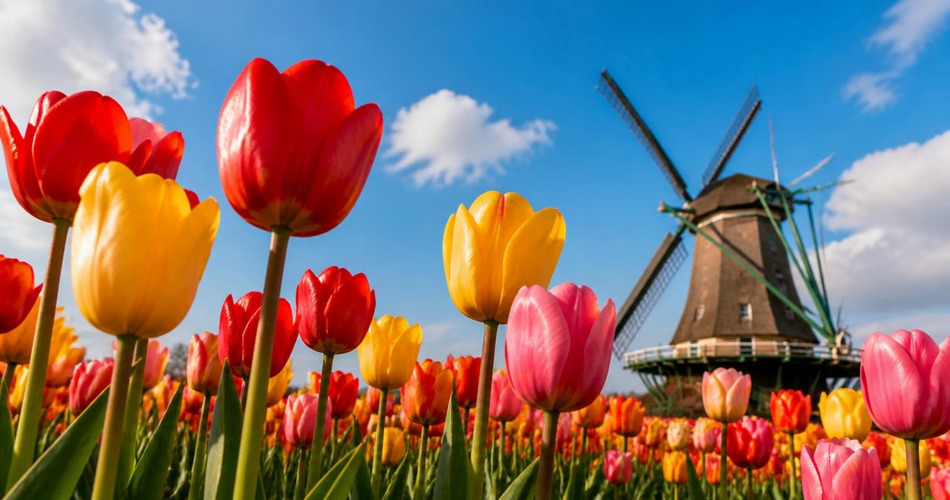
Today, the Netherlands remains synonymous with tulips, and the flower is a national emblem. The annual Keukenhof Gardens and tulip festivals worldwide celebrate the flower’s enduring appeal.
Symbolism in Different Cultures
In Persian and Turkish culture, the tulip is a symbol of love and divine beauty. Persian poets like Hafez used tulips to represent the beloved’s beauty and the fleeting nature of life. In Turkey, the tulip is considered a sacred flower and appears in art, architecture, and textiles as a motif of paradise.
In Dutch culture, the tulip represents national pride, prosperity, and the Golden Age of trade and art. It is a symbol of the country’s horticultural expertise and its historical role in global commerce. The tulip also appears in Dutch still-life paintings as a reminder of the transience of earthly pleasures (vanitas).
In Western floriography, the tulip’s meaning varies by color: red for true love, yellow for hopeless love or cheerfulness, white for forgiveness or worthiness, purple for royalty, and pink for affection and care.
Spiritual Meaning of Tulip
Spiritually, the tulip is seen as a symbol of enlightenment and divine love. Its cup-shaped flower is reminiscent of a chalice, representing receptivity to spiritual grace. In Sufi mysticism, the tulip’s red color and upright form symbolize the heart’s longing for union with the divine.
The tulip’s spring blooming aligns it with themes of resurrection and new life, making it a meaningful flower in Easter celebrations and other springtime spiritual observances. Its brief but brilliant display encourages mindfulness and appreciation of the present moment.
Tulip in Myths and Folklore
In Persian folklore, there is a tale that a tulip grew from the blood of a lover who was killed for his devotion. The red tulip thus became a symbol of perfect, self-sacrificing love. This story echoes in the flower’s association with martyrdom and passionate love.
In Turkish legend, the tulip was created from the tears of a young man who died of love. The flower’s petals are said to be stained with his blood, giving the red tulip its color. These myths reinforce the tulip’s connection to intense, often tragic love.
Tulip in Dreams
Dreaming of tulips generally carries positive meanings. A tulip in a dream can symbolize new love, a fresh start, or a period of happiness and prosperity. The specific color of the tulip in the dream can refine the interpretation: red tulips indicate passionate romance, while yellow tulips may suggest joyful friendships or creative inspiration.
If the tulip is wilting or dying in the dream, it may represent fading love or missed opportunities. A field of blooming tulips suggests abundance and emotional fulfillment.
Common Dream Scenarios
- Receiving a tulip: Indicates an upcoming declaration of love or a heartfelt compliment.
- Planting tulip bulbs: Symbolizes preparing for future happiness or investing in a relationship.
- A single red tulip: Represents a perfect, undying love or a significant romantic gesture.
- Yellow tulips in a dream: Suggests cheerfulness, optimism, or a new creative project.
- Wilted tulips: May warn of neglect in a relationship or the end of a romantic phase.
Tulip in Superstitions and Omens
In some European traditions, giving a tulip to someone was considered a declaration of love, but if the recipient accepted the flower, it meant the feeling was reciprocated. A tulip with a closed bud was seen as a promise of future affection.
In the language of flowers, a tulip given upside down was an insult, suggesting that the love was not genuine. Finding a tulip blooming out of season was considered a good omen, foretelling unexpected good news or a sudden romance.
Tulip in Art and Literature
Tulips appear prominently in Dutch Golden Age painting, particularly in still-life works by artists such as Jan Brueghel the Elder, Ambrosius Bosschaert, and Rachel Ruysch. These paintings often included tulips alongside other flowers to showcase wealth and the beauty of nature, but also as vanitas symbols reminding viewers of life’s brevity. The famous “Tulip Book” (Tulpenboek) of the 17th century documented the many varieties and colors of tulips, serving both as a botanical record and a status symbol.
In literature, tulips are referenced in Persian poetry, where they are metaphors for the beloved’s beauty and the fleeting nature of life. In modern literature, the tulip appears in works like “The Black Tulip” by Alexandre Dumas, a novel about a contest to grow a black tulip, symbolizing ambition, obsession, and the pursuit of perfection.
Tulip Tattoo Meaning
Tulip tattoos are popular for their elegant shape and rich symbolism. A red tulip tattoo often represents true love or a declaration of passion. Pink tulips symbolize affection and care, while purple tulips denote royalty and nobility. Yellow tulip tattoos can signify happiness and friendship, and white tulips may represent forgiveness or a fresh start.
Because tulips bloom in spring, a tulip tattoo can also symbolize renewal, hope, and new beginnings. The flower’s upright posture makes it a versatile design that fits well on the wrist, ankle, shoulder, or back.
Meanings of Different Tulip Colors
- Red tulips: Perfect love, deep passion, romance.
- Yellow tulips: Cheerfulness, hope, friendship (historically also associated with hopeless love).
- White tulips: Forgiveness, purity, worthiness, peace.
- Purple tulips: Royalty, nobility, admiration.
- Pink tulips: Affection, care, good wishes.
- Orange tulips: Energy, enthusiasm, desire.
- Black tulips: Power, mystery, obsession (rare; often a symbol of strength or exotic beauty).
Frequently Asked Questions
Q: What does a tulip symbolize?
A: A tulip primarily symbolizes perfect love, renewal, and fame. The meaning can vary by color, with red representing deep love, yellow cheerfulness, and white forgiveness.
Q: What is the meaning of a red tulip?
A: A red tulip is a declaration of true love, similar to a red rose but with a connotation of perfect, unblemished affection.
Q: Are tulips associated with any negative meanings?
A: Historically, tulips can symbolize greed and financial ruin due to the tulip mania. They can also represent fleeting beauty or unrequited love.
Q: What does a yellow tulip mean?
A: In modern floriography, yellow tulips represent cheerfulness and hope. Historically, they were associated with hopeless love.
Q: What is the spiritual meaning of a tulip?
A: Spiritually, the tulip symbolizes divine love, enlightenment, and receptivity to grace. Its spring bloom also represents resurrection and new life.
Related Symbols
- Rose – Another flower of love, but with thorns representing pain.
- Lily – Symbol of purity and rebirth, often associated with the Virgin Mary.
- Daffodil – Spring flower symbolizing renewal and new beginnings.
- Iris – Flower of royalty and wisdom, also associated with the French monarchy.
- Lotus – Spiritual enlightenment and rebirth in Eastern traditions.