Briefly
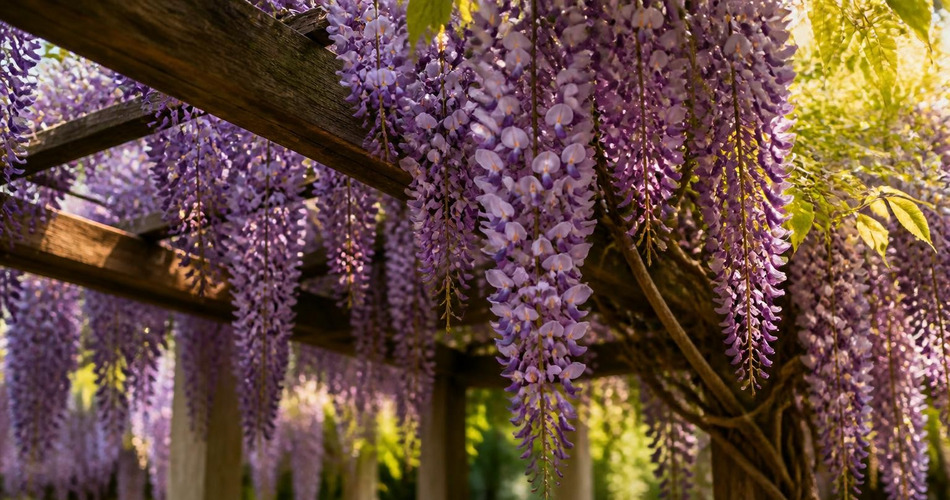
Wisteria is a climbing vine known for its cascading clusters of fragrant, purple-blue flowers. In the language of flowers and across various cultural traditions, wisteria symbolizes love, longevity, and rebirth. Its vigorous growth and ability to bloom year after year connect it to endurance and the cyclical nature of life. However, wisteria’s aggressive, invasive nature also carries warnings about overindulgence, obsession, or the suffocating aspects of love.
What Does Wisteria Symbolize?
Wisteria’s most prominent symbolic meanings are rooted in its physical characteristics. Its long, trailing vines and abundant blossoms often represent longevity and immortality, as the plant can live for over a century. The vine’s ability to climb and wrap around structures also symbolizes support and connection, often linked to romantic relationships and enduring bonds. In the Victorian language of flowers (floriography), wisteria was given to convey “I cling to you” or “welcome,” reflecting both affection and a sense of hospitality.
The plant’s dramatic spring bloom, which appears before many leaves, is associated with rebirth and new beginnings. Its purple-blue color connects it to royalty, spirituality, and mystery. In some contexts, wisteria also symbolizes grace and elegance due to the delicate, sweeping form of its flowers.
Positive and Negative Meanings
Positive associations: Wisteria is widely seen as a symbol of love and devotion, especially long-lasting, patient love. Its long lifespan makes it an emblem of endurance and fidelity. The plant’s spectacular flowering also represents beauty, grace, and the rewards of patience—since wisteria can take years to bloom for the first time.
Negative meanings: Wisteria’s aggressive growth habit gives it a darker side. It can symbolize obsession, clinging, or suffocation in relationships, as the vine can strangle host plants and structures. In some interpretations, it warns against overindulgence or the dangers of being trapped by one’s own desires. Its invasive nature in many regions also ties it to themes of uncontrolled growth and invasion.
History and Origins of Wisteria Symbolism
Wisteria is native to East Asia, particularly China, Japan, and Korea, as well as the eastern United States. The plant’s name honors the American physician and anatomist Caspar Wistar (1761–1818), though the spelling “wisteria” was popularized by the botanist Thomas Nuttall. In East Asia, wisteria has been cultivated for centuries and holds deep cultural significance.
In Japan, wisteria (fuji) has been a symbol of love, tenderness, and good fortune since ancient times. It appears in classical poetry, such as the Man’yōshū (8th century), where it is associated with spring and fleeting beauty. The Fuji family, a powerful clan in Japanese history, used wisteria as their crest (mon), linking the plant to nobility and authority. In Chinese culture, wisteria (zǐténg) symbolizes immortality and eternal life, often depicted in paintings and textiles alongside other auspicious symbols like the pine tree or crane.
Wisteria Symbolism in Different Cultures
In Japanese culture, wisteria is a central motif in art, poetry, and gardens. The Fuji Matsuri (Wisteria Festival) is held annually at places like the Ashikaga Flower Park, celebrating the plant’s beauty. Wisteria appears in kabuki theater and ukiyo-e woodblock prints, often representing the transient nature of life (mono no aware). Its purple color is also associated with the imperial family and high rank.
In Chinese culture, wisteria is one of the “Four Gentlemen” (along with plum, orchid, and bamboo) in some interpretations, though it is more commonly grouped with other flowering vines. It symbolizes longevity and eternal love, often used in wedding decorations and gifts. The plant’s twisting vines are seen as a metaphor for the intertwining of two souls.
In Western cultures, wisteria was introduced in the 19th century and quickly became a popular garden plant. Its symbolism in the West draws heavily from Victorian floriography, where it represented welcome, devotion, and the idea of clinging to someone. In modern times, wisteria is often associated with nostalgia and romance, appearing in literature and film as a symbol of Southern Gothic or old-world charm.
Spiritual Meaning of Wisteria
Spiritually, wisteria is seen as a symbol of transformation and spiritual growth. Its ability to climb toward the sun while remaining rooted in the earth represents the journey of the soul toward enlightenment. The plant’s long life and cyclical blooming pattern also connect it to reincarnation and the eternal cycle of life, death, and rebirth.
In some spiritual traditions, wisteria is used in meditation to foster patience and perseverance. Its flowers are believed to open the heart chakra, promoting love and compassion. However, because of its invasive nature, wisteria also serves as a reminder to maintain balance and not let attachments become overwhelming.
Wisteria in Myths and Folklore
In Japanese folklore, wisteria is associated with the fox spirit (kitsune), a shape-shifting creature often depicted as a beautiful woman. The fox is said to be attracted to wisteria vines, and the plant sometimes appears in stories as a place where magical encounters occur. Wisteria is also linked to the Shinto belief in kami (spirits) dwelling in natural objects; ancient wisteria trees are sometimes considered sacred and marked with shimenawa (sacred ropes).
In Chinese folklore, wisteria is connected to the legend of the Weaver Girl and the Cowherd, where the vine’s twisting form symbolizes the lovers’ eternal bond. The plant is also used in traditional medicine, though its seeds and pods are toxic if ingested.
Wisteria in Dreams
Dreaming of wisteria often reflects themes of love, attachment, and growth. The state of the wisteria in the dream—whether blooming, withered, or overgrown—can provide clues about the dreamer’s emotional life or relationships. Because wisteria is a climbing vine, dreams featuring it may also symbolize the dreamer’s ambition or desire to rise above challenges.
Common Dream Scenarios
- Blooming wisteria: A sign of happiness, romance, or the fruition of long-term efforts. It may indicate a period of abundance or a new phase in a relationship.
- Withered or dead wisteria: Suggests disappointment, the end of a relationship, or unfulfilled potential. It can also symbolize neglect or the need to let go of something that no longer serves you.
- Overgrown wisteria: Represents feeling overwhelmed or suffocated by a person, situation, or emotion. It may warn against becoming too dependent on someone or something.
- Climbing wisteria: Indicates ambition, personal growth, or the desire to reach new heights. It can also reflect the dreamer’s determination to overcome obstacles.
Wisteria in Superstitions and Omens
In some European folk traditions, wisteria planted near a home is believed to bring good luck and protection from evil spirits. However, because of its aggressive growth, it is also considered an omen of entanglement or domination if it begins to overtake the house. In Japan, wisteria is seen as a positive omen for love and marriage, and its flowers are often used in wedding ceremonies.
Wisteria in Art and Literature
Wisteria appears prominently in Japanese ukiyo-e prints, such as those by Katsushika Hokusai and Utagawa Hiroshige. Hokusai’s “Wisteria and Bullfinch” (from the series “Small Flowers”) captures the plant’s elegance, while Hiroshige’s “Wisteria at Kameido Tenjin Shrine” depicts the famous wisteria trellis in Edo (modern Tokyo). In literature, wisteria is a recurring motif in the works of Yasunari Kawabata, such as in “The Sound of the Mountain,” where the vine symbolizes memory and the passage of time.
In Western literature, wisteria is famously featured in Tennessee Williams’ play “The Glass Menagerie,” where the character Amanda Wingfield recalls a gentleman caller who brought her wisteria, symbolizing lost youth and romantic nostalgia. The plant also appears in Kate Chopin’s “The Awakening,” where it represents the protagonist’s desire for freedom and sensuality. In film, wisteria-covered settings often evoke a sense of Southern Gothic or romantic decay, as seen in the movie “The Curious Case of Benjamin Button.”
Wisteria Tattoo Meaning
Wisteria tattoos are popular for their beauty and layered symbolism. They often represent enduring love, longevity, and spiritual growth. The cascading flowers can symbolize grace and elegance, while the twisting vines may represent the complexity of life or the intertwining of two souls. In some designs, wisteria is paired with other symbols like butterflies (transformation) or birds (freedom). The purple color of wisteria tattoos also connects to royalty, mystery, and spirituality.
Meanings of Different Colors of Wisteria
- Purple/Blue wisteria: The most common color, symbolizing royalty, spirituality, mystery, and deep love. It is often associated with the crown chakra and higher consciousness.
- White wisteria: Represents purity, innocence, and new beginnings. It is sometimes used in wedding arrangements to symbolize a fresh start.
- Pink wisteria: Associated with romance, tenderness, and affection. It conveys a softer, more gentle form of love.
- Lavender wisteria: Combines the meanings of purple and white, symbolizing grace, elegance, and a balance between spirituality and purity.
Frequently Asked Questions
Q: What does wisteria symbolize in love?
A: Wisteria symbolizes enduring, patient love and devotion. In Victorian floriography, it conveyed “I cling to you,” reflecting a deep, lasting attachment. However, it can also warn against obsessive or suffocating love.
Q: Is wisteria a symbol of good luck?
A: In many cultures, especially in Japan, wisteria is considered a symbol of good fortune, love, and prosperity. It is often planted near homes for protection and used in wedding ceremonies.
Q: What does a wisteria tattoo mean?
A: A wisteria tattoo commonly represents longevity, spiritual growth, enduring love, and grace. The design’s meaning can vary based on color and accompanying elements.
Q: Why does wisteria take so long to bloom?
A: Wisteria can take several years to mature and produce its first flowers. This characteristic has made it a symbol of patience and the rewards of waiting.
Related Symbols
- Cherry Blossom – Both are spring-blooming trees/vines associated with beauty, transience, and renewal in Japanese culture.
- Lotus – Like wisteria, the lotus symbolizes spiritual growth and rebirth, though it is rooted in water rather than climbing.
- Ivy – A climbing vine that, like wisteria, represents fidelity, attachment, and endurance, but also the potential for suffocation.
- Purple Flowers – Generally symbolize royalty, spirituality, and mystery, sharing wisteria’s color symbolism.
- Fox (Kitsune) – In Japanese folklore, the fox spirit is often associated with wisteria, linking the plant to magic and transformation.