Briefly
The knife is one of humanity’s oldest and most versatile tools, carrying profound symbolic weight across cultures and eras. As an instrument that cuts, separates, and divides, the knife represents both creation and destruction, precision and violence, protection and danger. Its dual nature makes it a powerful symbol of transition, sacrifice, and the sharp edge between life and death. Whether in ritual, warfare, or everyday use, the knife embodies the human capacity for both nurturing and harm.
What Does Knife Symbolize?
At its core, the knife symbolizes separation and the act of cutting. It can sever physical objects, relationships, or even spiritual ties. This makes it a potent emblem of endings and new beginnings. The knife also represents precision, clarity, and the ability to make decisive choices. In many traditions, it is a tool of sacrifice, used to offer something valuable to the divine. Additionally, the knife stands for protection and self-defense, serving as a boundary between safety and threat. Its sharpness conveys the idea of truth that cuts through illusion.
Positive and Negative Meanings
Positive associations: The knife is seen as a symbol of precision, skill, and craftsmanship. It enables creation, from carving wood to preparing food. In spiritual contexts, it can represent the cutting away of negativity or obstacles, paving the way for growth and transformation. It is also a tool of protection, warding off danger and ensuring survival. In some cultures, the knife is a symbol of honor and status, worn as a badge of courage or authority.
Negative meanings: The knife also carries dark connotations of violence, aggression, and betrayal. It is associated with murder, treachery, and sudden death. In dreams, a knife may symbolize harsh words, emotional wounds, or the severing of relationships. Its sharpness can represent cruelty or a cutting remark. The knife’s potential for harm makes it a symbol of fear and danger, often linked to hidden threats or personal conflicts.
History and Origins of Knife Symbolism
The knife has been a part of human life since the Stone Age, when early humans used flint blades for hunting and survival. Its symbolic meanings evolved alongside its practical uses. In ancient Egypt, knives were used in mummification rituals, symbolizing the separation of the soul from the body. In Greek and Roman cultures, the knife appeared in sacrificial ceremonies, representing the offering of life to the gods. The double-edged knife, or dagger, became a symbol of duality and balance in many esoteric traditions.
During the Middle Ages, the knife was both a common tool and a weapon. It symbolized the power of life and death held by rulers and executioners. The ceremonial knife, such as the athame in Western occultism, represents the element of air or fire and is used to direct energy and cast circles. Across cultures, the knife has maintained its role as a symbol of transition, marking rites of passage from birth to death.
Knife Symbolism in Different Cultures
In Japanese culture, the tantō (short blade) is a symbol of the samurai’s honor and discipline. It was used for ritual suicide (seppuku) as a means of preserving honor in the face of defeat. The knife here represents courage, loyalty, and the ultimate sacrifice. In Tibetan Buddhism, the phurba (ritual dagger) is used to subdue negative forces and symbolizes the piercing of ignorance. It embodies the sharp wisdom that cuts through delusion.
In many Native American traditions, the knife is a practical tool and a symbol of survival. It is often associated with the hunter and the warrior, representing self-reliance and respect for the animal’s spirit. In African cultures, knives are used in initiation ceremonies and as symbols of authority among tribal leaders. The kris of Indonesia is a wavy-bladed dagger believed to possess spiritual power, both protective and dangerous. In Western culture, the knife is often a symbol of the kitchen and domestic life, representing nourishment and care, but also of crime and violence in media.
Spiritual Meaning of the Knife
In spiritual and esoteric traditions, the knife is a tool for cutting energetic ties, severing attachments, and creating boundaries. It is used in rituals to banish negative influences or to consecrate sacred space. The athame in Wicca is a ritual knife with a black handle, used to direct energy rather than for physical cutting. It symbolizes the will and the power of the practitioner. In shamanic practices, a knife may be used to cut the soul cord after death, helping the spirit move on.
The knife also represents the sharpness of the mind and the ability to discern truth from falsehood. In meditation, visualizing a knife can help one cut through confusion and focus on what is essential. Its spiritual meaning is deeply tied to transformation: the blade that cuts away the old to make way for the new.
Knife in Myths and Folklore
Knives appear in myths and folklore as magical objects, often with the power to cut through any substance or to reveal hidden truths. In Norse mythology, the dwarf Dvalin forged a magical sword (a type of blade) that never missed its target. In Arthurian legend, the sword Excalibur is a symbol of rightful sovereignty, though it is a sword rather than a knife. However, smaller blades like daggers appear in tales of betrayal, such as the murder of Julius Caesar with daggers, symbolizing political treachery.
In European folklore, a knife placed under the pillow was believed to protect against evil spirits and nightmares. In Slavic traditions, a knife was used in wedding ceremonies to symbolize the cutting of the couple’s bond to their families. The black knife in some folk tales is a tool of the devil or a witch, representing dark magic and danger. These stories highlight the knife’s dual role as both protector and threat.
Knife in Dreams
Dreaming of a knife often relates to feelings of conflict, aggression, or the need to make a decisive cut in one’s life. It can symbolize a sharp remark or a situation that feels threatening. The context of the dream is crucial: who holds the knife, how it is used, and the dreamer’s emotional response. A knife may also represent the dreamer’s own power to defend themselves or to sever unhealthy ties.
Common Dream Scenarios
- Being threatened with a knife: Indicates feelings of vulnerability, fear of betrayal, or a conflict that feels dangerous. It may also reflect inner aggression or unresolved anger.
- Cutting something with a knife: Suggests the need to separate from a situation, end a relationship, or make a clear decision. It can also represent creative work or precision in problem-solving.
- Losing a knife: Symbolizes a loss of protection, power, or ability to defend oneself. It may indicate feelings of helplessness or a lack of boundaries.
- Finding a knife: Points to discovering inner strength, a new tool for解决问题, or an opportunity to take control. It can also warn of hidden dangers.
- A broken knife: Represents failed protection, a broken boundary, or the end of a conflict. It may signal that a threat has passed or that one’s defenses are weakened.
Knife in Superstitions and Omens
Knives feature prominently in superstitions around the world. One common belief is that giving a knife as a gift will “cut” the friendship, so the recipient often gives a coin in return to symbolically “buy” the knife and avoid bad luck. In many cultures, a knife placed under the bed is thought to protect against nightmares or evil spirits. Dropping a knife is considered an omen that a visitor is coming, or that an argument will occur.
In some traditions, a knife left stuck into a table is seen as an invitation to violence or bad luck. Crossing knives on a table is also considered unlucky, as it symbolizes conflict. These superstitions reflect the knife’s association with sharpness, danger, and the potential for harm.
Knife in Art and Literature
The knife appears in art and literature as a potent symbol of violence, betrayal, and transformation. In William Shakespeare’s play Macbeth, the dagger is a hallucinatory symbol of Macbeth’s ambition and guilt, leading him to murder. The image of a floating dagger represents the temptation and moral conflict at the heart of the tragedy. In F. Scott Fitzgerald’s The Great Gatsby, the character of George Wilson uses a knife in the climax, symbolizing desperation and the destructive power of obsession.
In visual art, the knife often appears in still-life paintings as a tool of preparation, but also in more dramatic works like Francisco Goya’s The Third of May 1808, where French soldiers with bayonets (blades) execute civilians, symbolizing brutality and oppression. In modern cinema, the knife is a recurring motif in horror films, representing the primal fear of being cut or stabbed. The film Psycho (1960) uses a knife in the iconic shower scene to symbolize sudden, irrational violence.
Knife Tattoo Meaning
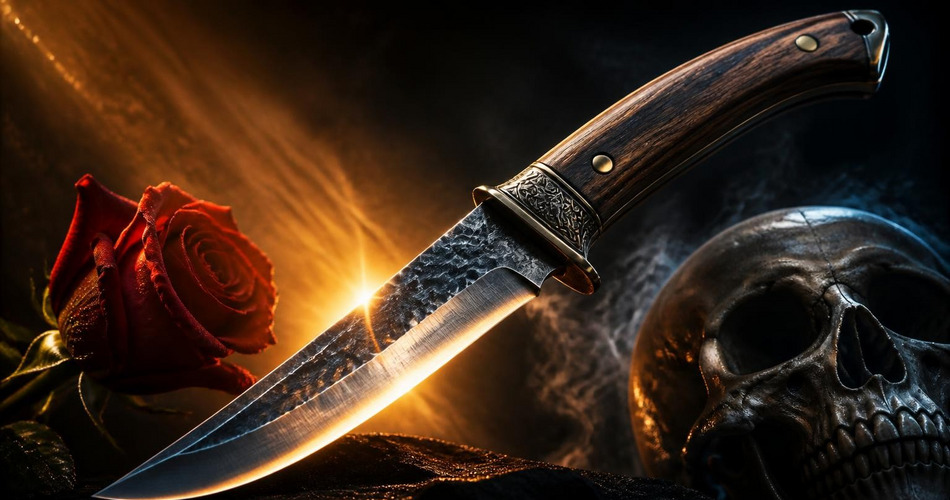
Knife tattoos are popular for their bold imagery and deep symbolism. A knife tattoo can represent protection, strength, and the ability to defend oneself. It may also symbolize a sharp mind, precision, or a decisive nature. For some, a knife tattoo signifies having overcome a dangerous situation or a period of conflict. The design often incorporates other elements like roses, skulls, or snakes to enhance the meaning. A dagger through a heart is a classic symbol of betrayal or lost love, while a knife with a snake represents cunning and danger.
Meanings of Different Types of Knives
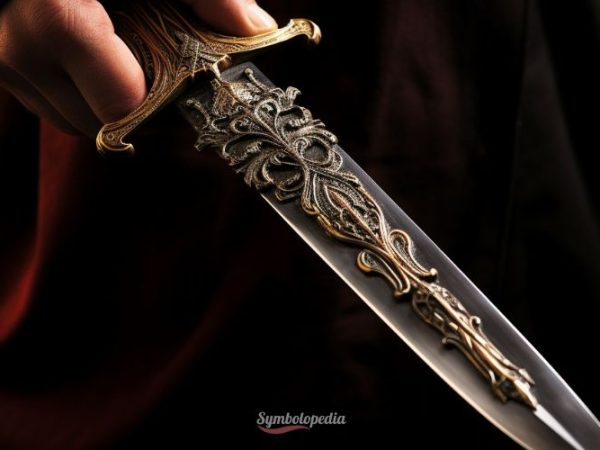
- Dagger: A double-edged blade symbolizing duality, balance, and often treachery. It is associated with stealth and close combat.
- Hunting knife: Represents survival, self-reliance, and the connection to nature. It is a tool of the hunter and a symbol of provision.
- Kitchen knife: Symbolizes nourishment, domesticity, and the creative act of preparing food. It can also represent the mundane aspects of life.
- Ceremonial knife: Used in rituals, it represents spiritual authority, sacrifice, and the cutting of energetic ties. Examples include the athame and the phurba.
- Switchblade or folding knife: Implies concealment, readiness, and potential danger. It is often associated with urban settings and street culture.
Frequently Asked Questions
Q: What does it mean when you dream about a knife?
A: Dreaming of a knife often symbolizes conflict, aggression, or the need to make a decisive cut in your life. It can also represent protection or the sharpness of your own mind.
Q: Is a knife a good luck symbol?
A: The knife is ambivalent. It can be a protective talisman against evil, but it is also associated with violence and bad luck if given as a gift without a token payment.
Q: What does a knife tattoo mean?
A: A knife tattoo typically symbolizes protection, strength, precision, or having survived a dangerous ordeal. It can also represent betrayal or loss depending on the design.
Q: Why is the knife used in spiritual rituals?
A: In many traditions, the knife is used to cut energetic cords, banish negativity, or consecrate space. Its sharpness represents the ability to discern truth and create boundaries.
Related Symbols
- Sword – A larger blade symbolizing authority, justice, and warfare.
- Scissors – A cutting tool representing separation and duality, often used in symbolism of fate.
- Dagger – A double-edged knife associated with stealth, betrayal, and ritual magic.
- Athame – A ritual knife in Wicca used to direct energy and cast circles.
- Blade – The cutting edge itself, symbolizing sharpness, precision, and danger.