Briefly
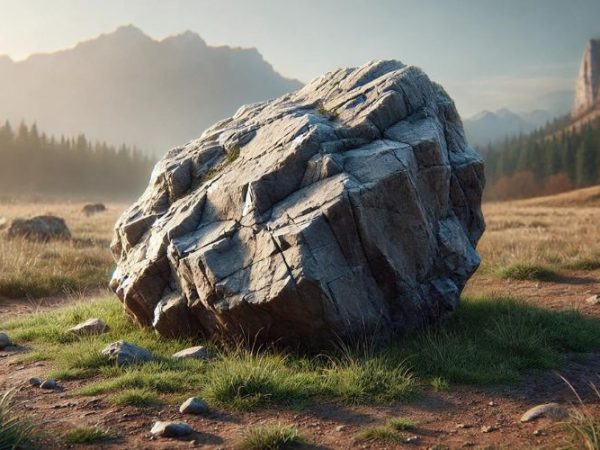
A boulder is a large, naturally occurring rock that has long symbolized strength, endurance, and permanence. Unlike smaller stones, its massive size and weight make it an emblem of immovability and resilience. Boulders often represent obstacles that must be overcome, but also the grounding stability that supports life and structures. Across cultures, they have been used as landmarks, boundary markers, and sacred sites, embodying the unyielding forces of nature.
What Does Boulder Symbolize?
Boulders symbolize strength and endurance due to their immense size and durability. They are often seen as ancient witnesses to time, outlasting generations and weathering storms. This makes them symbols of permanence and reliability. In many contexts, a boulder represents an obstacle or challenge—something that seems insurmountable but can be moved or overcome with effort. At the same time, boulders signify stability and grounding, serving as foundations for buildings, monuments, and even spiritual practices.
Because boulders are part of the earth itself, they are also associated with the natural world and the raw power of geological forces. They can represent the unchangeable aspects of life, the bedrock of character, or the solid principles one stands on. In meditation and mindfulness, visualizing a boulder can evoke a sense of centeredness and calm.
Positive and Negative Meanings of Boulder Symbolism
Positive associations: Boulders are positive symbols of resilience, stability, and protection. They remind us of the strength within ourselves to endure hardships. As landmarks, they provide orientation and a sense of place. In spiritual terms, boulders can represent a solid foundation for growth and transformation, offering a grounding energy that helps people stay connected to the earth.
Negative meanings: On the negative side, boulders can symbolize obstacles, burdens, or stagnation. A boulder blocking a path represents a challenge that may feel impossible to overcome. In dreams or metaphors, pushing a boulder uphill—like the myth of Sisyphus—can signify endless, futile effort. Boulders may also represent emotional or psychological weight, such as grief or guilt, that feels immovable.
History and Origins of Boulder Symbolism
Boulders have been significant to humans since prehistoric times. Early peoples used large boulders as markers for graves, territories, or ceremonial sites. Megalithic structures like Stonehenge and dolmens incorporate massive boulders, indicating their symbolic importance in rituals and astronomy. In many ancient cultures, boulders were considered dwelling places for spirits or gods, and touching them was thought to bring blessings or protection.
In Norse mythology, boulders were sometimes seen as the bones of giants, while in Celtic traditions, standing stones (often large boulders) were erected to mark sacred spaces or commemorate events. The use of boulders as boundary stones in medieval Europe reinforced their symbolism of permanence and ownership. Over centuries, the boulder has remained a potent symbol of the enduring natural world.
Boulder Symbolism in Different Cultures
In Native American cultures, boulders are often considered sacred. They may be used in sweat lodges or as altars for offerings. Some tribes view large boulders as ancestors or guardians of the land. In Japanese gardens, boulders (ishi) are carefully placed to represent mountains, islands, or spiritual presences, embodying the balance and permanence of nature. In Hinduism, the god Shiva is sometimes represented by a lingam, a smooth boulder-like stone, symbolizing divine energy and creation. Across many cultures, boulders serve as natural monuments that connect people to the earth and the cosmos.
Spiritual Meaning of Boulder
Spiritually, boulders represent grounding and stability. They are often used in meditation to help individuals feel rooted and connected to the earth. The immovability of a boulder can symbolize unwavering faith or inner strength. In some traditions, sitting or meditating near a large boulder is believed to absorb its ancient energy and wisdom. Boulders also remind us of the importance of patience and persistence—like water slowly wearing down stone, spiritual growth takes time.
Boulder in Myths and Folklore
One of the most famous myths involving a boulder is the Greek story of Sisyphus, condemned to roll a massive boulder uphill only for it to roll back down each time, symbolizing endless struggle and futility. In Norse mythology, the god Thor once threw a boulder at a giant, and the stone became a landmark. In Celtic folklore, boulders were often seen as petrified giants or fairy stones, and moving them was thought to bring bad luck. Many cultures have tales of boulders as resting places for spirits or as markers of hidden treasures.
Boulder in Dreams
Dreaming of a boulder often reflects feelings of being weighed down by a problem or responsibility. A boulder in a dream can symbolize an obstacle that seems too large to overcome, or it may represent the dreamer’s own inner strength and stability. The context matters: pushing a boulder suggests struggle, while sitting on a boulder may indicate a need for grounding. If the boulder is rolling toward the dreamer, it can signify an impending challenge or threat.
Common Dream Scenarios
- Pushing a boulder uphill: Represents a difficult task or repeated effort with little progress, similar to the myth of Sisyphus.
- A boulder blocking your path: Indicates an obstacle in waking life that requires patience and strategy to overcome.
- Sitting or standing on a boulder: Suggests a need for stability, perspective, or a solid foundation.
- A boulder falling or rolling toward you: May symbolize an unavoidable challenge or a looming threat.
- Breaking a boulder: Signifies overcoming a major obstacle or breaking through a barrier.
Boulder in Superstitions and Omens
In some folk traditions, moving a large boulder from its natural place is considered unlucky, as it may disturb the spirits residing within. Conversely, touching a boulder at a sacred site is thought to bring good fortune or healing. In parts of Europe, boulders with natural holes (called “wishing stones”) are believed to grant wishes if one looks through the hole. Boulders are also sometimes used in divination practices, where their shape or position is interpreted as an omen.
Boulder in Art and Literature
In literature, the most iconic boulder appears in Albert Camus’s philosophical essay The Myth of Sisyphus, where the boulder represents the absurdity of human effort in a meaningless universe. In visual art, the boulder is a recurring motif in landscape painting, from the Romantic works of Caspar David Friedrich to the precise studies of rocks by Leonardo da Vinci. In contemporary art, boulders are sometimes used as installations to evoke permanence or environmental themes. The boulder also features in film, such as the rolling boulder in Indiana Jones: Raiders of the Lost Ark, symbolizing an immediate, overwhelming threat.
Boulder Tattoo Meaning
A boulder tattoo often symbolizes strength, resilience, and an unyielding nature. It can represent overcoming a major obstacle or a commitment to staying grounded. Some people choose boulder tattoos to honor their connection to nature or to signify a solid foundation in their life. The design may include cracks or moss to show growth and endurance through hardship. Boulders are also combined with other elements like trees or water to convey balance and harmony.
Meanings of Different Types of Boulders
- Glacial boulders (erratics): Transported by glaciers, these symbolize movement, change, and the power of natural forces.
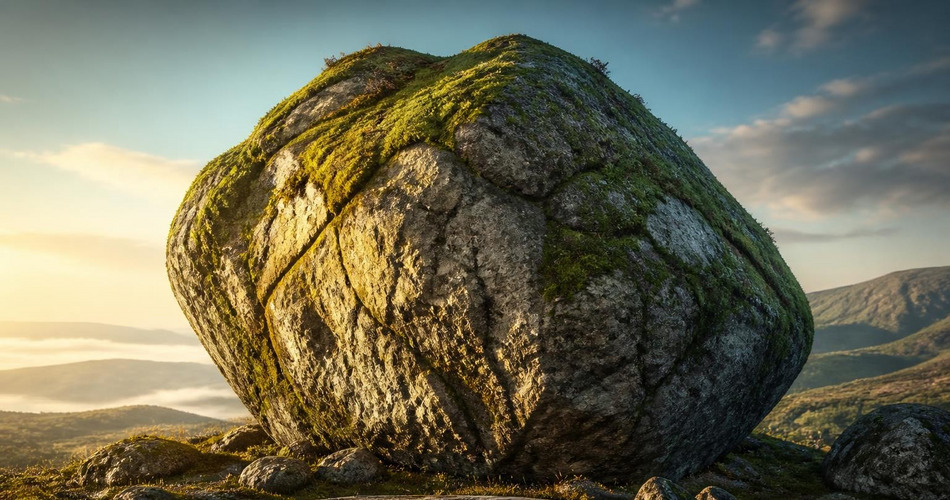
- Moss-covered boulders: Represent age, wisdom, and the slow passage of time, as well as harmony with nature.
- Split or cracked boulders: Indicate vulnerability, transformation, or the release of inner pressure.
- Round, smooth boulders: Often symbolize completeness, eternity, and the polishing effects of time and water.
Frequently Asked Questions
Q: What does a boulder symbolize in dreams?
A: In dreams, a boulder often represents an obstacle, a burden, or a source of stability, depending on the context. It can reflect feelings of being overwhelmed or the need for grounding.
Q: Is a boulder a positive symbol?
A: Yes, boulders are generally positive symbols of strength, endurance, and stability, but they can also represent challenges or stagnation in certain contexts.
Q: What is the spiritual meaning of a boulder?
A: Spiritually, boulders symbolize grounding, permanence, and the unshakable core of one’s being. They are often used in meditation to foster a sense of stability and connection to the earth.
Q: Why are boulders used in gardens?
A: In garden design, especially in Japanese rock gardens, boulders are placed to represent natural landscapes, evoke tranquility, and symbolize enduring strength and balance.
Related Symbols
- Stones – Smaller counterparts of boulders, often symbolizing grounding and permanence.
- Mountains – Represent larger, immovable forces and spiritual ascent.
- Rock – A general symbol of strength, stability, and faith.
- Earth – The element of grounding, fertility, and material existence.
- Obstacle – A concept closely tied to boulders in dreams and metaphors.