Briefly
The spoon is one of humanity’s oldest and most universal eating tools, and its meaning extends far beyond the dinner table. Across cultures, the spoon has come to represent nurturing, generosity, and abundance, while its material and craftsmanship add further layers of significance. From the idiom “born with a silver spoon” to the carved love spoons of Wales, this humble utensil carries a surprisingly rich symbolic history. In dreams, folklore, and daily customs, the spoon quietly speaks to themes of care, comfort, and human connection.
History and Origins of Spoon Symbolism
The spoon has been part of human life since prehistoric times, when early peoples used shells, stones, and pieces of wood to lift food. Ancient Egyptians crafted spoons from wood, ivory, and stone, often decorating them with figures of animals and people. The English word “spoon” derives from the Old English spon, meaning a chip or splinter of wood, reflecting the material most people used for centuries.
In medieval Europe, spoons became markers of social standing. Wealthy families owned spoons made of silver or even gold, while ordinary people made do with wood or pewter. The custom of giving a spoon as a christening gift dates back many centuries, and in Tudor England, sets of “apostle spoons” — spoons decorated with figures of the twelve apostles — were popular gifts for newborns. Over time, the spoon’s practical role as a feeding tool gave it a natural association with care, hospitality, and family life.
Spiritual Meaning of the Spoon
Because the spoon is used to feed, it has long been associated with nourishment in the broadest sense. In a spiritual context, the spoon can symbolize the way people care for one another — offering emotional support, comfort, and sustenance. It also represents hospitality, since offering food to a guest is one of the oldest expressions of goodwill across cultures.
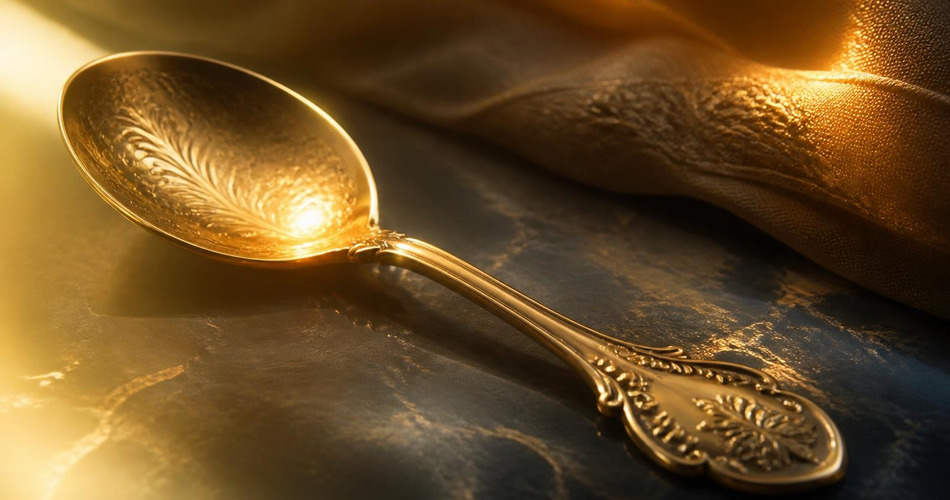
The material of a spoon can shape its spiritual meaning. A silver spoon has traditionally been linked to purity, wealth, and divine blessing, while a wooden spoon may represent humility, simplicity, and a connection to nature. In some spiritual traditions, the spoon is seen as a vessel that receives and gives, making it a symbol of openness and generosity.
The Spoon in Myths and Folklore
One of the most famous folk traditions involving the spoon is the Welsh love spoon. Since the seventeenth century, young men in Wales carved wooden spoons as tokens of affection for the women they hoped to marry. The designs were never random: a heart meant love, a key meant “you hold the key to my heart,” and a wheel symbolized “I will work for you.” These spoons were often displayed on the wall of the family home as a sign of engagement.
The English idiom “born with a silver spoon in his mouth” has been in use since at least the eighteenth century. It refers to the custom of godparents presenting a silver spoon at a christening, and it has come to mean someone born into wealth and privilege. In European folklore, spoons also appear in superstitions: in some regions, dropping a spoon was thought to foretell the arrival of a female visitor, while placing a spoon under the pillow was said to help a young person dream of their future spouse.
Spoon Symbolism in Dreams
In dream interpretation, the spoon is generally viewed as a positive symbol connected to nourishment and emotional fulfillment. A clean, shiny spoon in a dream may suggest that the dreamer is feeling cared for or that good fortune is on the way. Eating from a spoon in a dream can point to a need for comfort, support, or emotional sustenance in waking life.
As with many dream symbols, the condition of the spoon matters. A broken or tarnished spoon might indicate feelings of neglect, disappointment, or a fear that one’s needs are not being met. Conversely, finding a spoon in a dream can symbolize an opportunity to receive help or to give care to someone else. Dream interpreters often remind us that the spoon is a tool for sharing, so dreaming of one may also reflect the dreamer’s relationships and willingness to give or receive.
Meanings of Different Types of Spoons
Different kinds of spoons carry their own symbolic associations:
- Silver spoon — wealth, status, and inherited privilege, best known from the idiom “born with a silver spoon.”
- Wooden spoon — simplicity, folk tradition, and craftsmanship; in sports, the “wooden spoon” is also a humorous prize for finishing last.
- Love spoon — romantic devotion and engagement, especially in Welsh tradition, where carved symbols carry specific messages.
- Measuring spoon — precision, balance, and the careful blending of ingredients, symbolizing the importance of proportion in life.
- Horn or bone spoon — in some cultures, these materials were linked to strength and natural vitality.
Spoon Superstitions and Customs
Several traditional superstitions have grown up around the spoon:
- Dropping a spoon is said to mean a female visitor is on the way, while dropping a fork is said to announce a male visitor.
- Hanging a spoon on the wall was once believed to protect the household from harm in some European folk traditions.
- Giving a spoon as a housewarming gift is thought to bring abundance and good luck to the new home.
- In some regions, a spoon placed under the pillow on certain nights was used in love divination, helping single people dream of their future partner.
The Spoon in Art and Literature
The spoon has appeared in art and literature for centuries, often as a symbol of domestic life and comfort. In still-life paintings, a spoon placed beside a bowl of fruit or a glass of wine can suggest hospitality, abundance, or the simple pleasures of the table. In literature, the spoon frequently appears in scenes of family meals, where it stands for warmth, security, and the bonds created around shared food.
The best-known literary reference to the spoon is probably the English nursery rhyme “Hey Diddle Diddle,” in which the dish runs away with the spoon. The image of the eloping dish and spoon is playful and absurd, yet it also reflects the spoon’s long association with pairing, partnership, and the domestic sphere. In modern writing, the spoon is sometimes used as a metaphor for careful, deliberate action, as in the idea of “spoon-feeding” information to someone.
Spoon-Related Symbols and Their Meanings
The spoon belongs to a family of objects connected with food and eating, and its meaning overlaps with several related symbols. The bowl, like the spoon, is a vessel and can represent receptivity, abundance, and the feminine principle. The fork, by contrast, is often seen as more active and direct, symbolizing action, choice, and the reaching out for what one wants. The knife, with its cutting edge, is associated with separation, protection, and decisiveness.
Together, these eating tools form a small symbolic language of daily life. Where the knife divides and the fork pierces, the spoon gathers and offers — which is perhaps why it has come to symbolize care, generosity, and the simple act of feeding both body and soul.