Briefly
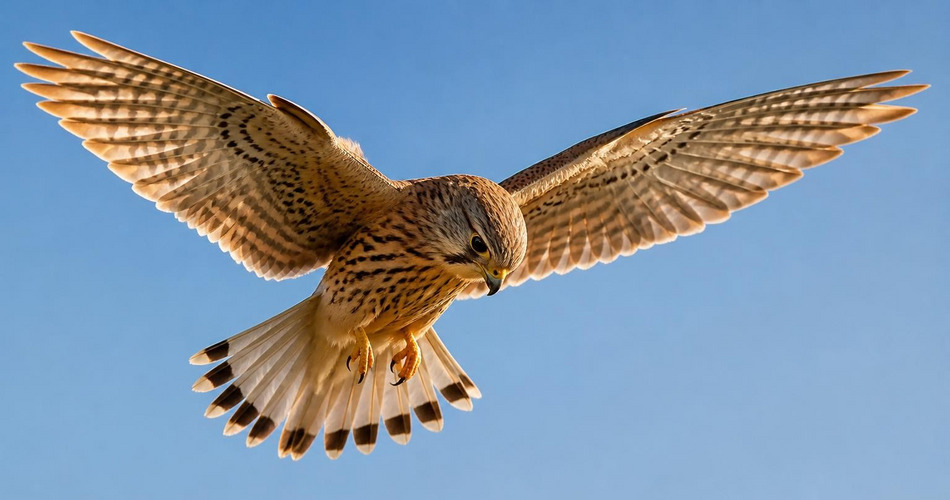
The kestrel, a small falcon found across Europe, Asia, Africa, and the Americas, symbolizes keen observation, patience, and the ability to seize opportunities. Known for its distinctive hovering flight as it scans the ground for prey, the kestrel represents focus and precision. In many cultures, it is seen as a messenger of change or a guide to seeing the bigger picture. Its symbolism often emphasizes the balance between waiting and acting, making it a powerful emblem for those who value timing and awareness.
What Does the Kestrel Symbolize?
The kestrel’s most prominent symbolic trait is its hovering ability, which represents the power of stillness and focused observation. This bird teaches the importance of pausing to assess a situation before making a move. It is also associated with opportunity, as the kestrel strikes quickly when the moment is right. Its sharp eyesight symbolizes clarity and insight, encouraging a broader perspective. Additionally, the kestrel embodies agility and adaptability, as it thrives in diverse habitats from open countryside to urban areas.
Positive and Negative Meanings
Positive associations: The kestrel is seen as a symbol of patience, precision, and strategic thinking. It encourages careful planning and the ability to remain calm under pressure. Its presence can signify that a time of waiting is about to yield results, and that one should trust their instincts to act at the right moment.
Negative meanings: In some contexts, the kestrel can represent impatience or restlessness, as its constant hovering may suggest an inability to commit. It can also symbolize a predatory nature, reminding of the need to be wary of those who watch too closely. Overly aggressive pursuit of goals, without regard for others, is another negative aspect.
History and Origins of Kestrel Symbolism
Kestrels have been part of human culture for centuries, particularly in Europe where they were commonly used in falconry during the Middle Ages. Unlike larger falcons, kestrels were often flown by beginners or women, giving them an association with gentleness and accessibility. In ancient Egypt, the kestrel was linked to the god Horus, who was often depicted as a falcon, representing kingship and the sky. However, the specific kestrel species was not always distinguished from other falcons in historical texts. The bird’s scientific name, Falco tinnunculus, means “ringing falcon,” a reference to its call, which has been interpreted as a sound of warning or announcement in folklore.
Kestrel Symbolism in Different Cultures
In European folklore, the kestrel was sometimes seen as a bringer of good luck, especially when it nested near a home. Its presence was thought to protect against evil spirits. In Native American traditions, falcons in general were revered as messengers and symbols of vision, though specific references to kestrels are less common. Some tribes viewed the kestrel’s hovering as a sign to pause and reflect. In Asian cultures, particularly in China, small falcons like the kestrel were associated with military strategy and discipline, admired for their precise strikes. In African folklore, the kestrel is sometimes considered a trickster figure, using its speed and cunning to outwit larger birds.
Spiritual Meaning of the Kestrel
Spiritually, the kestrel is seen as a totem animal for those who need to develop patience and keen observation. It encourages a meditative state of watchfulness, where one can see the subtle movements of life. The kestrel’s ability to hover in place symbolizes the power of staying grounded while remaining alert. It is also associated with the air element, representing intellect and communication. As a spirit guide, the kestrel helps in recognizing opportunities that others might miss and in taking decisive action when the time is right.
Kestrel in Myths and Folklore
In Greek mythology, the kestrel was sometimes linked to the story of Tereus, who was transformed into a hoopoe, but falcons appear in various myths as messengers of the gods. In Celtic folklore, the kestrel was a bird of prophecy, its call believed to foretell changes in weather or fortune. In medieval bestiaries, the kestrel was described as a bird that could be tamed but remained wild at heart, symbolizing the tension between civilization and nature. Some European superstitions held that seeing a kestrel at the start of a journey meant the traveler would encounter a challenge that required quick thinking.
Kestrel in Dreams
Dreaming of a kestrel often points to a need for focus in waking life. The bird may appear when you are being too hasty or, conversely, when you are waiting too long to act. A kestrel hovering in a dream suggests that you are in a period of assessment and should trust your instincts. If the kestrel catches prey, it may indicate that a goal is within reach if you act decisively. A kestrel flying away could represent a missed opportunity or a warning to let go of something that is not meant for you.
Common Kestrel Dream Scenarios
- Kestrel hovering above you: You are being watched or evaluated, or you need to step back and observe a situation more carefully.
- Kestrel swooping down to catch prey: A sudden opportunity or challenge is about to appear; be ready to act.
- Kestrel perched calmly: A period of rest and patience is needed before moving forward.
- Kestrel calling loudly: A message or warning is being communicated; pay attention to your environment.
- Kestrel flying away: You may be letting an opportunity slip, or you need to release control.
Kestrel in Superstitions and Omens
- In some European traditions, a kestrel nesting on a house was considered a good omen, bringing protection and prosperity to the household.
- Seeing a kestrel on the left side of the road was thought to foretell a quarrel or disagreement, while on the right side it signaled a successful venture.
- A kestrel flying over a wedding procession was believed to bless the union with fidelity and sharp insight.
- In parts of rural England, the kestrel’s call was said to predict rain if heard at dawn.
Kestrel Tattoo Meaning
A kestrel tattoo often represents freedom, focus, and the ability to rise above challenges. It is chosen by those who value independence and precision in their actions. The hovering pose is a popular design, symbolizing a balance between action and patience. In some cases, the tattoo serves as a reminder to stay alert and seize opportunities. The kestrel’s association with falconry also appeals to individuals who appreciate discipline and mastery.
Frequently Asked Questions About Kestrel Symbolism
Q: What does it mean when a kestrel visits you?
A: A kestrel visit is often interpreted as a sign to pay attention to details and to be patient. It may indicate that an opportunity is near, but you must wait for the right moment to act.
Q: Is a kestrel a good omen?
A: Generally yes, especially in European folklore where it was seen as a protector. However, its meaning can vary depending on the context, such as the direction it appears from.
Q: What is the spiritual meaning of a kestrel?
A: Spiritually, the kestrel represents clarity, observation, and the power of stillness. It encourages you to trust your instincts and to remain grounded while scanning the horizon for opportunities.
Q: How does a kestrel differ from other falcon symbolism?
A: While larger falcons often symbolize power and speed, the kestrel emphasizes patience and precision. Its hovering flight is unique and gives it a distinct association with careful waiting rather than aggressive pursuit.
Related Symbols
- Falcon – broader symbol of vision, speed, and nobility
- Hawk – similar focus and keen eyesight, but often associated with leadership
- Eagle – represents majesty, strength, and spiritual elevation
- Owl – wisdom and nocturnal observation, contrasting with the kestrel’s daytime hunting
- Hoverfly – insect that also hovers, symbolizing patience and precision in a smaller form