Briefly
Birthday candles are small flames placed on a cake to mark another year of life. They carry layered meanings: the light represents life itself, the act of blowing them out marks the passage of time, and the traditional wish made before extinguishing the flame connects them to hope and intention. In many cultures, the number of candles corresponds to a person’s age, making the cake a personal symbol of growth and continuity. At the same time, the fragility of a candle flame gives the ritual an undertone of mortality, reminding us that each birthday is both a celebration and a milestone.
What Does the Birthday Candle Symbolize?
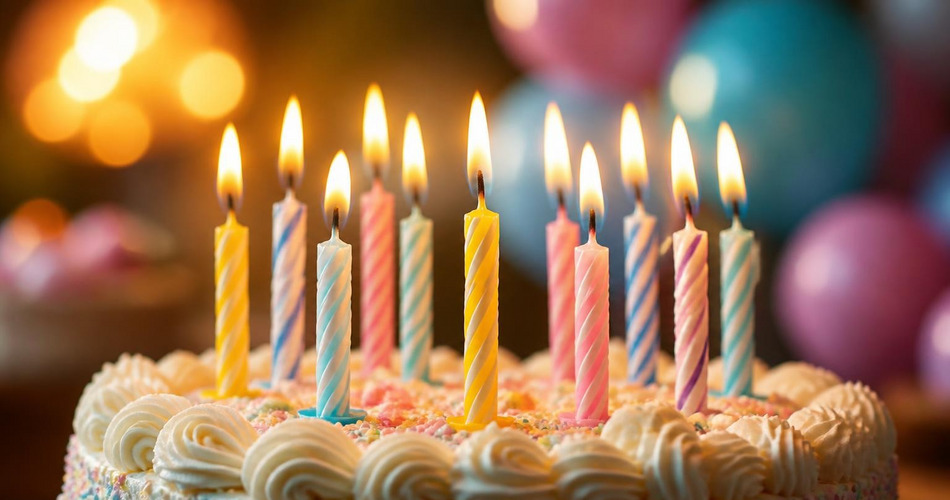
The central symbolism of the birthday candle is life. A lit flame is one of the oldest human symbols for vitality and the soul, so placing it on a birthday cake links the individual’s personal life to the archetypal power of fire. Each candle represents one year lived, and together they form a visual record of time passing — a bright, countable expression of age.
Birthday candles also symbolize wishes. The moment before blowing out the flame is treated as a threshold when a wish may be made and carried upward with the smoke. This makes the candle a small bridge between the everyday world and something more personal and hopeful. Finally, the cake-and-candle arrangement is a communal symbol of inclusion, belonging, and shared joy — the gathering of people around a single flame is one of the most universal images of celebration.
Positive and Negative Meanings
Positive associations: Birthday candles are overwhelmingly positive symbols of joy, gratitude, and another year of health and opportunity. They mark personal milestones, connect families and friends in a shared ritual, and give occasions a tangible sense of warmth and light. The wish made over the candles adds an optimistic dimension: the flame becomes a focus of hope and personal intention.
Negative meanings: The same flame can carry darker undertones. Because candles burn down and go out, they have long been associated with mortality and the brevity of life. In a birthday context, each candle also signals that a year has passed and cannot be recovered, which can stir feelings of aging, regret, or anxiety. A candle that will not light or is blown out too early can be read, in a folk-symbolic way, as an omen or a mark of disappointment.
History and Origins of the Symbolism
The birthday cake itself is often traced to ancient Greek and Roman customs, but the specific tradition of placing lit candles on top is more recent. One commonly cited origin is the 18th-century German practice of Kinderfest, a children’s birthday celebration in which a cake with candles was placed on a table. The candles were meant to represent the light of life, and a larger candle was sometimes placed in the center as a symbol of the year ahead.
Some historians have connected the candles to earlier European folk beliefs about fire having protective powers. In this view, the flames did not merely decorate the cake — they also warded off evil spirits on a day when a person was especially vulnerable to ill fortune, namely their birthday. This blend of protective magic and Christian domestic celebration shaped the tradition that later spread through Europe and North America during the 19th century, especially as childhood birthdays became more commercialized.
Birthday Candles in Different Cultures
In the English-speaking world, the standard custom is simple: the birthday person makes a wish, takes a deep breath, and tries to extinguish every candle in one blow. Success is believed to make the wish come true, and the number of candles normally matches the person’s age, sometimes with one extra “a year to grow on.”
Similar customs appear in other countries, each with local variants. In Germany, the historical center of the birthday-cake tradition, candles often remain lit for the whole celebration until the cake is cut, and the birthday person is not supposed to tell anyone the wish. In Scandinavian countries, a birthday cake may be decorated with a small Danish or Swedish flag among the candles, and the burning candle is sometimes placed on the cake as part of a morning surprise for the birthday child. In many Latin American cultures, a special “cake pull” or candle-related birthday song accompanies the moment of blowing out the flames, with the wish treated as a serious personal commitment. Despite these variations, the shared symbolic core remains constant: fire, age, wish, and community.
Spiritual Meaning of Birthday Candles
From a spiritual perspective, the birthday candle functions as a miniature altar or focal point. The act of lighting it can be understood as an invitation for light into the new year of life. The flame is often seen as a stand-in for the soul or the inner self, and the wish made while looking at it is a form of focused prayer or meditation. The smoke rising after the flame is blown out is sometimes interpreted as carrying the wish upward, a symbolic gesture found across many spiritual traditions that use smoke as a conveyor of prayers.
Birthday candles also fit into a broader symbolism of thresholds. A birthday is a liminal moment — the end of one year and the beginning of another — and candles mark that boundary with visible light. In this sense, the ritual is less about magic and more about mindfulness: the flame makes people pause, reflect, and consciously choose a hope for the future.
Birthday Candles in Myths and Folklore
Fire and light appear throughout world mythology as gifts from the divine: from Prometheus bringing fire to humans in Greek myth to the eternal flames kept in temples and hearths. Birthday candles can be seen as a small domestic echo of these ancient stories — a human-made flame that carries meaning beyond its practical function. The idea that a wish made over fire is more powerful has folk roots in many cultures, where fire was believed to be a medium between humans and the spirit world.
Folk beliefs also surround the number and handling of the candles. Some European customs held that a candle that burns all the way down without being blown out brings good luck, while a candle that sputters and dies on its own might be an unlucky sign. The smoke from birthday candles has been regarded in folklore as carrying the wish to celestial listeners, and for this reason, telling the wish aloud is considered a way to break its effect. These beliefs are not universal, but they show how deeply the simple act of lighting and blowing out a candle is woven into folk ideas about fate and luck.
Birthday Candles in Dreams
When birthday candles appear in a dream, they usually combine the symbolism of fire with the symbolism of birthdays themselves. A dream of a cake with lit candles may point to a sense of self-celebration, acknowledgment, or the end of a personal cycle. The number of candles in the dream may be significant, especially if the dreamer notices it clearly — it can represent a past age, a coming milestone, or an aspect of identity that needs attention.
The condition and behavior of the candles matter in dream interpretation. Bright, steady flames often reflect confidence, hope, and positive energy. Candles that are difficult to light, that keep going out, or that burn too quickly may indicate frustration, fear of aging, or a feeling that time is slipping away. As with all dream symbols, the context and the dreamer’s feelings are more important than any fixed dictionary meaning, but birthday candles in dreams generally invite reflection on time, self-worth, and personal growth.
Common Dream Scenarios
- Unable to blow out the candles: may reflect frustration, a fear of failure, or a sense that a goal is just out of reach.
- Candles that will not light: can indicate self-doubt, creative blockage, or difficulty starting a new phase in life.
- A cake with many candles: often points to concerns about aging, accumulated experience, or the weight of responsibilities.
- One single candle on a cake: may symbolize a fresh start, a new chapter, or a focus on the self.
- Candles melting or burning unevenly: can represent wasted time, unbalanced energy, or neglected aspects of life.
Birthday Candles in Superstitions and Omens
Several superstitions have grown up around the birthday candle ritual. The most widespread is that the wish must never be spoken aloud; silence is part of the magic. Many people also believe that blowing out all the candles in a single breath is essential — failure to do so means the wish will not come true. A common related rule is that the number of candles should equal the person’s age, with the addition of one extra candle for luck or for the coming year.
- A wish made over birthday candles should be kept secret.
- All candles should be blown out in one breath.
- An extra candle is sometimes added for good luck.
- A candle that stays lit after the attempt may be a sign that the wish needs more effort.
- Eating the first piece of cake after the wish is sometimes thought to seal the intention.
Birthday Candles in Art and Literature
Birthday candles appear in art and literature as a compact symbol of passing time, vanished youth, and fragile hope. In Ernest Hemingway’s short story “A Clean, Well-Lighted Place,” the café’s electric lights contrast with darkness and age, and while candles are not the story’s central image, its meditation on light and human endurance resonates with candle symbolism in general. A more direct example is the children’s picture book Happy Birthday, Moon by Frank Asch, in which a bear gives the moon a birthday present and the quiet, candlelit mood of celebration becomes an emblem of friendship and wonder.
In visual art, the birthday motif appears in Marc Chagall’s 1915 painting The Birthday (known in Russian as «День рождения»). The painting depicts the artist and his future wife Bella floating in a room, with the celebration of her birthday rendered as a dreamlike, weightless scene. Chagall’s use of light and tenderness around the birthday theme has made the work a famous visual representation of love and life’s celebratory moments. In popular culture, the lighting and blowing out of birthday candles has become a cinematic shorthand for emotional turning points, from coming-of-age films to dramas about regret and renewal.
Tattoo Meaning of Birthday Candles
Birthday candles are not among the most common tattoo motifs, but they do appear as personal commemorative symbols. A tattoo of a birthday candle often marks a specific birth date, the age of a child, or the memory of a loved one. Because the candle is a flame on a small stick, it can be combined with numbers, names, or cakes to form a compact personal emblem of life and remembrance.
As a tattoo design, the birthday candle usually carries positive meanings: joy, gratitude for being alive, and the celebration of a particular person. It can also serve as a memento of survival — a cleaned-up version of the folk saying that a birthday candle represents one more year of life. When rendered in a simple, graphic style or as part of a larger commemorative piece, the birthday candle is a direct and legible symbol of a personal milestone.
Interpretation of Different Colors and Variations
Though the classic birthday candle is a thin, striped or pastel stick, color adds extra layers of meaning. White candles, the most traditional, are linked to purity, new beginnings, and the blank page of a new year. Pink and red candles suggest love, affection, and warmth, and are often chosen for young children or romantic celebrations. Blue is associated with calm, wisdom, and loyalty; green with growth, health, and hope; and purple with creativity, mystery, or a touch of regal solemnity for milestone birthdays.
The shape and number of candles also carry significance. Number-shaped candles make the age explicit and are common for milestone birthdays such as 18, 30, or 50. Reusable candles in the shape of a single question mark are deliberately ambiguous, symbolizing both the mystery of the coming year and the playful uncertainty of the wish. In recent years, “magic” candles that relight after being blown out have become a popular variation — humorously symbolizing persistence or the idea that one’s spirit cannot be easily extinguished.
Frequently Asked Questions
Q: Why do we make a wish before blowing out birthday candles?
A: The wish-making ritual combines ancient beliefs about fire as a medium between humans and the divine with the modern idea that a birthday is a personal new year — a natural moment for setting a hope or intention.
Q: What does a birthday candle symbolize?
A: A birthday candle symbolizes life, the passage of time, and the light of the individual self. It also represents a wish, a hope, and the shared joy of celebration.
Q: What if you can’t blow out all the candles in one breath?
A: Superstitiously, this is thought to mean the wish will not come true, but many people simply take it as a fun challenge and try again — the meaning is more playful than prophetic.
Q: Where did the tradition of birthday candles come from?
A: The tradition is most often traced to 18th-century German Kinderfest celebrations, where candles on a birthday cake represented the light of life and were sometimes kept burning for the whole day.
Related Symbols
- Cake — the birthday cake is the material base on which the candle ritual is performed.
- Candle flame — the flame itself symbolizes life, the soul, and prayer.
- Fire — the ancient element underlying the candle’s warmth and light.
- Wish — the spoken or silent hope that accompanies the blowing out of the candles.
- Smoke — believed in folklore to carry the wish upward.
- Light — the universal symbol of hope, guidance, and life that a birthday candle embodies in miniature.