Briefly
The cherry is a fruit deeply embedded in human symbolism, representing a delicate balance between beauty and impermanence. Across cultures, it evokes spring’s renewal, the sweetness of life, and the fleeting nature of existence. While often associated with love, fertility, and good fortune, the cherry also carries darker meanings, such as temptation and mortality. Its symbolism is most powerfully expressed in the Japanese cherry blossom, or sakura, which celebrates transient beauty and the acceptance of life’s ephemeral nature.
What Does Cherry Symbolize?
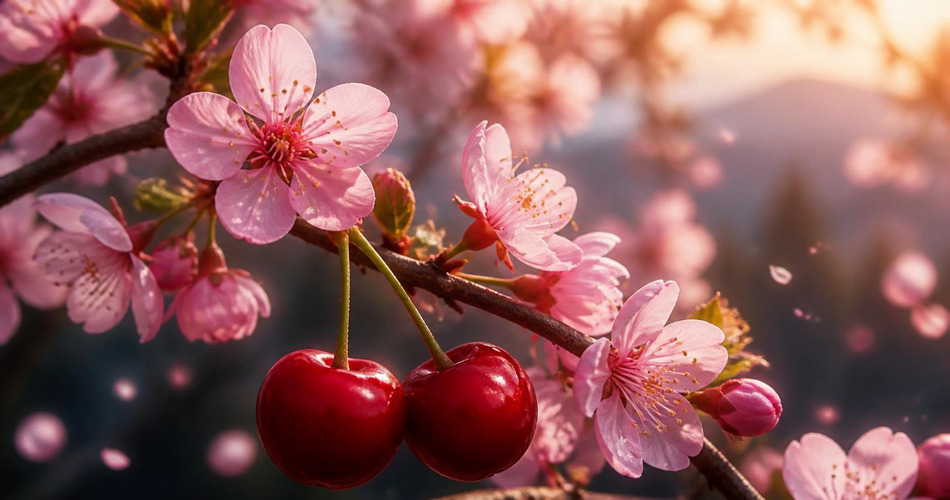
Cherries symbolize a range of ideas, often depending on whether we look at the fruit or the blossom. The fruit, with its bright red color and sweet taste, is linked to passion, desire, and sensuality. It also represents fertility and abundance because of its many seeds and juicy flesh. The cherry tree, however, is more closely associated with spring and renewal, as it blooms early in the season.
The cherry blossom is perhaps the most powerful symbol, especially in East Asian cultures. It embodies the concept of impermanence – the idea that beauty is fleeting and life is short. This makes the cherry a symbol of both celebration and sorrow, reminding us to cherish every moment.
Positive and Negative Meanings
Positive associations: Cherries are seen as symbols of happiness, joy, and the sweetness of life. They represent new beginnings, as they ripen in early summer, and are often linked to love, romance, and attraction. In many traditions, the cherry tree’s blossoms signal the start of spring, bringing hope and rejuvenation after winter. The fruit’s abundance is a sign of prosperity and good fortune.
Negative meanings: On the darker side, cherries can symbolize temptation, especially as a forbidden fruit. The deep red color evokes blood and may represent danger or mortality. In some contexts, cherries are linked to deceit or seduction, as their sweet exterior can hide a bitter pit. The cherry blossom’s rapid falling is a reminder of death’s inevitability, leading to associations with sorrow and loss.
History and Origins of the Symbolism
The cherry has been cultivated for thousands of years, with origins believed to trace back to the Caucasus and Persia. But its symbolic importance grew most prominently in Japan, where the cherry blossom became the national flower. The tradition of hanami, or flower viewing, dates back over a thousand years, with aristocrats admiring the blossoms and composing poetry. By the Edo period, this practice had spread to all classes.
In ancient China, cherries were associated with the arrival of spring and were often used in imperial ceremonies. The fruit was considered a delicacy, and its blossoms were seen as symbols of feminine beauty and elegance. In European folklore, cherries were linked to the Virgin Mary and sometimes called “the fruit of paradise,” although the association was not always consistent.
Symbolism in Different Cultures
In Japanese culture, the cherry blossom is the most iconic symbol. It represents the samurai ethos – a life that is beautiful but short, lived with honor and dignity. The Sakura is celebrated in festivals, art, and literature, and its falling petals are a metaphor for the acceptance of mortality. For many Japanese, the blossom also signifies a new start, as it coincides with the school and fiscal year.
In China, the cherry is less prominent than the plum blossom, but it still carries meanings of love and femininity. The Chinese word for cherry, “yingtao,” can evoke thoughts of innocence and purity. In Korean culture, cherry blossoms are also admired, but they often represent purity and beauty rather than impermanence.
In Western traditions, cherries are frequently associated with childhood and innocence, as seen in the game “cherry picking” or the expression “life is a bowl of cherries.” They also appear in Christian art as symbols of the blood of Christ, and sometimes of the Virgin Mary’s purity, echoing the “cherry tree carol” that tells of Mary and the infant Jesus.
Spiritual Meaning
Spiritually, cherries encourage us to embrace the present moment. Their fleeting bloom and short season urge a mindfulness of our own existence. The cherry blossom is a reminder that spiritual awakening often comes through acceptance of impermanence, aligning with Buddhist teachings on attachment and letting go.
In a broader sense, cherries are symbols of divine love and blessing. Their red, heart-like appearance connects them to matters of the heart, both human and divine. The cherry tree’s cycle of bloom, fruit, and dormancy echoes the soul’s journey through life, death, and rebirth.
In Myths and Folklore
One famous myth involves the Roman hero Tarquin, who demonstrated the consequences of indecision by striking off a cherry blossom’s head with a staff. This story, recorded by Livy, used the plant as a metaphor for force and resolution.
The cherry tree also appears in the Washingtonian legend of George Washington chopping down his father’s cherry tree, an anecdote likely invented by biographer Mason Locke Weems to illustrate honesty. Though not historically accurate, the tale became a cornerstone of American folklore.
Japanese folklore includes the yūrei, or ghosts, sometimes portrayed beneath cherry trees, symbolizing souls that are restless. Conversely, cherry blossoms are often seen as the spirits of warriors who died in battle, returning to earth in blooms.
In Dreams
Dreams about cherries are generally positive, reflecting your desires and passions. A ripe cherry may indicate a period of sweetness and pleasure, or a love affair on the horizon. The condition of the cherry is important: ripe and juicy suggests fulfillment, while bruised or rotten cherries warn of disappointment.
Cherrying blossoms in a dream might signal a time of major change or the end of a chapter, urging you to appreciate what you have before it passes. Eating cherries can symbolize indulgence, while picking them implies you are actively pursuing your goals.
Common Dream Scenarios
- Eating ripe cherries: good fortune and joyful experiences ahead.
- Seeing cherry blossoms: a reminder of life’s transient nature, prompting you to live fully.
- Picking cherries from a tree: success in your current projects, but require patience.
- Cherries turning sour or rotten: missed opportunities or a failing relationship.
- A cherry tree withered or dead: fear of aging or the loss of vitality.
In Superstitions and Omens
In some European traditions, dreaming of cherries was a portent of a happy marriage or a legacy. In parts of France, cherry trees were planted near houses to protect against lightning. In Japan, the blossoming of cherry trees was seen as an omen of a good harvest, while early falling blossoms could predict a poor year.
There is also a superstition that eating cherries before kissing will ensure a sweet kiss, and that finding a double cherry (two fruits joined) brings good luck. Conversely, knocking down a cherry blossom was considered unlucky, as it was believed to bring a death to the family.
In Art and Literature
Cherries and cherry blossoms have inspired countless artistic works. The most famous literary work is Anton Chekhov’s play The Cherry Orchard (1904), where the selling of a cherry orchard symbolizes the passing of the Russian aristocracy and the end of a way of life. The orchard represents memory, beauty, and inevitable change.
In Japanese poetry, cherry blossoms are a seasonal word (kigo) in haiku. Matsuo Bashō wrote, “The cherry blossoms / In the morning light / Fall gently, as if the sky itself / Weeps for them.” This captures the essence of mono no aware, the pathos of things.
In Western art, cherries appear in Renaissance still lifes, often as symbols of Christ’s blood or the sweetness of paradise. They also feature in folk songs like “Cherry Ripe,” sung by Henry Purcell.
In cinema, cherry blossoms are a recurring motif in Japanese films, from The End of Summer by Yasujirō Ozu to anime like Your Name, where they mark both renewal and loss.
Tattoo Meaning
Cherry tattoos are popular for their visual appeal and layered meanings. A cherry fruit tattoo often signifies sensuality, desire, or a bold personality. It can also represent the sweetness and bitterness of life, depending on the style.
A cherry blossom tattoo is more closely tied to the Japanese tradition, symbolizing the fleeting nature of life and the beauty of acceptance. It can also represent purity, love, and the start of a new chapter. Combining both the blossom and fruit in a design suggests the cycle of life.
Meanings of Different Types, Colors, and Variations
Cherries come in many varieties, but the symbolic meanings often follow color and context. The most common red cherry represents passion and vitality. A darker, almost black cherry can symbolize mystery or deep desire. White or pale pink cherry blossoms are especially linked to purity and spiritual awakening.
In Japan, five-petaled blossoms are standard, but multi-layered varieties like yae-zakura have double petals and are considered more luxurious and complex, symbolizing abundance rather than simplicity. The weeping cherry, with its drooping branches, is often associated with sorrow or mourning, yet also with new hope.
Frequently Asked Questions
Q: What does a cherry symbolize in love?
A: A cherry often represents romantic love and attraction because of its heart-like shape and sweet taste. It suggests passion, desire, and the joy of being in love.
Q: Is a cherry tattoo considered lucky?
A: Cherry tattoos are usually seen as positive, symbolizing good fortune, vitality, and the enjoyment of life. However, some people might interpret a bruised or split cherry as a warning.
Q: Can cherries appear in dreams as warnings?
A: Yes, a dream featuring rotten or bitter cherries could indicate disappointment or a warning to reconsider a current path in love or business.
Q: What is the spiritual lesson of the cherry blossom?
A: The cherry blossom teaches us about impermanence, urging us to let go of attachments and live fully in the present moment, as beauty is fleeting.
Related Symbols
- Peach – another stone fruit associated with longevity and immortality in East Asian cultures.
- Plum Blossom – symbol of resilience and perseverance, often compared to cherry blossom.
- Apple – represents temptation and knowledge, similar to cherry’s darker meanings.
- Sakura – the Japanese term for cherry blossom, carrying the same transience symbolism.
- Red Rose – shares associations with love and passion, like the crimson cherry.