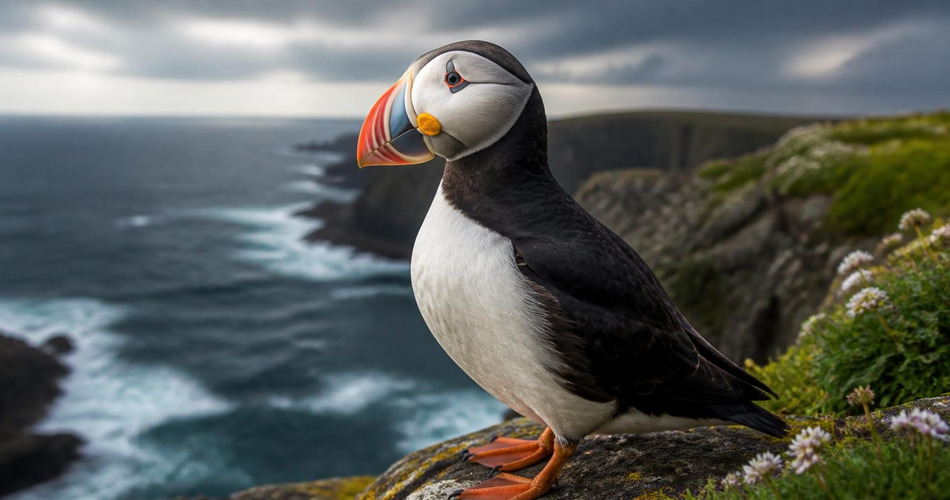
The puffin is a distinctive seabird that symbolizes playfulness, adaptability, and community. With its brightly colored beak and clown-like appearance, the puffin is often seen as a joyful and resilient creature, capable of thriving in harsh coastal environments. Its ability to live both on land and at sea makes it a symbol of resourcefulness and balance. While the puffin is generally associated with positive traits, it can also represent vulnerability due to its dependence on healthy marine ecosystems.
What Does the Puffin Symbolize?
The puffin is most commonly recognized as a symbol of playfulness. Its colorful beak and comical waddle give it a cheerful, approachable character, making it a beloved emblem of joy and lightheartedness. Beyond its appearance, the puffin also represents adaptability, as it seamlessly moves between the air, the sea, and rocky burrows on land. This dual existence reflects a capacity to navigate different environments and challenges with ease.
Puffins are highly social birds that nest in large colonies, making community another key aspect of their symbolism. They work together to raise their young and defend their territory, embodying cooperation and mutual support. Additionally, the puffin’s ability to endure cold, stormy conditions and long migrations ties it to endurance and resilience. In many interpretations, the puffin is also seen as a symbol of resourcefulness, as it uses its beak to carry multiple fish at once—a practical skill that ensures its survival.
Positive and Negative Meanings
Positive associations: The puffin is widely seen as a symbol of joy, playfulness, and optimism. Its bright beak and lively behavior evoke feelings of happiness and lightheartedness. The bird also represents adaptability, community, and resilience, inspiring people to embrace change and work together. In coastal cultures, the puffin is often a symbol of the natural beauty and vitality of the sea.
Negative meanings: On the negative side, the puffin’s comical appearance can sometimes be interpreted as foolishness or naivety. Its reliance on specific fish stocks and safe nesting sites makes it vulnerable to environmental changes, so the puffin can also symbolize fragility or precariousness. In some contexts, the puffin’s bright beak is seen as a superficial or deceptive feature, masking a more serious nature.
History and Origins of the Symbolism
The puffin has been known to humans for centuries, but its symbolic significance is relatively modern. Early coastal communities in the North Atlantic, such as the Vikings and the Norse, hunted puffins for food and feathers, but there is little evidence of deep symbolic meaning in pre-modern times. The bird’s name itself may derive from the Middle English word “pophyn,” meaning “puffed up,” likely referring to its plump body shape.
The puffin’s popularity as a symbol grew in the 19th and 20th centuries, particularly in Britain and North America. Naturalists and artists began to celebrate the puffin for its unique appearance and behavior. The bird became a mascot for seaside tourism and conservation efforts, especially in places like the Farne Islands and the island of Lundy, where puffins are a major attraction. Today, the puffin is an icon of marine wildlife and a symbol of the health of ocean ecosystems.
Puffin Symbolism in Different Cultures
In Icelandic culture, the puffin is a familiar sight along the coast and is often associated with the rugged beauty of the island. While not a national symbol, it is a beloved bird that appears in folklore as a clever creature that can outwit predators. In the Faroe Islands, puffins have been hunted for food, but they are also respected for their ability to survive harsh winters.
In Newfoundland and Labrador, Canada, the Atlantic puffin is the official provincial bird. It symbolizes the province’s rich maritime heritage and the resilience of its coastal communities. The puffin appears on license plates, souvenirs, and emblems, representing a connection to the sea and the natural environment.
On the island of Lundy in England, the puffin is so iconic that the island’s name is thought to come from the Old Norse word for puffin (“lundi”). The bird is featured on the island’s flag and is a central part of its identity. In modern popular culture, the puffin is often used as a friendly, approachable character in children’s books, cartoons, and logos, reinforcing its association with playfulness and innocence.
Spiritual Meaning
In spiritual and totemic contexts, the puffin is seen as a guide for embracing joy and finding balance between work and play. Its ability to dive deep into the ocean while also soaring through the air represents the integration of the emotional (water) and intellectual (air) realms. The puffin encourages people to approach life with a light heart, to be resourceful in difficult situations, and to value community connections.
As a spirit animal, the puffin is thought to appear when one needs to lighten their mood or adapt to changing circumstances. It reminds us that even in challenging environments, there is room for playfulness and creativity. The puffin’s colorful beak is also seen as a symbol of self-expression and authenticity—showing one’s true colors without fear.
Puffin in Myths and Folklore
While the puffin does not feature prominently in ancient myths, it appears in some modern folklore and local legends. In the Faroe Islands, there is a tradition that puffins were once human beings who were transformed into birds as a punishment for greed. This story serves as a cautionary tale about overconsumption and respect for nature.
In Icelandic folklore, puffins are sometimes said to be able to predict the weather. Their behavior—such as the direction they fly or how they gather—is observed by fishermen as a sign of approaching storms or good fishing conditions. These practical beliefs reflect the puffin’s close relationship with the sea and its role as a natural indicator.
Puffin in Art and Literature
The puffin has inspired a number of artistic and literary works. One of the most famous references is the short poem “The Puffin” by American poet Ogden Nash, which begins: “A wonderful bird is the puffin, his beak is his fortune.” The poem humorously highlights the puffin’s distinctive beak and its role in catching fish, and it has been widely quoted and anthologized.
In the world of publishing, the puffin is the mascot of Puffin Books, a well-known British children’s imprint founded in 1940. The puffin logo appears on countless books, making the bird a familiar symbol of childhood reading and imagination. The logo itself is a simple, friendly puffin that conveys approachability and fun.
Puffins also appear in nature documentaries and wildlife photography, such as the BBC’s “The Secret Life of Puffins” and the work of photographers like David Tipling. These visual representations emphasize the puffin’s beauty and behavior, contributing to its status as a beloved seabird.
Puffin Tattoo Meaning
Puffin tattoos are chosen for their playful and resilient symbolism. People who feel a connection to the sea or coastal life often get puffin tattoos to represent their love of the ocean and its wildlife. The puffin can also symbolize a lighthearted approach to life, adaptability, and the importance of community. Because puffins mate for life, a puffin tattoo may also represent loyalty and partnership. The bird’s colorful beak makes it a visually striking choice for tattoos, often rendered in bright blues, oranges, and yellows.
Frequently Asked Questions
Q: What does a puffin symbolize?
A: A puffin primarily symbolizes playfulness, adaptability, community, and resilience. It is also associated with joy, resourcefulness, and the ability to thrive in challenging environments.
Q: Is the puffin a symbol of good luck?
A: In some coastal cultures, puffins are considered good luck because they indicate healthy fish stocks and favorable weather. However, this belief is not universal.
Q: Why is the puffin called the “clown of the sea”?
A: The puffin’s colorful beak, waddling walk, and expressive face give it a comical, clown-like appearance, earning it the nickname “clown of the sea.”
Related Symbols
- Seagull – another coastal seabird symbolizing freedom and adaptability
- Albatross – a larger seabird representing endurance and long journeys
- Auk – a relative of the puffin, also associated with resilience in cold climates
- Penguin – a flightless seabird symbolizing adaptability and community (though unrelated)
- Pelican – a bird with a large bill, sometimes linked to resourcefulness