Briefly
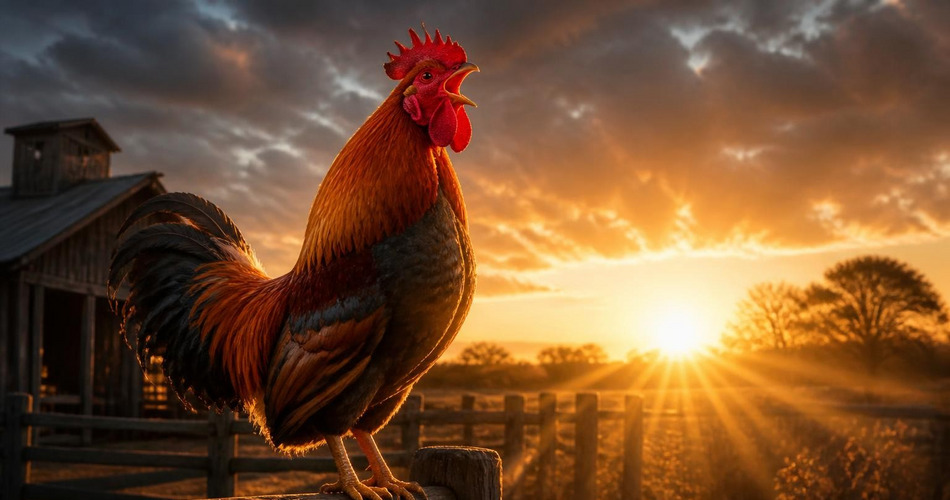
The rooster is a powerful symbol of courage, vigilance, and the triumph of light over darkness. Known for crowing at dawn, it represents the start of a new day, awakening, and alertness. Across many cultures, the rooster is also associated with masculinity, pride, and protection. Its crow is often seen as a call to action or a warning, making it a symbol of both authority and watchfulness.
What Does the Rooster Symbolize?
At its core, the rooster symbolizes dawn and the daily renewal of light. Its crow marks the transition from night to day, linking it to solar symbolism and the concept of rebirth. This makes the rooster a natural emblem of hope, new beginnings, and the cyclical nature of time.
The rooster is also widely recognized as a symbol of courage. In many traditions, the bird is seen as a fighter, willing to defend its territory and flock against threats. This has made it a common emblem in heraldry and military insignia, where it represents bravery and readiness for battle.
Beyond these traits, the rooster stands for vigilance and watchfulness. Its alarm-like crow is a signal of danger or an announcement of the hour, reinforcing its role as a guardian and timekeeper. In Christian symbolism, for instance, the rooster’s crow recalls Peter’s denial of Jesus, serving as a reminder of human fallibility and the need for spiritual awakening.
Positive and Negative Meanings
Positive associations: The rooster is a symbol of courage, protection, punctuality, and vigilance. Its crow at dawn is associated with the promise of a new day and the triumph of light over darkness. In many cultures, it is also considered a bringer of good luck and a guardian against evil spirits.
Negative meanings: The rooster can also represent vanity, pride, and aggression. Its loud crow may be interpreted as arrogance or a desire to dominate. In folklore, the rooster is sometimes linked to betrayal or false promises, primarily due to the biblical story of Peter’s denial, where the rooster’s crow marked the moment of his failure.
History and Origins of Rooster Symbolism
The rooster has been a meaningful symbol for thousands of years. In ancient Persia, the rooster was considered a sacred bird associated with the angel Sraosha, who protected souls and announced the dawn. The crow of the rooster was believed to drive away demons and evil spirits, a belief that later spread into Jewish and Christian traditions.
In Greek and Roman cultures, the rooster was sacred to Apollo, the god of the sun, and to Asclepius, the god of healing. It was also associated with Ares and Mars, the gods of war, due to its combative nature. The rooster’s connection to dawn and the sun made it a symbol of resurrection and new life, themes that would carry into medieval Christian art and architecture, where roosters were often placed atop church steeples as weather vanes and protective symbols.
In China, the rooster has been a significant symbol for centuries. It is one of the 12 animals of the Chinese zodiac, representing fidelity and punctuality because of its reliable crowing. The rooster is also a traditional symbol of yang energy, masculinity, and protection in Chinese culture.
Symbolism in Different Cultures
In Christianity, the rooster is most famously linked to the story of Peter’s denial of Jesus. According to the Gospels, Jesus predicted that Peter would deny him three times before the rooster crowed. This event made the rooster a symbol of repentance, vigilance, and the call to spiritual awakening. Roosters were later placed on church towers as a reminder of this story and as a symbol of the Church’s watchfulness.
In Greek mythology, the rooster was sacred to Apollo and Asclepius. It was said that the rooster’s crow heralded the sun’s return, and thus it became a symbol of the triumph of light over darkness. The philosopher Socrates, in his final moments, asked his followers to sacrifice a rooster to Asclepius, indicating the bird’s connection to healing and the transition from life to death.
In Chinese culture, the rooster is one of the most revered birds. It is considered a symbol of fidelity and punctuality because it crows at the same time every morning. The rooster is also believed to ward off evil spirits, and its image is often used in homes and during festivals for protection. In Chinese astrology, people born in the Year of the Rooster are thought to be confident, hardworking, and observant.
In Japan, the rooster is associated with Amaterasu, the sun goddess. According to Shinto mythology, the rooster’s crow coaxed the goddess out of a cave, bringing light back to the world. This story reinforces the rooster’s role as a herald of dawn and a symbol of courage and renewal.
Spiritual Meaning of the Rooster
Spiritually, the rooster is a messenger of light and a guardian against darkness. Its crow is seen as a call to awaken spiritually, to become more aware of one’s surroundings and one’s inner self. The rooster encourages vigilance in both the physical and spiritual realms.
In many traditions, the rooster’s crow is believed to have protective powers. It is said to drive away demons, evil spirits, and nightmares. This is why roosters were often placed on rooftops and weather vanes — to watch over the household and announce the coming of the sun, which represents divine light and truth.
The rooster also symbolizes the cycle of death and rebirth. Its daily announcement of the sunrise is a reminder that after every period of darkness, there is a new beginning. This makes the rooster a powerful symbol for those seeking transformation or renewal in their lives.
Rooster in Myths and Folklore
In Greek mythology, the rooster was sacred to the gods of the sun and healing. The story of Socrates asking for a rooster sacrifice to Asclepius ties the bird to the concept of healing the soul and the transition to the afterlife.
In Japanese mythology, the rooster’s crow was instrumental in convincing the sun goddess Amaterasu to emerge from a cave, restoring light to the world. This myth emphasizes the rooster’s role as a bringer of light and a symbol of hope.
In European folklore, the rooster’s crow was believed to scare away nocturnal spirits and witches. Many folk tales describe how the rooster’s crow signals the end of the night and the retreat of evil forces. This belief made the rooster a common protective amulet, often placed on barns and houses.
In Celtic folklore, the rooster was associated with the Otherworld and was considered a messenger between the worlds of the living and the dead. Its crow was thought to mark the boundary between night and day, and between this world and the next.
Rooster in Dreams
Dreaming about a rooster can have several meanings. Commonly, a rooster in a dream is a sign of awakening and alertness. It may indicate that the dreamer needs to pay attention to something important or that a new opportunity is on the horizon.
A crowing rooster in a dream can symbolize a call to action, a warning, or a reminder to be more vigilant in waking life. It may also represent pride, confidence, or a desire to be heard.
Common Dream Scenarios
- Hearing a rooster crow: This often symbolizes a need for awakening or a reminder to pay attention to something you have been ignoring.
- A fighting rooster: May represent inner conflict, aggression, or a struggle for dominance in your life.
- A silent rooster: Could indicate a missed opportunity, a lack of courage, or a warning that you are not speaking up when you should.
- A rooster on a roof or high place: Suggests a need for perspective, leadership, or a higher vantage point in a situation.
Rooster in Superstitions and Omens
In many cultures, the rooster is considered a lucky omen. Hearing a rooster crow at dawn is generally seen as a positive sign, heralding a good day ahead. In some traditions, a rooster crowing in the middle of the night was thought to be an omen of death or bad news.
- In European folk belief, a rooster crowing at the door of a house was said to announce the arrival of a stranger or a visitor.
- In some parts of Asia, placing a rooster figurine in the home is believed to bring good luck and protect against evil spirits.
- A rooster crowing when no one is around is sometimes interpreted as a warning of danger or an impending event.
Rooster in Art and Literature
The rooster appears in various works of art and literature. In the medieval French epic The Song of Roland, the rooster is a symbol of French national pride and courage. The rooster later became a national emblem of France, representing vigilance and the fighting spirit of the French people.
In the painting The Cock and the Pearl, by the Dutch artist Jan Steen, the rooster is used as a symbol of vanity and foolishness. The rooster also features in many still-life paintings from the Dutch Golden Age, where it often symbolizes pride or the fleeting nature of life.
In literature, the rooster plays a key role in Geoffrey Chaucer’s The Canterbury Tales, specifically in the “Nun’s Priest’s Tale.” In this comic tale, the rooster Chauntecleer is a proud and clever bird whose dream of a fox leads to a cautionary story about pride and foolishness.
Rooster Tattoo Meaning
A rooster tattoo often symbolizes courage, pride, and a vigilant nature. People choose this design to represent their fighting spirit, their connection to the dawn, or their role as a protector. In some traditions, the rooster is a symbol of luck and is believed to ward off evil, making it a popular choice for those seeking a protective talisman.
Rooster tattoos can also represent punctuality, reliability, and a hardworking character. For those born in the Year of the Rooster in the Chinese zodiac, the tattoo may serve as a personal emblem of their inherent traits, such as confidence and loyalty.
Meanings of Different Rooster Colors
- Red rooster: Often associated with passion, energy, and the sun. Red roosters are seen as symbols of vitality and strength.
- White rooster: Represents purity, spiritual awakening, and good fortune. In some cultures, a white rooster is considered a particularly auspicious omen.
- Black rooster: Can symbolize mystery, the unknown, or protection against dark forces. In some traditions, black roosters are used in rituals to ward off evil spirits.
- Golden rooster: Associated with wealth, prestige, and the sun’s life-giving energy. It is a symbol of success and prosperity.
Frequently Asked Questions
Q: What does a rooster symbolize?
A: A rooster typically symbolizes courage, vigilance, dawn, awakening, pride, and protection. It is also a symbol of masculinity and the triumph of light over darkness.
Q: Is a rooster a good luck symbol?
A: Yes, in many cultures the rooster is considered a good luck charm, believed to bring protection, prosperity, and positive energy. Its crow is seen as a sign of a new beginning.
Q: What does it mean when a rooster crows?
A: The rooster’s crow typically marks the dawn, but it can also be a call to attention or a warning. In spiritual contexts, it is often seen as a reminder to stay alert and awaken to your surroundings.
Q: Why is the rooster a symbol of France?
A: The rooster (le coq gaulois) became a symbol of France because of its association with the Latin word for Gaul (gallus), which also means rooster. It represents the courage, vigilance, and fighting spirit of the French people.
Q: What does the rooster represent in the Chinese zodiac?
A: In the Chinese zodiac, the Rooster is one of the 12 animal signs. People born in the Year of the Rooster are thought to be confident, hardworking, punctual, and observant.
Related Symbols
- Sun – The rooster is closely linked to solar symbolism as the herald of dawn.
- Crow – Both birds are associated with signaling and awakening, though the crow has different connotations in various cultures.
- Phoenix – Like the rooster, the phoenix is a symbol of rebirth and renewal, often connected to the sun.
- Lion – In heraldry, the lion and rooster both represent courage and strength.
- Weather vane – The rooster atop weather vanes is a practical and symbolic guardian of homes and churches.