Briefly
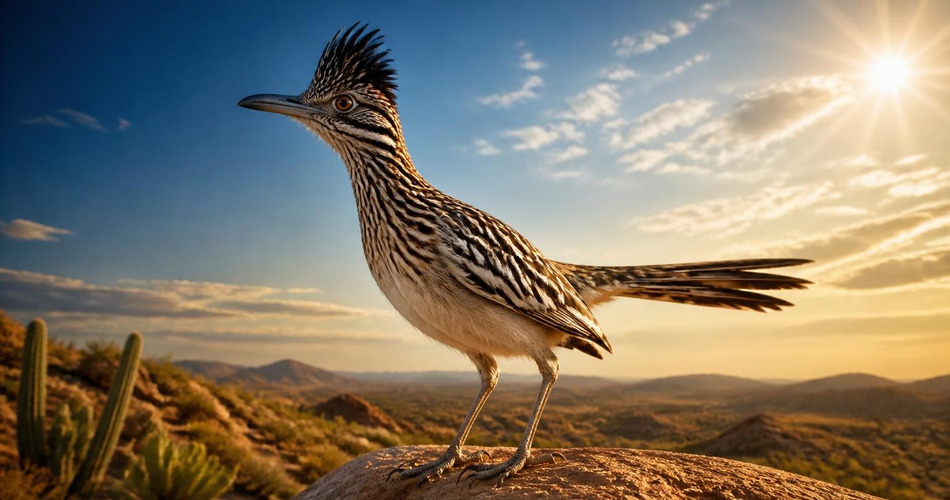
The roadrunner is a bird that symbolizes speed, agility, and resourcefulness. Known for its distinctive appearance and rapid running ability, it represents the ability to navigate challenges with quick thinking and determination. In various cultures, the roadrunner is also seen as a symbol of protection, cunning, and resilience, often associated with the desert landscapes of the southwestern United States and Mexico.
What Does the Roadrunner Symbolize?
The roadrunner embodies several key symbolic meanings, most notably speed and agility. As a bird that primarily runs rather than flies, it represents swift movement and the ability to escape danger or pursue goals with efficiency. Its long legs and streamlined body allow it to reach speeds of up to 20 miles per hour, making it a natural emblem of quick action and adaptability.
Beyond physical speed, the roadrunner symbolizes cunning and resourcefulness. In the wild, it is known for its clever hunting techniques, such as using its speed to catch lizards, snakes, and insects, and even killing rattlesnakes by striking them repeatedly on the head. This behavior has led to associations with intelligence, strategy, and the ability to overcome formidable obstacles.
The roadrunner also represents protection and resilience. Its natural habitat in arid deserts and scrublands requires it to endure extreme temperatures and scarce resources, symbolizing survival against the odds. In some traditions, the bird is considered a guardian against evil spirits or negative influences, reflecting its role as a tenacious survivor.
Positive and Negative Meanings
Positive associations: The roadrunner is widely regarded as a positive symbol of speed, cleverness, and adaptability. It encourages quick thinking, decisive action, and the ability to navigate life’s challenges with grace. Its association with protection and resilience makes it a symbol of hope and perseverance, especially in difficult environments.
Negative meanings: In some contexts, the roadrunner’s cunning can be interpreted as trickery or deceit, especially in folklore where it outsmarts larger animals. Its solitary nature may also symbolize isolation or a tendency to avoid social bonds. Additionally, its reliance on speed can be seen as a warning against impatience or hasty decisions without careful consideration.
History and Origins of the Symbolism
The roadrunner’s symbolic roots are deeply tied to the indigenous cultures of the American Southwest and Mexico. Among Native American tribes such as the Pueblo, Hopi, and Navajo, the roadrunner was revered as a powerful spiritual figure. The bird’s ability to outrun snakes, particularly rattlesnakes, made it a symbol of protection against danger and evil. In Pueblo mythology, the roadrunner was often associated with the sun and was believed to bring good fortune.
In Mexican folklore, the roadrunner is known as the paisano or correcaminos, and it appears in stories as a clever trickster figure. Its habit of crossing paths with travelers led to the belief that it could guide lost souls or warn of impending danger. The bird’s distinctive X-shaped footprints were thought to confuse evil spirits, preventing them from following a person’s trail. This belief contributed to the roadrunner’s reputation as a protective symbol in Mexican culture.
In modern times, the roadrunner gained widespread recognition through the animated character from the Looney Tunes series, where it outwits the coyote. While this portrayal is humorous, it echoes the bird’s traditional association with cunning and speed, reinforcing its symbolic identity in popular culture.
Symbolism in Different Cultures
In Native American cultures, the roadrunner is a sacred bird with multiple symbolic meanings. Among the Hopi, it is considered a rain-bringer and a symbol of fertility, as its appearance often coincided with the rainy season. The Pueblo people used roadrunner feathers in ceremonial headdresses and prayer sticks, believing they carried protective and healing powers. The Navajo viewed the roadrunner as a guardian against witchcraft and evil spirits, often incorporating its image into sand paintings and rituals.
In Mexican culture, the roadrunner is a folk symbol of protection and guidance. Its footprints, which form an X-shape, were thought to represent the cross and were used as a charm to ward off evil. Travelers in rural areas would look for roadrunner tracks as a sign of safe passage. The bird’s association with the desert also connects it to endurance and survival in harsh conditions.
In contemporary Western culture, the roadrunner is often seen as a symbol of speed and determination. Its image is used in sports teams, logos, and branding to convey agility and competitive spirit. The Looney Tunes character has further cemented the roadrunner as a symbol of cleverness and victory against larger adversaries.
Spiritual Meaning
Spiritually, the roadrunner is considered a totem animal representing speed, agility, and mental clarity. Those who resonate with the roadrunner are believed to possess quick thinking and the ability to make rapid decisions in times of crisis. The bird encourages individuals to trust their instincts and act swiftly when opportunities or dangers arise.
The roadrunner also symbolizes protection on a spiritual level. Its presence is thought to ward off negative energies and provide a shield against harm. In shamanic traditions, the roadrunner is a messenger that helps people navigate the spiritual realm with speed and precision, guiding them toward their goals without unnecessary delays.
Additionally, the roadrunner represents resilience and adaptability. Its ability to thrive in the desert teaches the importance of conserving energy and resources while remaining flexible in changing circumstances. Spiritually, it reminds individuals to stay grounded and focused, even in challenging environments.
In Myths and Folklore
In Native American mythology, the roadrunner appears in several creation stories and legends. Among the Pueblo tribes, the roadrunner was believed to have been created by the sun god to protect the people from snakes and other dangers. The bird’s swift movements were seen as a reflection of the sun’s rays, and its feathers were used in ceremonies to invoke the sun’s power.
In Mexican folklore, the roadrunner is a trickster figure similar to the coyote or rabbit in other traditions. Stories depict the roadrunner using its intelligence to outsmart larger animals, such as rattlesnakes and coyotes. One common tale tells of the roadrunner luring a rattlesnake into a cactus patch, where the snake becomes entangled and is easily defeated. These stories emphasize the roadrunner’s cunning and resourcefulness.
In some legends, the roadrunner is also a symbol of good luck. Crossing a roadrunner’s path was considered a positive omen, and its call was believed to announce the arrival of rain or good news. The bird’s X-shaped footprints were used as a protective symbol in homes and on clothing to guard against evil spirits.
In Dreams
Dreaming of a roadrunner often symbolizes speed and urgency in waking life. The dream may indicate that the dreamer needs to act quickly to seize an opportunity or avoid a threat. It can also represent a desire for freedom and the ability to move through life with agility and grace.
A roadrunner in a dream may also be a sign of cunning or cleverness. The dreamer may be encouraged to use their intelligence to solve a problem or outsmart an opponent. Alternatively, the roadrunner’s solitary nature could suggest a need for independence or time alone to reflect.
Common Dream Scenarios
- Seeing a roadrunner running: This scenario often indicates that the dreamer is moving quickly toward a goal or needs to speed up their efforts to achieve success.
- A roadrunner crossing your path: This can symbolize an unexpected opportunity or a warning to pay attention to your surroundings.
- Chasing a roadrunner: This may reflect a pursuit of a goal that feels elusive or requires quick thinking to attain.
- A roadrunner fighting a snake: This dream often represents overcoming a major obstacle or defeating a hidden enemy through cleverness and determination.
In Superstitions and Omens
In the American Southwest and Mexico, the roadrunner is surrounded by several superstitions and omens. Seeing a roadrunner is generally considered a good omen, especially if it crosses your path from left to right. This was believed to bring good luck and protection from harm.
Some superstitions hold that the roadrunner’s call can predict the weather. A loud, frequent call was thought to signal rain, while a silent roadrunner might indicate drought. In rural communities, the bird’s behavior was observed as a natural barometer for upcoming changes.
Another common belief is that roadrunner feathers or footprints can be used as protective charms. Placing a roadrunner feather above a doorway was thought to keep evil spirits out, and carrying a small pouch with roadrunner footprints was believed to ensure safe travel.
In Art and Literature
The roadrunner appears most famously in the Looney Tunes animated series, where the character is a fast, clever bird that constantly outwits the coyote. This portrayal has made the roadrunner a cultural icon of speed and intelligence. The cartoon, created by Chuck Jones, first aired in 1949 and has since become a staple of American animation, reinforcing the bird’s symbolic associations in popular culture.
In literature, the roadrunner is often used as a symbol of the American Southwest. In works such as Edward Abbey’s Desert Solitaire, the bird represents the wild, untamed spirit of the desert. Its presence in the landscape serves as a reminder of resilience and adaptability in harsh environments.
In Native American art, the roadrunner is a common motif in pottery, weaving, and jewelry. Its image is used to convey protection, speed, and connection to the earth. Contemporary artists in the Southwest continue to incorporate the roadrunner into their work, celebrating its cultural and symbolic significance.
Frequently Asked Questions
Q: What does a roadrunner symbolize?
A: The roadrunner symbolizes speed, agility, cunning, protection, and resilience, often representing quick thinking and the ability to overcome obstacles.
Q: Is a roadrunner a good omen?
A: Yes, in many cultures, seeing a roadrunner is considered a good omen, bringing protection, good luck, and guidance.
Q: What does it mean if a roadrunner crosses your path?
A: It is often interpreted as a sign of upcoming opportunities or a warning to pay attention to your surroundings and act quickly.
Q: What is the spiritual meaning of a roadrunner?
A: Spiritually, the roadrunner represents mental clarity, quick decision-making, protection from negative energies, and resilience in challenging times.
Q: Are roadrunner feathers used in rituals?
A: Yes, in Native American traditions, roadrunner feathers are used in ceremonies for protection, healing, and invoking the sun’s power.
Related Symbols
- Coyote – Often depicted as a trickster and adversary to the roadrunner in folklore and popular culture.
- Rattlesnake – A natural enemy of the roadrunner, symbolizing danger and the obstacles the roadrunner overcomes.
- Desert – The roadrunner’s habitat, symbolizing endurance, survival, and harsh conditions.
- Sun – Associated with the roadrunner in Pueblo mythology, representing life, energy, and protection.
- Arrow – A symbol of speed and direction, similar to the roadrunner’s swift movement and purposeful action.