Briefly
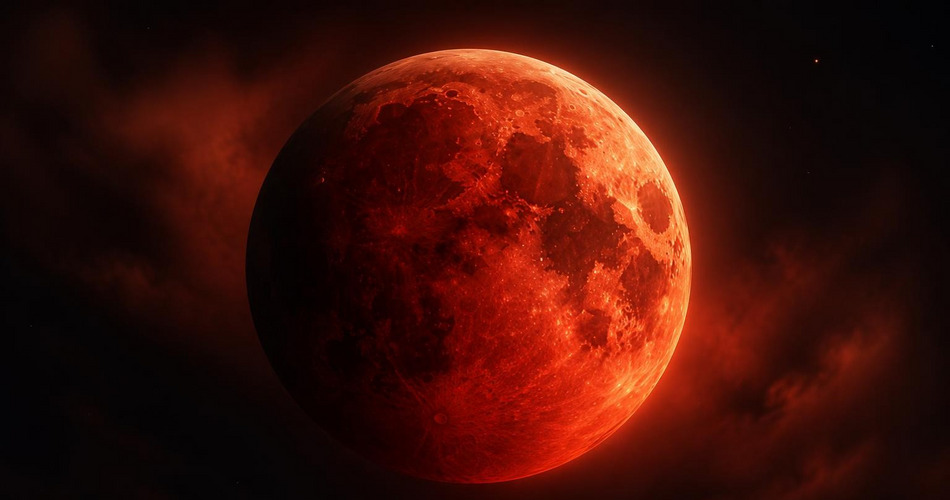
A Blood Moon is a striking astronomical phenomenon that occurs during a total lunar eclipse, when the Moon passes through Earth’s shadow and takes on a reddish hue due to sunlight scattering through the atmosphere. This visual transformation has long captured human attention, often being interpreted as a powerful symbol of change, upheaval, or spiritual awakening. Across cultures and history, the Blood Moon has been seen as both a harbinger of significant events and a moment of deep reflection on cycles of death and rebirth.
What Does the Blood Moon Symbolize?
The Blood Moon primarily symbolizes transformation—a dramatic shift from the familiar bright lunar glow to an eerie, red-tinted orb. This change represents endings and new beginnings, much like the cycle of the Moon itself. In many traditions, the red color is associated with life force, blood, and vitality, but also with danger, warning, and the thinning of boundaries between the physical and spiritual worlds. The Blood Moon is often viewed as a time of heightened energy when hidden truths may come to light and significant personal or collective change is imminent.
Positive and Negative Meanings
Positive associations: The Blood Moon can symbolize a powerful opportunity for renewal and personal growth. Its rarity and dramatic appearance encourage introspection, letting go of the old, and embracing new phases. It is seen as a time of deep spiritual connection, emotional release, and the manifestation of long-held intentions.
Negative meanings: Historically, the Blood Moon has also been linked to omens of disaster, war, or upheaval. Its unsettling color and association with darkness have made it a symbol of fear, impending doom, and the collapse of established order. In some beliefs, it marks a time when malevolent forces are more active.
History and Origins of the Blood Moon Symbolism
The term «Blood Moon» entered popular use relatively recently, but the phenomenon has been observed and recorded for millennia. Ancient astronomers recognized that a total lunar eclipse could produce a red Moon, though the scientific explanation—Rayleigh scattering of sunlight through Earth’s atmosphere—was only understood much later. In many early cultures, the sudden reddening of the Moon was interpreted as a portent. For instance, in the Old Testament book of Joel, the phrase «the moon shall be turned to blood» appears as a sign of the Day of the Lord, a theme later echoed in the New Testament’s Book of Revelation. This biblical association reinforced the Blood Moon as a symbol of divine judgment and apocalyptic events.
Blood Moon Symbolism in Different Cultures
In various Indigenous cultures of the Americas, a red Moon during an eclipse was often seen as a sign that the Moon was sick or wounded, and ceremonies were performed to aid its recovery. The Inca believed that a lunar eclipse was caused by a jaguar attacking the Moon, and they would shout and shake spears to drive the beast away. In some Hindu traditions, the blood-red Moon is associated with the demon Rahu, who is said to swallow the Moon during an eclipse, causing it to turn dark or red. People often chant mantras and perform rituals for protection. In Chinese folklore, a lunar eclipse was thought to be caused by a celestial dragon devouring the Moon, and people would beat drums to scare it away.
Spiritual Meaning of the Blood Moon
In contemporary spiritual and New Age contexts, the Blood Moon is regarded as a potent time for ritual and manifestation. Its energy is considered intense and transformative, ideal for releasing old patterns, setting powerful intentions, and connecting with deeper aspects of the self. The red color links it to the root chakra, grounding energy, survival instincts, and primal passions. Many practitioners see a Blood Moon as a direct invitation to face fears and embrace personal power.
Blood Moon in Myths and Folklore
One of the most enduring myths is the association of the Blood Moon with werewolves, a connection popularized by horror films and fiction. Though not found in ancient folklore, this modern myth plays on the idea of the full Moon triggering transformation, intensified by the blood-red coloration. In Norse mythology, it was believed that during a lunar eclipse, the Moon was being chased by wolves—Skoll and Hati—and the red color came from the blood of their prey. In many European peasant traditions, a Blood Moon was a bad omen for crops and livestock, foreshadowing famine or harsh winters.
Blood Moon in Dreams
Dreaming of a Blood Moon is often interpreted as a sign of major life transitions or emotional turmoil. The dream may reflect subconscious fears about change, loss, or hidden aspects of the self coming to the surface. It can also indicate a period of intense emotional release and the need to confront unresolved issues. Because the Moon in dreams is often linked to the feminine, intuition, and the unconscious, a Blood Moon can symbolize a powerful awakening of these inner forces.
Common Blood Moon Dream Scenarios
- Seeing a Blood Moon rise: Symbolizes the beginning of a transformative period or the emergence of a hidden truth.
- A Blood Moon with a strange color: May represent confusion or a distorted perception of reality, urging self-reflection.
- The Blood Moon is eclipsed or dark: Often signifies suppressed emotions or a feeling of being overwhelmed by change.
- Standing under a Blood Moon: Can indicate a sense of being at the center of significant change or a call to embrace one’s destiny.
- A Blood Moon turning normal again: Suggests resolution of a crisis or the return of emotional balance after a period of upheaval.
Blood Moon in Superstitions and Omens
Throughout history, the Blood Moon has been a potent omen in many cultures. It was often believed to foreshadow war, famine, or the death of a ruler. In some agricultural traditions, a Blood Moon was thought to affect planting and harvesting, being either a sign of fertile times or a warning of crop failure. Modern superstitions sometimes associate it with increased paranormal activity or a time when wishes made are more likely to manifest. However, these beliefs vary widely and are not universal.
Blood Moon in Art and Literature
The Blood Moon has appeared in literature and film as a powerful visual and thematic device. In Stephen King’s novel The Cycle of the Werewolf (and its film adaptation Silver Bullet), the Blood Moon marks the transformation of the werewolf. In the 2013 film Blood Moon, the phenomenon sets the stage for a supernatural horror story. The imagery is also used in poetry to evoke a sense of dread, mystery, or the sublime. For example, the Blood Moon appears in the works of poets like Sylvia Plath, where it symbolizes emotional intensity and the darker aspects of the psyche.
Frequently Asked Questions
Q: Is a Blood Moon always a total lunar eclipse?
A: Yes, the term «Blood Moon» specifically refers to the reddish appearance of the Moon during a total lunar eclipse, when sunlight is refracted through Earth’s atmosphere.
Q: How often do Blood Moons occur?
A: Blood Moons occur during total lunar eclipses, which happen about twice a year, though they may not be visible from every location on Earth.
Q: Does a Blood Moon have any proven effect on human behavior?
A: No, there is no scientific evidence that a Blood Moon or any lunar eclipse directly affects human behavior, though it may influence mood or perception due to its dramatic appearance and cultural associations.
Related Symbols
- Eclipse — A broader symbol of temporary darkness, hidden truths, and the cyclical nature of existence.
- Red Moon — Often used interchangeably with Blood Moon, but can also refer to a Moon that appears red due to atmospheric conditions or wildfires.
- Lunar Eclipse — The astronomical event that causes the Blood Moon, symbolizing the interplay between light and shadow.
- Harvest Moon — The full Moon closest to the autumnal equinox, associated with abundance and completion.
- Wolf Moon — The January full Moon, often linked to howling and the wild, sharing a connection to transformation and primal instincts.