Briefly
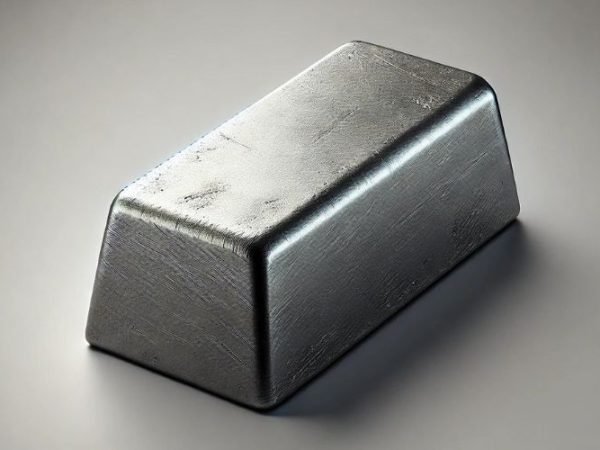
Lead metal carries a rich symbolic weight that spans from its physical properties to its role in alchemy and mythology. Known for its density and malleability, lead represents the base, unrefined state of matter—the prima materia—that holds the potential for profound transformation. At the same time, its toxicity and heaviness evoke themes of stagnation, melancholy, and limitation. In protective contexts, lead’s ability to block radiation has made it a symbol of shielding and defense. Across cultures, lead is tied to the planet Saturn, the god of time and harvest, reinforcing associations with patience, endurance, and the slow but inevitable processes of change.
What Does Lead Metal Symbolize?
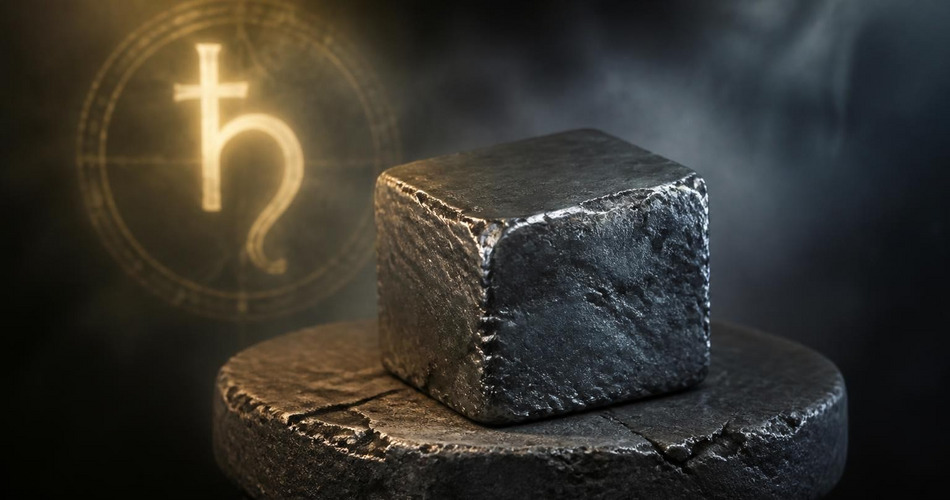
Lead metal is primarily a symbol of the prima materia—the raw, unformed substance that alchemists believed was the starting point of all transformation. Its dark, dull appearance and heaviness make it an emblem of the physical world, the material realm, and the limitations of earthly existence. In alchemy, lead is the metal of Saturn, representing the slow, grinding passage of time, discipline, and the necessity of enduring hardship to achieve spiritual gold.
Beyond alchemy, lead symbolizes protection. Its use in radiation shielding and as a barrier against harmful forces has given it a meaning of safety and defense. In a psychological sense, lead can represent emotional or mental heaviness—a burden that must be carried or transformed. It also stands for stability and grounding, as its weight anchors objects and prevents movement.
Positive and Negative Meanings of Lead
Positive associations: Lead is seen as a protective metal, capable of blocking harmful radiation and providing a safe barrier. In alchemy, it holds the promise of transformation—the potential to turn the base into the precious. Its stability and density make it useful for anchoring and balancing, symbolizing endurance, patience, and the strength to withstand pressure. Lead also represents the foundation upon which higher states can be built, much like the base metal that must be purified before becoming gold.
Negative meanings: Lead’s toxicity and association with poisoning give it a dark side. It symbolizes stagnation, inertia, and the weight of depression or melancholy—the “saturnine” temperament. In a spiritual context, lead can represent the ego’s resistance to change, the heavy burden of materialism, or a state of spiritual deadness. Its dullness and lack of luster are often linked to ignorance or a lack of enlightenment.
History and Origins of Lead Symbolism
The symbolic meaning of lead is deeply rooted in ancient alchemy and astrology. In Hellenistic and medieval alchemy, lead was considered the oldest and most base of the seven classical metals, corresponding to the planet Saturn. Alchemists sought to transmute lead into gold, a process that symbolized the purification of the soul. The term “lead” itself comes from the Old English “lead,” but the Latin “plumbum” gives us the word “plumbing,” reflecting its ancient use in water pipes.
In ancient Rome, lead was widely used for aqueducts and pipes, but its toxic effects were not fully understood. This practical use contributed to its symbolism of utility and infrastructure, but also of hidden danger. During the Renaissance, alchemical texts such as the “Emerald Tablet” described lead as the starting material for the Great Work. The association with Saturn, the slowest-moving planet, reinforced ideas of time, patience, and the inevitability of decay and renewal.
Lead Symbolism in Different Cultures
In Western alchemical tradition, lead is unequivocally the metal of Saturn. It represents the beginning of the alchemical process—the stage of nigredo, or blackening, where the material must be broken down before it can be renewed. This symbolism extends to astrology, where people born under Saturn’s influence are said to be serious, disciplined, and sometimes melancholic.
In Chinese alchemy and Taoist philosophy, lead (铅, qiān) also appears as a key ingredient in the quest for immortality. It is often paired with mercury (汞, gǒng) as the two opposing principles that must be harmonized. Lead represents the heavy, yin aspect—the physical body or the earthly self—while mercury symbolizes the light, yang spirit. The union of lead and mercury was believed to produce the elixir of life.
In Hindu mythology, lead is associated with the planet Shani (Saturn), a deity who dispenses justice and karma. Shani’s influence is feared because it brings hardship and delay, but also eventual reward for patience. Lead’s dark color and weight align with Shani’s stern, slow-moving nature.
Spiritual Meaning of Lead
Spiritually, lead represents the densest, most material aspect of existence. It is the “shadow” self—the parts of the psyche that are heavy, unrefined, and in need of transformation. In alchemical spirituality, working with lead means confronting one’s own baseness, limitations, and fears. The process of transmuting lead into gold is a metaphor for spiritual enlightenment, where the practitioner must endure a period of darkness and dissolution before achieving higher consciousness.
Lead also teaches patience. Its slow, unglamorous nature reminds seekers that spiritual growth is often gradual and requires sustained effort. In meditation, visualizing lead can help ground an overactive mind, bringing a sense of stability and presence. However, too much lead energy can lead to rigidity or depression, so balance is essential.
Lead in Myths and Folklore
In Greek and Roman mythology, lead is linked to Cronus (Saturn), the Titan who devoured his children to prevent being overthrown. Cronus was associated with the harvest and the passage of time, and his metal, lead, reflects the slow, inexorable nature of time. In some myths, lead was used to weigh down the souls of the dead in the underworld, or as a material for the chains that bound Prometheus.
In European folklore, lead was sometimes used in protective charms against evil spirits. A piece of lead inscribed with symbols was believed to ward off witchcraft. Conversely, lead was also associated with curses, as its heavy, toxic nature could be used to bring misfortune. The phrase “to have a leaden heart” describes a person who is emotionally numb or weighed down by sorrow.
Frequently Asked Questions
Q: What does lead symbolize in alchemy?
A: In alchemy, lead symbolizes the prima materia—the raw, unrefined starting material that must undergo transformation. It represents the base state of matter and spirit, associated with Saturn, and is the first stage of the alchemical process known as nigredo (blackening).
Q: Is lead a protective symbol?
A: Yes, lead is often seen as a protective metal due to its ability to block radiation and its historical use in shielding. In a symbolic sense, it represents a barrier against harmful influences, both physical and spiritual.
Q: Why is lead associated with melancholy?
A: The association comes from the ancient concept of the four temperaments, where the saturnine temperament (ruled by the planet Saturn) was considered cold, dry, and melancholic. Lead, as Saturn’s metal, inherited this quality, symbolizing heaviness, depression, and a slow, brooding nature.
Related Symbols
- Saturn – the planet and god associated with lead, time, and discipline
- Gold – the goal of alchemical transformation, the opposite of lead
- Mercury – the volatile partner of lead in alchemy, representing spirit
- Iron – another base metal, symbolizing strength and war
- Tin – associated with Jupiter, often contrasted with lead’s Saturnine nature
- Prima Materia – the alchemical concept of the original substance, often symbolized by lead