Briefly
Jade is a gemstone that has been revered for thousands of years, particularly in Chinese, Mesoamerican, and Maori cultures, for its beauty and profound symbolic meanings. It represents purity, wisdom, protection, and harmony, and is often associated with the virtues of a noble person. Beyond its aesthetic appeal, jade is considered a stone of balance and a powerful talisman for good fortune and longevity.
What Does Jade Symbolize?
Jade is primarily a symbol of purity and moral integrity. In Chinese philosophy, it embodies the five cardinal virtues: charity, rectitude, modesty, courage, and wisdom. The gemstone is also a symbol of status and wealth, often reserved for emperors and the elite. Across cultures, jade represents protection, healing, and harmony, acting as a bridge between the physical and spiritual worlds.
Positive and Negative Meanings
Positive associations: Jade is overwhelmingly associated with positive qualities. It is believed to attract good luck, prosperity, and love. As a protective stone, it shields the wearer from harm and negative energies. In many traditions, jade promotes wisdom, clarity, and emotional balance, making it a stone of serenity and inner peace.
Negative meanings: While rare, jade can sometimes be linked to materialism or obsession when its value is overemphasized. In some contexts, the stone’s association with wealth and status might lead to greed or vanity. However, these negative connotations are not inherent to jade itself but arise from human attachment to its material worth.
History and Origins of Jade Symbolism
Jade has been used by humans since the Neolithic period. The earliest known jade artifacts come from China, where the stone was carved into ritual objects and ornaments as early as 6000 BCE. The Chinese word for jade, yu, appears in ancient texts and is synonymous with preciousness and virtue. In Mesoamerica, the Olmec civilization (1500–400 BCE) prized jade for ceremonial tools and jewelry, a tradition continued by the Maya and Aztec. The Maori of New Zealand also revered pounamu (greenstone), a type of jade, using it for tools, weapons, and heirlooms. Across these cultures, jade’s durability and beauty made it a symbol of eternity and the divine.
Jade Symbolism in Different Cultures
Chinese culture: Jade is deeply embedded in Chinese civilization. It is considered the “stone of heaven” and is associated with Confucian virtues. Jade amulets are worn for protection, and jade burial suits were believed to preserve the body in the afterlife. The Jade Emperor, the supreme deity in Taoist mythology, further cements the stone’s celestial importance.
Mesoamerican cultures: For the Maya and Aztec, jade was more valuable than gold. It symbolized power, fertility, and the connection to the gods. Jade objects were placed in tombs to accompany the deceased into the afterlife and were used in rituals to ensure agricultural abundance.
Maori culture: In New Zealand, pounamu (greenstone jade) is a taonga (treasure) with deep spiritual significance. It is used in carvings and jewelry, often passed down through generations as a symbol of ancestry and mana (spiritual power).
Spiritual Meaning of Jade
Spiritually, jade is a stone of wisdom and balance. It is believed to calm the mind and foster a sense of inner peace. Many use jade during meditation to connect with higher consciousness and to ground themselves. The stone is also thought to protect the soul from negative influences and to promote emotional healing. In crystal healing traditions, jade is associated with the heart chakra, encouraging love and compassion.
Jade in Myths and Folklore
In Chinese mythology, the Jade Emperor (Yu Huang) rules over heaven and earth, embodying the ultimate authority and virtue. The stone itself is often featured in folk tales as a gift from the gods or as a test of character. One famous story tells of a poor boy who finds a piece of jade and, through his honesty, becomes a great ruler. In Mesoamerican myths, jade was thought to be the solidified tears of the gods or the essence of the earth. The Maori legend of Poutini, a taniwha (water spirit), explains the origin of pounamu, which is considered a protective stone against evil spirits.
Jade in Dreams
Dreaming of jade often carries positive connotations. It may represent a desire for purity, wisdom, or protection in one’s life. The context of the dream can provide deeper insight.
Common Dream Scenarios
- Finding jade: Symbolizes discovering inner wisdom or a new opportunity.
- Wearing jade jewelry: Indicates a need for protection or a connection to one’s heritage.
- Breaking jade: May signify a loss of innocence or a warning against materialism.
- Receiving jade as a gift: Represents love, respect, or a blessing from others.
Jade in Superstitions and Omens
Jade is widely regarded as a lucky stone. In Chinese culture, it is believed to ward off evil spirits and bring good fortune. Many people wear jade bracelets or pendants as protective talismans. It is also common to give jade as a gift for weddings, births, and New Year celebrations to symbolize prosperity and harmony. In some traditions, if a jade piece cracks or breaks, it is thought to have absorbed a negative energy meant for the wearer, thus serving as a protective sacrifice.
Jade in Art and Literature
Jade has been a central motif in Chinese art and literature for centuries. In the classic novel Dream of the Red Chamber by Cao Xueqin, the protagonist is born with a piece of jade in his mouth, which becomes a symbol of his destiny and the novel’s themes of love and loss. Ancient Chinese poetry, such as the Shi Jing (Book of Odes), frequently uses jade as a metaphor for beauty and virtue. Confucius himself compared the qualities of a gentleman to jade, praising its hardness, luster, and resonance. In Mesoamerican art, jade was carved into intricate figurines, masks, and jewelry, many of which survive today as testaments to the stone’s cultural importance.
Jade Tattoo Meaning
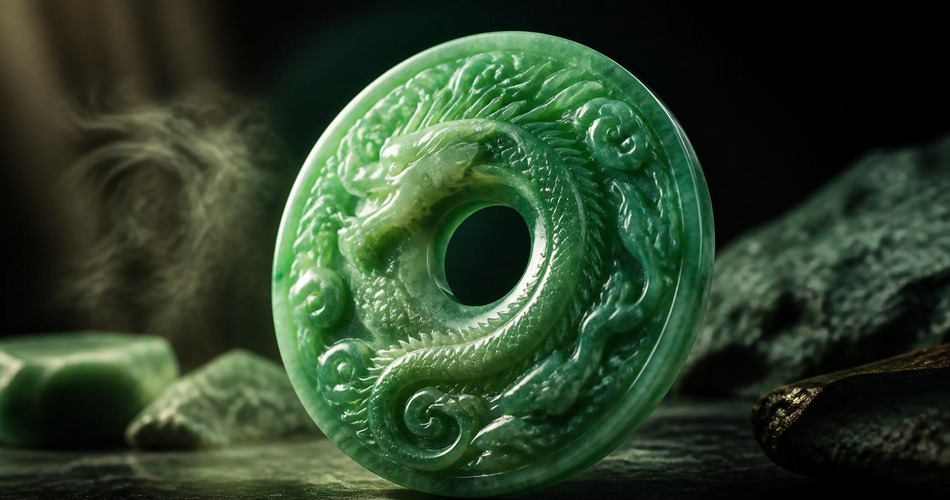
Jade tattoos are relatively uncommon but carry deep symbolism for those who choose them. A jade tattoo can represent a connection to Chinese heritage, a commitment to wisdom and balance, or a desire for protection. The green color of jade is often associated with growth and renewal, making it a popular choice for tattoos that signify personal transformation. Some people ink jade carvings, such as dragons or flowers, to combine the stone’s symbolism with other meaningful motifs.
Meanings of Different Types of Jade
Jade comes in two main mineral forms: nephrite and jadeite. Nephrite, typically green or white, has been used in China for millennia and symbolizes purity and simplicity. Jadeite, which can be green, lavender, red, or yellow, is rarer and often associated with wealth and status. The most prized jadeite is “imperial jade,” a vivid emerald green that symbolizes prosperity and high social standing. In Chinese culture, the color of jade also carries meaning: green jade represents harmony and growth, white jade symbolizes purity and wisdom, and lavender jade is linked to spirituality and love.
Frequently Asked Questions
Q: What does jade symbolize in Chinese culture?
A: In Chinese culture, jade symbolizes purity, wisdom, protection, and the five Confucian virtues. It is considered a stone of heaven and a symbol of nobility.
Q: Is jade considered a lucky stone?
A: Yes, jade is widely believed to bring good luck, protect against evil, and promote health and harmony.
Q: What is the difference between nephrite and jadeite symbolism?
A: Nephrite is associated with ancient traditions and symbolizes purity and simplicity, while jadeite, especially imperial jade, represents wealth, status, and prosperity.
Q: Can jade be used in meditation?
A: Yes, jade is often used in meditation to promote wisdom, balance, and a connection to higher consciousness.
Related Symbols
- Dragon: Often paired with jade in Chinese art to symbolize power and protection.
- Phoenix: Represents rebirth and is sometimes carved in jade.
- Lotus: Symbol of purity, often combined with jade in jewelry.
- Gold: Like jade, a symbol of wealth and status.
- Pearl: Another gemstone associated with purity and wisdom.