Briefly
The mule, a hybrid offspring of a male donkey and a female horse, symbolizes strength, endurance, and hard work. It represents the blending of two different natures, combining the horse’s speed and spirit with the donkey’s sure-footedness and resilience. Often associated with stubbornness, the mule also embodies determination and practicality, making it a symbol of reliable labor and humble service.
What Does the Mule Symbolize?
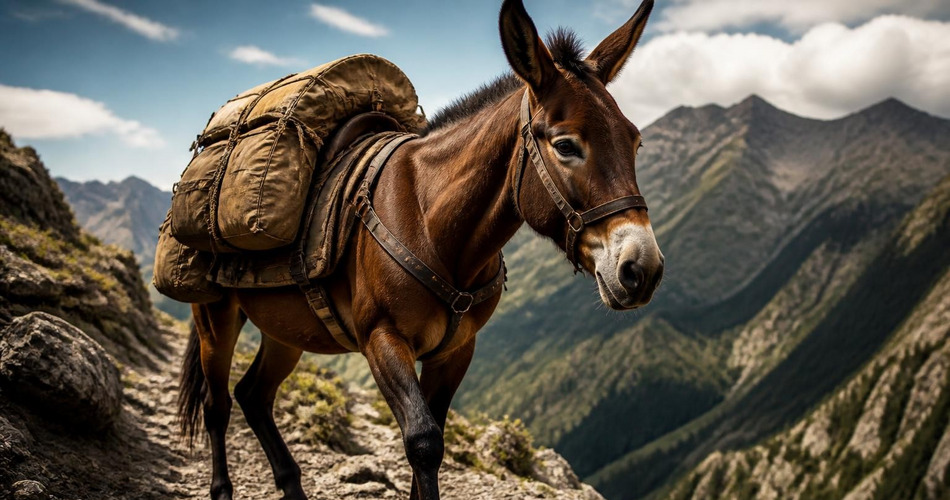
The mule is a powerful symbol of endurance and perseverance. Its ability to carry heavy loads over difficult terrain makes it an emblem of hard work and reliability. As a hybrid, the mule also represents the union of opposites—the horse’s grace and the donkey’s steadiness—symbolizing balance and adaptability. In many cultures, the mule is seen as a humble, patient worker, valued for its strength without the need for praise or recognition. Additionally, the mule’s notorious stubbornness is often interpreted as a symbol of determination and unwavering will, a refusal to be forced into action without proper cause.
Positive and Negative Meanings
Positive associations: The mule is admired for its incredible stamina, sure-footedness, and ability to thrive in harsh conditions. It symbolizes loyalty, reliability, and the quiet strength of those who labor without complaint. In agricultural and transport contexts, the mule represents productivity and the value of steady, consistent effort.
Negative meanings: The mule is also associated with stubbornness, obstinacy, and a refusal to cooperate. Its hybrid nature can symbolize sterility or incompleteness, as mules are typically infertile. In some contexts, the mule represents a lack of originality or a sense of being caught between two worlds, unable to fully belong to either.
History and Origins of Mule Symbolism
Mules have been bred for thousands of years, with evidence of their use dating back to ancient Mesopotamia and Egypt. They were highly valued in the Roman Empire for their strength and endurance in military campaigns and agriculture. In many historical societies, the mule was a symbol of practical wealth—a reliable asset for farmers and traders. The mule’s symbolism as a hardworking, unglamorous beast of burden emerged from its essential role in pre-industrial transport and farming. Over time, the mule became a metaphor for the working class, representing those who carry the weight of society without recognition.
Mule Symbolism in Different Cultures
In Greek mythology, mules were associated with the god Dionysus, who was sometimes depicted riding a mule, symbolizing the blending of wild and tame natures. In Chinese culture, the mule is less common but appears in folklore as a symbol of stubbornness and practicality. In American frontier history, mules were essential for transporting goods across rugged terrain, and they became symbols of pioneer endurance and resourcefulness. In Mediterranean cultures, the mule is often seen as a humble, hardworking animal, respected for its ability to navigate rocky hillsides and carry heavy loads. The mule’s hybrid status also gives it a unique place in cultures that value purity of bloodlines, sometimes leading to negative connotations of being impure or unnatural.
Spiritual Meaning of the Mule
Spiritually, the mule represents the integration of dualities—the ability to combine different strengths to create a balanced whole. It encourages patience, persistence, and the wisdom to know when to stand firm. The mule’s sure-footedness symbolizes spiritual grounding and the ability to navigate difficult paths with steady resolve. As a hybrid, the mule also reminds us that our differences can be sources of strength, and that we can create new paths by blending seemingly incompatible qualities.
The Mule in Myths and Folklore
In Greek mythology, the mule is sometimes linked to the centaur, another hybrid creature, though the mule itself appears in stories as a symbol of labor and endurance. In Roman folklore, mules were considered lucky animals, and their presence was believed to bring good fortune to farms. In American folklore, the mule features in tales of the Wild West, often depicted as stubborn but loyal, capable of surviving harsh conditions. The phrase “stubborn as a mule” originates from these folk traditions, highlighting the animal’s determined nature. In some African American folklore, the mule symbolizes the resilience of enslaved people, who were often forced to perform backbreaking labor, yet persevered with quiet strength.
The Mule in Dreams
Dreaming of a mule often signifies a need for patience and perseverance in waking life. It may indicate that you are taking on heavy responsibilities or that you need to adopt a more practical, steady approach to a challenge. A mule in a dream can also represent stubbornness—either your own unwillingness to change or someone else’s resistance. If the mule is carrying a load, it may symbolize burdens you are carrying or the rewards of hard work. A calm, cooperative mule suggests successful collaboration and steady progress, while a balking or kicking mule warns of obstacles or conflicts ahead.
Common Dream Scenarios
- Riding a mule: Indicates that you are in control of a situation that requires patience and steady effort.
- A mule refusing to move: Reflects stubbornness, either your own or someone else’s, blocking progress.
- A mule carrying a heavy load: Symbolizes burdens or responsibilities you are managing, often with success.
- A mule kicking: Warns of unexpected resistance or conflict from a person or situation.
- A mule in a peaceful field: Suggests contentment with hard work and a simple, grounded life.
The Mule in Superstitions and Omens
In some rural traditions, seeing a mule first thing in the morning is considered a good omen for a productive day. In contrast, a mule braying at night was sometimes believed to foretell bad weather or misfortune. In parts of Europe, carrying a mule’s hair was thought to bring luck and protect against evil spirits. The mule’s hybrid nature also made it a subject of superstition; some believed that mules could see ghosts or spirits, as they were neither fully horse nor donkey, and thus existed between worlds.
The Mule in Art and Literature
In literature, the mule appears in Miguel de Cervantes’ Don Quixote, where Sancho Panza rides a mule, symbolizing his practical, earthy nature contrasted with Don Quixote’s idealism. In American literature, John Steinbeck’s The Grapes of Wrath features mules as symbols of the enduring spirit of Dust Bowl farmers. In visual art, the mule is often depicted in pastoral scenes, such as in the paintings of the Barbizon school, where it represents rural labor and harmony with nature. In film, the mule appears in Westerns as a reliable pack animal, embodying the grit and determination of frontier life.
Mule Tattoo Meaning
A mule tattoo can symbolize hard work, endurance, and a down-to-earth nature. It may represent the wearer’s own stubborn determination or their appreciation for the unsung heroes of labor. The mule tattoo can also signify a blending of different aspects of one’s identity, embracing hybridity and balance. Often chosen by those who value practicality and resilience, the mule tattoo is a tribute to steady, reliable strength.
Meanings of Different Mule Types or Colors
- Gray mule: Often associated with neutrality, practicality, and a calm, steady nature.
- Bay mule (brown with black points): Symbolizes traditional strength and reliability, common in working mules.
- Black mule: Represents mystery, power, and a more intense, determined spirit.
- Spotted or pinto mule: Highlights the hybrid nature and uniqueness, symbolizing individuality and the beauty of blending.
Frequently Asked Questions
Q: What does a mule symbolize in the Bible?
A: In the Bible, mules are mentioned as valuable pack animals, often associated with royalty and wealth (e.g., King David’s mule). They symbolize service, strength, and the carrying of burdens.
Q: Is a mule a good luck symbol?
A: In some folk traditions, mules are considered lucky, especially in agricultural contexts, where their presence is believed to ensure a good harvest.
Q: What does it mean to call someone a mule?
A: Calling someone a mule usually implies stubbornness or obstinacy, but it can also acknowledge their hard work and endurance.
Related Symbols
- Donkey – The mule’s parent, symbolizing humility and patience.
- Horse – The other parent, representing freedom, speed, and nobility.
- Ox – Another beast of burden, symbolizing strength and sacrifice.
- Hybrid creatures – Such as the centaur or griffin, representing the union of different natures.
- Pack animal – General symbol of carrying burdens and supporting others.