Briefly
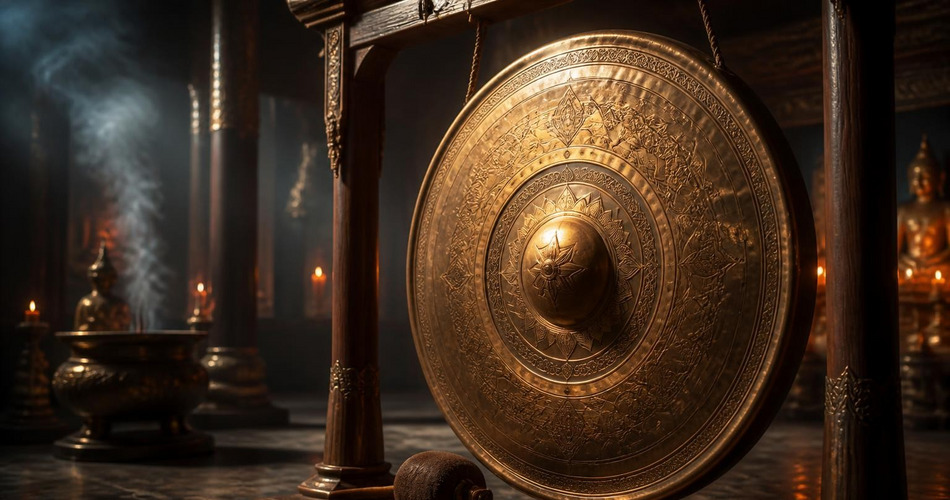
The gong is a powerful percussion instrument that has been used for centuries in East Asian cultures for ceremonial, spiritual, and musical purposes. It symbolizes authority, transformation, and the connection between the earthly and the divine. The deep, resonant sound of a gong is often associated with clearing negative energy, marking important transitions, and inducing meditative states. In modern contexts, the gong is also a tool for sound healing and personal growth.
What Does Gong Symbolize?
The gong symbolizes power and authority, as its loud, penetrating sound can command attention and signal important events. It also represents transformation and renewal, because the act of striking a gong is often used to mark the beginning or end of a ritual, a ceremony, or a period of meditation. The gong’s vibration is believed to clear stagnant energy and facilitate spiritual awakening. Additionally, the gong symbolizes communication, as its sound can carry over long distances to convey messages or call communities together.
Positive and Negative Meanings of Gong
Positive associations: The gong is seen as a source of purification and healing. Its sound waves are thought to harmonize the body and mind, promoting relaxation and inner peace. In spiritual practices, the gong helps to focus intention, deepen meditation, and connect with higher states of consciousness. It also symbolizes celebration and joy, often used in festivals and joyous occasions.
Negative meanings: In some contexts, the gong can represent disturbance or chaos, especially when struck harshly or out of place. Its loud, sudden sound can be jarring and unsettling, symbolizing alarm or warning. In warfare, gongs were used to intimidate enemies or signal attack, linking them to aggression and conflict. A broken or cracked gong may be considered an omen of misfortune.
History and Origins of Gong Symbolism
The gong has ancient origins, with the earliest known examples dating back to the Bronze Age in Southeast Asia and China. These early gongs were often made of bronze and used in religious ceremonies, as well as for signaling and military purposes. In Chinese culture, gongs became integral to Confucian and Taoist rituals, where their sound was believed to bridge the human and spiritual realms. The gong also spread to Tibet, where it was adopted in Buddhist monasteries for meditation and prayer. Over time, the gong’s symbolism expanded to include authority, as it was used in imperial courts to announce the presence of rulers or to mark important decrees. In the 20th century, the gong entered Western orchestras and later became a key instrument in sound therapy and New Age spirituality.
Gong Symbolism in Different Cultures
In Chinese culture, the gong is deeply associated with festivals, especially the Lunar New Year, where its sound is believed to scare away evil spirits and bring good luck. It is also used in traditional opera and folk music to heighten dramatic moments. In Tibetan Buddhism, the gong is a ritual instrument used to mark the beginning and end of meditation sessions, as well as to accompany chanting and prayers. Its sound is thought to purify the environment and aid in spiritual transformation. In Southeast Asian cultures, such as in Myanmar and Thailand, gongs are used in ceremonies to honor ancestors and spirits. In the West, the gong has been adopted in orchestral music, particularly in works by composers like Richard Wagner and Gustav Mahler, where it adds dramatic intensity. More recently, the gong has become a central tool in sound baths and holistic healing practices, symbolizing the power of sound to restore balance.
Spiritual Meaning of Gong
In spiritual contexts, the gong is considered a sacred instrument that can alter consciousness and facilitate deep meditation. Its sustained vibrations are believed to resonate with the body’s energy centers, or chakras, helping to release blockages and promote healing. Many practitioners use the gong in sound therapy sessions to induce a state of relaxation and inner stillness. The gong is also used in shamanic journeying to help individuals access altered states of awareness. Its sound is often described as a bridge between the physical and spiritual worlds, making it a powerful tool for prayer, ritual, and personal transformation.
Gong in Myths and Folklore
In Chinese folklore, the gong is sometimes associated with the legend of the Nian, a mythical beast that terrorized villages at the start of the new year. The loud noise of gongs and firecrackers was used to scare the Nian away, a tradition that continues in Lunar New Year celebrations. In Tibetan mythology, the gong is linked to the sound of the dharma, the teachings of the Buddha, and is believed to have the power to awaken beings from ignorance. In some Southeast Asian traditions, gongs are considered sacred objects that house spirits, and they are treated with reverence and offered gifts. These myths reinforce the gong’s role as a symbol of protection, spiritual awakening, and the triumph of light over darkness.
Gong in Dreams
Dreaming of a gong often carries significant meaning related to communication, awakening, or a call to attention. The specific context of the dream can provide further insight into its symbolism.
- Hearing a gong: May indicate that you are being called to pay attention to an important message or that a major life change is approaching.
- Striking a gong: Suggests you are ready to make your voice heard or to assert your authority in a situation.
- A broken gong: Could symbolize missed opportunities, a failure to communicate, or a disruption in your spiritual practice.
- A loud, jarring gong: May represent a sudden realization or a wake-up call that forces you to confront a truth.
Gong in Superstitions and Omens
In various cultures, the gong is surrounded by superstitions and omens. In Chinese tradition, the sound of a gong at a wedding is believed to bring good fortune and drive away evil spirits. Conversely, a gong that sounds unexpectedly or at an inauspicious time might be considered a bad omen. In some folk beliefs, a cracked gong is thought to bring misfortune or signal the death of a community member. In Western esoteric traditions, the gong is sometimes used in rituals to banish negative energies, and its sound is considered protective. These beliefs highlight the gong’s dual nature as both a bringer of positive energy and a warning of potential danger.
Gong in Art and Literature
The gong has appeared in various works of art and literature, often symbolizing mystery, power, or the exotic. In Western classical music, the gong is famously used in Gustav Mahler’s Symphony No. 6 to create a sense of impending doom, and in Richard Wagner’s operas to evoke ritualistic or otherworldly atmospheres. In literature, the gong appears in Herman Melville’s novel Moby-Dick, where the character Queequeg uses a gong to signal the crew. In modern cinema, the gong is often used in films set in Asia to establish cultural authenticity or to mark a dramatic moment, such as in David Lean’s The Bridge on the River Kwai. These examples show how the gong’s sound and symbolism are employed to convey tension, ceremony, and cultural identity.
Meanings of Different Types of Gongs
Different types of gongs carry distinct symbolic meanings based on their shape, size, and sound. The tam-tam, a flat, large gong, produces a deep, resonant crash and is often used in orchestras to symbolize drama or catastrophe. The nipple gong, with a raised central boss, creates a focused, sustained pitch and is commonly used in meditation and healing, representing clarity and spiritual focus. The chau gong, a traditional Chinese gong with a slightly curved rim, is associated with celebration and is often played in festivals. The suzu gong, a small hand-held gong used in Japanese Buddhist rituals, symbolizes purity and the call to prayer. Each type of gong carries its own nuanced symbolism, reflecting the cultural and functional context in which it is used.
Frequently Asked Questions About Gong Symbolism
Q: What does it mean when you hear a gong in a dream?
A: Hearing a gong in a dream often signifies a wake-up call or an important message from your subconscious. It may indicate that you need to pay attention to something you have been ignoring or that a major change is approaching.
Q: Is the gong considered a sacred instrument?
A: Yes, in many cultures, particularly in Tibetan Buddhism and Chinese Taoism, the gong is regarded as a sacred instrument used in rituals to purify space, aid meditation, and connect with the divine.
Q: What is the difference between a gong and a tam-tam?
A: A tam-tam is a type of gong with a flat surface that produces an indefinite pitch and a crashing sound, often used in orchestras for dramatic effect. A gong typically has a raised center and produces a definite pitch, used in both music and spiritual practices.
Q: Can gongs be used for healing?
A: Yes, gongs are widely used in sound therapy and sound baths. The vibrations are believed to promote relaxation, reduce stress, and balance the body’s energy centers, contributing to physical and emotional healing.
Related Symbols
- Bell – Like the gong, bells are used in rituals to mark time and call attention, symbolizing clarity and spiritual presence.
- Drum – Both drums and gongs are percussion instruments used for communication, ceremony, and rhythm, representing heartbeat and community.
- Cymbal – Cymbals share the gong’s metallic sound and are used in similar contexts, often in pairs to create crashing accents.
- Singing bowl – Used in meditation and healing, singing bowls produce resonant tones that, like the gong, are believed to harmonize the mind and body.
- Trumpet – In many cultures, trumpets and gongs both serve as instruments of announcement and celebration, symbolizing power and authority.