Briefly
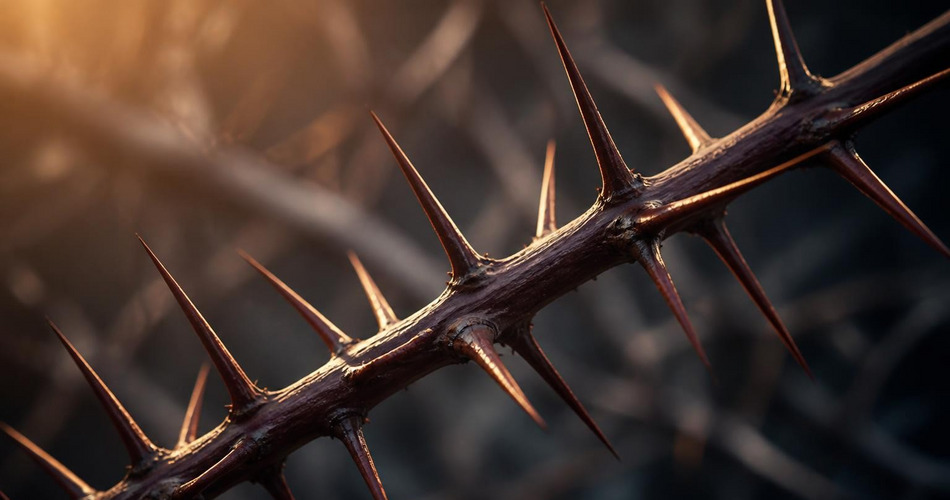
Thorns are sharp, pointed outgrowths found on many plants, serving as a natural defense against herbivores. Symbolically, they represent protection, boundaries, and the duality of life—beauty intertwined with danger. Thorns also evoke themes of sacrifice, pain, and resilience, often appearing in religious, mythological, and literary contexts to illustrate suffering and redemption.
What Does Thorn Symbolize?
Thorns symbolize a multifaceted range of concepts, primarily revolving around the idea of protection. In nature, thorns deter predators, so they naturally come to represent self-defense, boundaries, and the need to guard oneself against harm. This protective aspect extends to personal boundaries in human relationships and spiritual contexts.
At the same time, thorns are closely linked with sacrifice and suffering. The most famous example is the Crown of Thorns worn by Jesus Christ, which imbues the thorn with profound connotations of pain, endurance, and redemptive suffering. This duality makes thorns a powerful symbol of beauty that is hard-earned and often painful.
Thorns also represent the concept of resilience. Plants that thrive despite thorny defenses demonstrate adaptability and strength in harsh conditions, making thorns an emblem of durability and the ability to overcome adversity.
Positive and Negative Meanings
Positive associations: Thorns are often seen as symbols of protection, strength, and boundaries. They remind us of the need to safeguard our personal space and values. In some traditions, thorns also represent resilience and the ability to thrive despite challenges.
Negative meanings: Conversely, thorns can signify pain, suffering, and betrayal. Their sharpness evokes feelings of hurt, whether physical or emotional. In cultural contexts, thorns may represent obstacles, hardship, and the harsh realities of life that must be endured.
History and Origins of the Symbolism
The symbolism of thorns has ancient roots, deeply intertwined with both natural observation and religious narratives. In prehistoric times, humans observed the defensive function of thorns and likely used thorny branches to create barriers around settlements, embedding the idea of protection into early cultural consciousness.
In Judeo-Christian tradition, thorns appear prominently in the Book of Genesis, where God curses the ground after Adam’s sin, causing it to produce “thorns and thistles” (Genesis 3:18). This association links thorns with the consequences of disobedience and the toil of human existence. Later, the crown of thorns placed on Jesus during his crucifixion (Gospel of Matthew 27:29) transformed the thorn into a central Christian symbol of sacrifice and redemption.
In ancient Greek mythology, thorns also feature in the story of Adonis, who was killed by a wild boar, but whose blood is said to have given rise to the anemone flower with thorny stems—a story blending beauty, love, and painful loss. These early narratives established thorns as enduring symbols of life’s dualities.
Symbolism in Different Cultures
Across cultures, thorns carry varied meanings. In African traditions, thorn-bearing plants like the acacia are often used in protective rituals and as symbols of endurance in harsh environments. The Maasai people, for instance, use thorn branches to fence their villages, reinforcing the idea of protection and boundaries.
In Celtic mythology, the hawthorn tree—distinct for its thorns—is considered sacred, associated with the fairy realm and used as a boundary marker. Cutting down a hawthorn was thought to bring misfortune, highlighting the thorn’s role as a guardian between worlds.
In Japanese culture, the plum blossom’s thorns are seen as a metaphor for resilience: the beauty of the flower emerging despite the harshness of winter. Similarly, in Native American traditions, cactus spines symbolize protection and the ability to survive in arid landscapes, often used in healing rituals.
Thorns also appear in Islamic art and literature as reminders of life’s trials and the importance of patience and faith. The concept of “the thorn in the flesh” is a recurring metaphor for persistent struggles that humble and strengthen the soul.
Spiritual Meaning
Spiritually, thorns represent the path of suffering leading to enlightenment or redemption. In Christian mysticism, meditation on the Crown of Thorns is a practice that focuses on the pain of Christ as a means to deepen faith and compassion. Thorns also symbolize the idea that spiritual growth often requires enduring hardship.
In broader mystical traditions, thorns serve as reminders of the barriers between the material and spiritual worlds. They can represent the protective energy that must be navigated or overcome to achieve higher consciousness. Some spiritual traditions view thorns as symbols of the sharp clarity that comes from facing life’s difficulties directly.
In Myths and Folklore
Thorns appear frequently in myths and folklore as both protective and perilous elements. In Grimm’s fairy tales, the story of “Sleeping Beauty” features a thicket of thorns that grows around the sleeping princess—representing both the danger of the curse and the protective barrier that must be overcome by true love.
In Norse mythology, the goddess Frigg swears an oath from all plants to protect her son Baldr—except the mistletoe, which is often depicted with thorn-like features and ultimately leads to his death. This story underscores the dual nature of thorns: they can be agents of harm even when overlooked.
In African folklore, the story of the hungry jackal and the thorn bush tells of how the jackal, seeking food, becomes entangled in thorns—a cautionary tale about greed and the consequences of ignoring warnings. These stories embed thorns as symbols of moral lessons about caution and respect for nature.
In Art and Literature
Thorns have been a powerful motif in art and literature for centuries. In Western painting, the Crown of Thorns is a common subject, notably in works by Caravaggio (“The Crowning with Thorns”) and Albrecht Dürer (“The Crown of Thorns”), where it symbolizes Christ’s suffering and the cruelty of humanity.
In literature, the rose with thorns is a classic metaphor for beauty paired with danger. The 13th-century French poem “Roman de la Rose” uses the rose and its thorns to explore themes of love and obstacles. In William Blake‘s poetry, thorns often represent the harshness of experience that tempers innocence.
In modern fiction, the “Song of Ice and Fire” series by George R.R. Martin includes the sigil of House Tyrell, a golden rose on a green field, with thorns emphasizing the power behind beauty. The phrase “the thorns of life” has become idiomatic in English literature, representing everyday hardships.
Frequently Asked Questions
Q: What does a thorn symbolize in a dream?
A: In dreams, thorns often represent obstacles, pain, or feelings of being hurt by someone or something in waking life. They may also signal the need to set stronger boundaries.
Q: Are thorns always negative symbols?
A: No, thorns also symbolize protection, resilience, and the strength to overcome challenges. Their meaning depends on context, culture, and the specific plant.
Q: What is the spiritual meaning of a thorn bush?
A: A thorn bush in spiritual terms often represents the trials and hardships that lead to spiritual growth, as well as the protective barriers around sacred spaces.
Q: Why are thorns associated with sacrifice?
A: The association primarily comes from the Crown of Thorns in Christianity, which symbolizes Jesus Christ’s sacrifice and suffering for humanity’s salvation.
Q: What does a thorn tattoo mean?
A: A thorn tattoo can represent strength, protection, and the ability to endure hardship. It may also be a personal reminder of overcoming a difficult experience.
Related Symbols
- Rose — beauty and love paired with the pain of thorns
- Crown of Thorns — specific Christian symbol of sacrifice
- Acacia — resilience and protection in harsh climates
- Hawthorn — Celtic sacred tree, guardian between worlds
- Cactus — survival and protection in dry environments