Briefly
Standing stones are ancient megaliths erected by prehistoric peoples across many regions of the world. They symbolize endurance, mystery, and a profound connection to the earth and the cosmos. Often marking sacred spaces, burial sites, or astronomical alignments, these silent sentinels evoke a sense of timelessness and spiritual power. Their enduring presence continues to inspire awe and curiosity, representing humanity’s early attempts to understand and mark the world around them.
What Does Standing Stone Symbolize?
Standing stones primarily symbolize permanence and stability. Having stood for thousands of years, they embody the idea of something that endures beyond human lifetimes. They are often seen as markers of sacred or significant places, commemorating events, individuals, or boundaries. Additionally, standing stones represent the link between the earth and the sky, often aligned with celestial bodies, reflecting a desire to connect with the cosmos and the cycles of nature. They also stand for mystery and the unknown, as their original purposes are not fully understood, inviting contemplation and interpretation.
Positive and Negative Meanings of Standing Stones
Positive associations: Standing stones are seen as symbols of strength, resilience, and endurance. They connect people to their heritage and ancestral past, offering a sense of grounding and spiritual stability. Many view them as sources of positive energy, places for meditation, and reminders of the enduring human spirit.
Negative meanings: Standing stones can also evoke feelings of isolation, loneliness, and the weight of forgotten history. They are sometimes associated with dark folklore, such as legends of cursed stones or places where tragic events occurred. Their immovability can symbolize being stuck or unable to change, and their ancient, weathered appearance may remind observers of decay and the passage of time.
History and Origins of Standing Stone Symbolism
The practice of erecting standing stones dates back to the Neolithic and Bronze Ages, with examples found across Europe, Asia, Africa, and the Americas. The most famous include Stonehenge in England, the Carnac stones in France, and the menhirs of the British Isles. These stones were often aligned with astronomical events such as solstices and equinoxes, suggesting they functioned as calendars or observatories. They also marked burial sites, territorial boundaries, and places of ritual gathering. The sheer effort required to transport and erect these massive stones indicates their profound importance to prehistoric societies, linking them to concepts of power, community, and the sacred.
Standing Stone Symbolism in Different Cultures
In Celtic cultures, standing stones are often associated with druids and ancient religious practices. They were seen as sacred pillars that connected the earthly realm to the spiritual world, sometimes used for ceremonies or as markers of tribal territories. In other European traditions, standing stones were boundary markers or memorials for important individuals. In parts of Africa and Asia, similar megaliths served as ancestral monuments or symbols of fertility and protection. Despite regional differences, the common thread is the use of standing stones to mark significance—whether celestial, spiritual, or social—and to create a lasting human imprint on the landscape.
Spiritual Meaning of Standing Stones
Spiritually, standing stones are often regarded as conduits for earth energy or ley lines. Many people visit them for meditation, seeking grounding and a connection to ancient wisdom. They are seen as places where the veil between worlds is thin, allowing communication with ancestors or spirits. The act of touching or standing near a stone is believed to bring strength, clarity, and a sense of peace. Their alignment with celestial bodies also reinforces their role as spiritual tools for understanding cosmic cycles and one’s place in the universe.
Standing Stones in Myths and Folklore
Folklore surrounding standing stones is rich and varied. In the British Isles, legends often attribute their creation to giants or mythical heroes who threw or placed the stones. Some stories claim the stones move at certain times, such as on Midsummer’s Eve, or that they dance when they hear church bells. In Irish tradition, standing stones are sometimes considered fairy dwellings or cursing stones, used to invoke blessings or harm. Many local tales warn against damaging or moving the stones, as doing so brings bad luck or supernatural consequences. These stories reflect the deep respect and fear these ancient monuments inspired.
Standing Stones in Dreams
Dreaming of standing stones can carry several meanings. They often symbolize a need for stability and grounding in one’s life, or a desire to connect with one’s roots and heritage. A standing stone may represent an enduring aspect of the dreamer’s personality, such as strength or resilience. Conversely, it can indicate feelings of isolation or being stuck in a situation. The context of the dream—such as whether the stone is alone or part of a circle, and the dreamer’s interaction with it—provides further insight.
Common Dream Scenarios
- Standing alone near a stone: May reflect a need for solitude or a feeling of being isolated from others.
- Touching or leaning on a stone: Suggests seeking support, stability, or connection to the past.
- A stone falling or crumbling: Could indicate a fear of losing stability or that something once permanent is changing.
- Walking through a stone circle: Often symbolizes a journey of self-discovery, spiritual awakening, or entering a sacred space.
- Carving or marking a stone: Represents a desire to leave a lasting legacy or make a significant change.
Standing Stones in Superstitions and Omens
Superstitions about standing stones are common in regions where they are found. Touching a standing stone is sometimes believed to bring good luck or healing, especially if the stone has a smooth, worn surface from centuries of contact. However, many traditions warn against disturbing or removing stones, as this is thought to bring misfortune. In some areas, it is considered unlucky to walk around a standing stone an odd number of times, or to sleep near one at night. These beliefs underscore the enduring power these ancient monuments hold in the popular imagination.
Standing Stone Tattoo Meaning
As a tattoo design, a standing stone symbolizes endurance, strength, and a deep connection to one’s heritage or spiritual path. It can represent a personal anchor or a reminder of ancient wisdom. Some choose the image to honor their ancestry or to mark a significant life event that required resilience. The stark, simple form of a standing stone also appeals to those who appreciate minimalist or nature-inspired body art.
Meanings of Different Types of Standing Stones
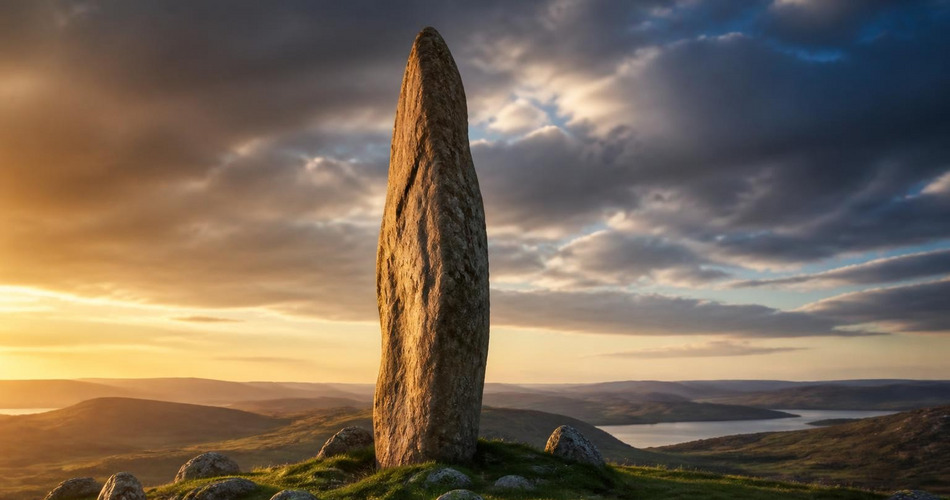
- Single menhir: Often symbolizes individuality, solitude, or a specific memorial. It may mark a burial site or a significant location.
- Stone circle: Represents community, cycles, and unity. The circular arrangement suggests inclusivity, eternity, and connection to celestial rhythms.
- Alignment (rows of stones): Symbolizes a path, journey, or procession. Often associated with astronomical observation and the passage of time.
- Pointed or shaped stones: May carry additional meanings, such as phallic symbols of fertility or directional markers pointing to sacred sites.
Frequently Asked Questions
Q: What was the purpose of standing stones?
A: Standing stones served various purposes: as astronomical observatories, burial markers, territorial boundaries, ritual sites, and symbols of community identity. Their exact meanings often remain unknown.
Q: Are all standing stones ancient?
A: Most standing stones date from the Neolithic to Bronze Age, but some modern monuments are erected in similar styles to evoke ancient symbolism.
Q: Can standing stones be found outside Europe?
A: Yes, standing stones and megalithic structures exist in Asia, Africa, the Americas, and the Pacific Islands, each with unique cultural contexts.
Q: Do standing stones have healing properties?
A: Many people believe standing stones possess spiritual or healing energy, though this is not scientifically proven. They are often used in meditation and spiritual practices.
Related Symbols
- Stone circles – Enclosed arrangements of standing stones, often with astronomical alignments.
- Dolmens – Megalithic tombs consisting of a large flat stone supported by upright stones.
- Menhirs – Single standing stones, often tall and slender.
- Cairns – Piles of stones used as markers or burial mounds.
- Ley lines – Invisible alignments believed to connect sacred sites, including standing stones.