Briefly
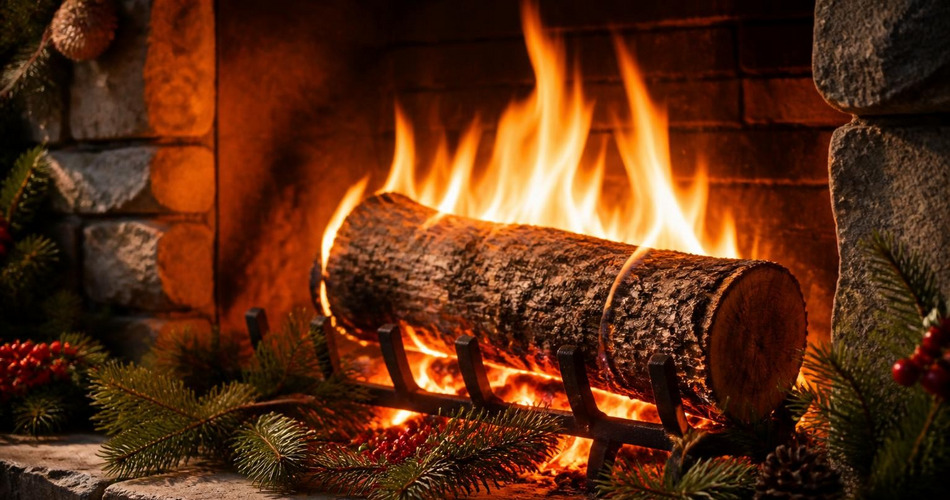
The Yule Log is a powerful winter solstice symbol representing the return of light, warmth, and life during the darkest days of the year. Traditionally burned in hearths, it embodies protection, abundance, and family continuity. Its origins lie in ancient Germanic and Norse pagan rituals, later absorbed into Christian Christmas celebrations. The log’s slow-burning embers are seen as a promise of renewal and hope for the coming spring.
What Does the Yule Log Symbolize?
The Yule Log primarily symbolizes light and warmth in the depths of winter. As the solstice marks the longest night, the burning log becomes a beacon of hope and a physical manifestation of the sun’s eventual return. It also stands for protection — the smoke and ashes were believed to ward off evil spirits and bring good fortune to the household.
Beyond its protective qualities, the Yule Log represents abundance and fertility. The ashes were often scattered on fields to ensure a bountiful harvest. The log itself, often a whole tree trunk or a large branch, symbolizes the continuity of life through the harsh winter, linking the past year’s harvest to the promise of the next.
Family unity is another core meaning. The gathering around the hearth to watch the log burn reinforced bonds and shared hopes for the coming year. In many traditions, a piece of the previous year’s log was saved to light the next one, creating a tangible link between generations.
Positive and Negative Meanings
Positive associations: The Yule Log is overwhelmingly positive, embodying warmth, light, hope, and renewal. It signifies protection from harm, abundance in the home, and the strengthening of family ties. Its burning is a ritual of purification and a celebration of life’s persistence through winter.
Negative meanings: Negative interpretations are rare but can include the loss of authentic tradition when the Yule Log is reduced to a commercialized, decorative cake (the Bûche de Noël) without its ritual significance. Some may also see the log’s consumption by fire as a reminder of mortality and the passing of time, though this is usually subsumed by the hopeful message of rebirth.
History and Origins of the Yule Log Symbolism
The Yule Log tradition traces back to pre-Christian Germanic and Norse peoples who celebrated the winter solstice, known as Yule. They would burn a whole log or tree trunk in honor of the god Thor, believing it would bring protection and prosperity. The log was often from an oak tree, sacred to Thor, and its burning was a plea for the sun’s return.
With the Christianization of Europe, the Yule Log was adapted into Christmas celebrations. The Church reframed the ritual as a symbol of Christ’s light entering the world. Medieval records describe families bringing a large log into the house on Christmas Eve, decorating it with greenery, and lighting it with a piece saved from the previous year. The log was kept burning through the Twelve Days of Christmas.
In many regions, the Yule Log was chosen with care: it had to be large enough to burn for the entire holiday period, and its selection was often a communal event. The ashes were prized for their supposed healing and protective properties, and they were sometimes used in medicines or scattered around the home.
Yule Log Symbolism in Different Cultures
In Scandinavia, the Yule Log (or “juleblok”) was often a large wheel of wood that was rolled into the home and burned. The custom is closely tied to the Norse festival of Yule, which honored the god Odin and celebrated the rebirth of the sun. In some areas, the log was replaced by a “Yule candle” that burned for twelve days.
In France, the tradition evolved into the “Bûche de Noël,” a log-shaped cake eaten on Christmas Eve. While the cake is a culinary treat, it retains the symbolic meaning of the original log: warmth, abundance, and the continuity of the family. The French custom also involved burning a real log, often with prayers for a good harvest.
In England, the Yule Log was central to Christmas festivities. Families would go to the woods to select the log, often oak or ash, and bring it home with ceremony. The log was lit with a piece of the previous year’s log, and it was considered bad luck to let it go out before the Twelve Days ended. The ashes were kept for protection and to ensure good luck.
In North America, the Yule Log tradition was brought by European settlers but gradually faded in favor of the Christmas tree. However, in the 20th century, the Yule Log was revived as a televised event — a burning log video played on Christmas morning — which emphasizes the cozy, nostalgic aspect of the symbol.
Spiritual Meaning of the Yule Log
Spiritually, the Yule Log represents the inner light that persists through darkness. It is a meditation on the cycle of death and rebirth, both in nature and in the human soul. The log’s transformation into ash and smoke mirrors the spiritual journey of letting go of the old to make way for the new.
In pagan and Wiccan traditions, the Yule Log is a central element of the winter solstice ritual. It is often carved with symbols representing the sun, the horned god, or personal intentions. The burning is a symbolic act of releasing the past year’s burdens and inviting in the light of the returning sun.
For Christians, the Yule Log has been reinterpreted as a symbol of Christ’s light entering a dark world. The log’s heat and light represent divine love and the warmth of faith. Some churches still hold Yule Log blessings, where the log is sprinkled with holy water and incense.
Yule Log in Myths and Folklore
In Norse mythology, the Yule Log is linked to the oak tree sacred to Thor. The thunder god was said to protect homes where the log burned, warding off giants and evil spirits. The log’s smoke was believed to carry prayers to the gods.
In English folklore, it was thought that the Yule Log must not be bought or stolen — it had to be given freely or found. If the log was obtained improperly, it would bring bad luck. Some traditions held that the log should come from the landowner’s own property to ensure the household’s prosperity.
Another widespread belief was that the Yule Log’s ashes had magical properties. They were scattered on fields to ensure fertility, used in charms to protect against lightning, or mixed with animal feed to keep livestock healthy. In some regions, a piece of the log was kept under the bed to ward off nightmares.
Yule Log in Superstitions and Omens
- Lighting the log: It was considered unlucky to light the Yule Log with a new flame; instead, a piece of the previous year’s log had to be used. This ensured continuity of good fortune.
- Burning through the Twelve Days: If the log went out before Twelfth Night, it was seen as an omen of misfortune for the coming year. Families would take turns watching the fire to keep it alive.
- Ashes as protection: The ashes were kept in a bag or scattered around the house to protect against evil spirits, illness, and lightning strikes. Some people rubbed ashes on their foreheads for good luck.
- Gender of the log: In some regions, the log was personified as a “Yule Clog” and treated with respect. If it burned unevenly, it was thought to predict a quarrel in the household.
Yule Log in Art and Literature
The Yule Log appears in the poetry of Robert Herrick, a 17th-century English poet. In his poem “Ceremony upon Candlemas Eve,” Herrick describes the tradition of burning the Yule Log and the importance of saving a piece to light the next year’s fire. His work captures the ritual’s blend of pagan and Christian elements.
In Charles Dickens’ “A Christmas Carol,” the Cratchit family’s hearth fire, though not explicitly a Yule Log, evokes the same warmth and family unity. The imagery of the glowing fire as a center of domestic joy is a direct descendant of Yule Log symbolism.
In modern visual media, the Yule Log video — a continuous shot of a burning log fireplace — has become a Christmas television staple since the 1960s. This broadcast emphasizes the log’s role as a comforting, nostalgic symbol of home and holiday peace.
Meanings of Different Types of Yule Logs
- Oak log: The most traditional, associated with strength, protection, and the Norse god Thor. Oak was believed to ward off evil and bring prosperity.
- Ash log: In English tradition, ash was preferred because it burned steadily and was thought to repel snakes and evil spirits. Ash logs were also used in healing rituals.
- Birch log: In some Scandinavian customs, birch represented new beginnings and purification. Its white bark symbolized the light returning after the solstice.
- Holly or pine logs: Evergreen branches were sometimes added to the log for their symbolism of eternal life and resilience through winter.
Frequently Asked Questions
Q: What is the difference between a Yule Log and a Christmas tree?
A: The Yule Log is a pre-Christian winter solstice symbol focused on fire, light, and protection, while the Christmas tree originated in 16th-century Germany as a Christian symbol of eternal life. Both represent life in winter, but the log emphasizes warmth and renewal through fire.
Q: Can I celebrate Yule Log traditions today?
A: Yes. Many people still burn a real Yule Log on Christmas Eve or the winter solstice. If a fireplace isn’t available, you can use a Yule Log candle or bake a Bûche de Noël cake. The key is to focus on the symbolic meanings of light, family, and hope.
Q: What do the ashes of a Yule Log symbolize?
A: The ashes represent the enduring presence of the log’s protective and fertile energy. They are often saved and scattered in gardens or fields to promote growth, or kept as a talisman for good luck throughout the year.
Related Symbols
- Christmas Tree — both are evergreens or logs brought indoors to symbolize life in winter
- Mistletoe — another pagan winter solstice symbol associated with protection and fertility
- Holly — evergreen plant used in Yule decorations, symbolizing eternal life and the crown of thorns in Christian tradition
- Winter Solstice — the astronomical event that gives the Yule Log its primary meaning of light returning
- Hearth Fire — the domestic fire that embodies warmth, family, and protection