
Briefly
Blue is the color of the sky and the sea, and it carries a double life: it stands for calm, trust, and clarity, but it can also express sadness, coldness, and distance. It is the most popular favorite color in the West, a color of loyalty in heraldry, and a sacred color in many religious traditions. Yet the same hue that paints heavens and oceans also gives us “feeling blue.” Few colors balance such different meanings so naturally.
What Does Blue Symbolize?
In color symbolism, blue represents trust, intelligence, calm, loyalty, stability, and depth. These associations come from the two vast blue realms of nature: the sky above and deep water below. The sky links blue to the heavens, truth, infinity, and spiritual awareness, while the sea links blue to emotion, mystery, and the subconscious. Because both realms are constant and reliable, blue has come to mean constancy itself.
Blue is also a “cool” color. Color psychology research has found that looking at blue tends to slow the pulse and encourage relaxation, which is why hospitals, schools, and banks use it so often. The same coolness gives blue its darker edge: it can read as cold, formal, or emotionally distant. The exact meaning usually depends on the shade — bright blues feel free and optimistic, while dark blues feel serious and authoritative.
Positive and Negative Meanings of Blue
Positive associations: Blue is linked to peace, loyalty, honesty, wisdom, and reliability. It is the color of clear skies, clean water, open horizons, and fresh beginnings. Institutions from the police to the United Nations use blue to signal order, protection, and trustworthiness, and in everyday life blue clothing is widely perceived as calm and professional.
Negative meanings: Blue is also the classic color of sadness and melancholy. To “feel blue” is to feel low, and the blues is a genre of music built on sorrow and hardship. Deep or desaturated blues can feel cold, lonely, oppressive, or secretive, and phrases like “blue mood” and “blue devils” show how easily the color slips from serenity into grief.
History and Origins of Blue Symbolism
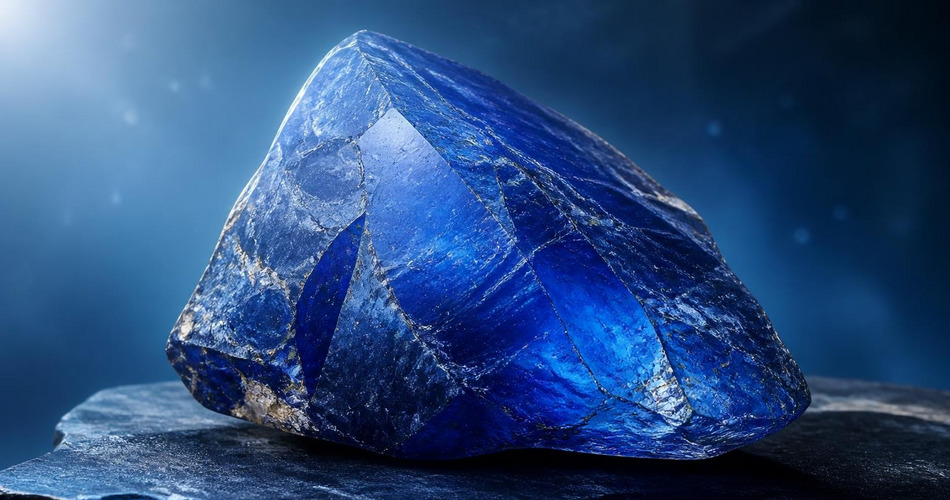
Blue is a late arrival in the history of color. Ancient Greeks and Romans had little use for it, and Homer could describe the sea as “wine-dark” rather than blue. The earliest civilizations prized blue because true blue pigments were rare. The Egyptians mined lapis lazuli in Afghanistan for royal jewelry and funeral masks, and they created “Egyptian blue,” one of the first synthetic pigments, around 4,500 years ago.
In medieval Europe, ultramarine made from ground lapis lazuli cost more than gold. Painters reserved it for the robes of the Virgin Mary, turning blue into the color of heaven and divine mercy. Around the 12th century, French kings adopted blue with the gold fleur-de-lis, and blue became a royal color. Later history added new layers: indigo built empires through the dye trade, Levi’s denim made blue the world’s favorite workwear, and by the 20th century surveys consistently named blue the most popular color in the West.
Blue Symbolism in Different Cultures
In Western cultures blue means calm, authority, and reliability. It is the default color of business suits, police uniforms, and bank logos. The phrase “blue chip” still describes investments of the highest quality, borrowed from the most valuable chips in poker.
In the Mediterranean and Middle East, blue has a protective meaning. Blue glass evil-eye charms (nazar) hang in homes and are worn as jewelry from Turkey to Greece and Iran, because blue is thought to absorb the power of envious glances. Entire towns, such as Chefchaouen in Morocco, paint their streets blue, and blue doors and shutters appear throughout North Africa.
In Asia, blue takes on spiritual and protective meanings. In India, the god Krishna is shown with blue skin because blue represents the infinite sky and the boundless divine. In China, the blue-green hue qing was associated with spring, healing, and immortality, and blue-and-white porcelain became a symbol of refined taste. In Japan, deep indigo was the color of working clothes and samurai undergarments, valued for its durability and believed to protect the wearer from harm.
The Spiritual Meaning of Blue
Across religions, blue points upward to the divine. In Christian art, Mary’s blue robe signals purity and heavenly grace, and blue is the traditional color of heaven. In Judaism, the tekhelet — a blue dye from sea snails — was commanded for the fringes worn on prayer shawls as a reminder of the sky and the commandments.
In Hindu tradition blue is the color of the infinite, as seen in the blue-skinned Vishnu and Krishna. In Buddhism, the blue Buddha Akshobhya represents unchanging wisdom. In chakra teachings, blue rules the throat chakra, the energy center of honest speech and self-expression, making blue a color of truth in spiritual terms.
Blue in Myths and Folklore
Blue naturally belongs to the gods of the sea. In Greek and Roman myth, Poseidon and Neptune ruled the blue depths, and Aphrodite rose from the sea foam; the color becomes the realm of the divine and the unknown. In ancient Egypt, the sky was linked to the god Amun, who was sometimes depicted with blue skin, and the blue lotus of the Nile appeared in temple scenes as a symbol of rebirth.
In Hindu myth, Shiva swallowed the poison that arose during the churning of the cosmic ocean, and his throat turned blue — earning him the name Neelakantha, “the blue-throated one.” Northern Scotland has the Blue Men of the Minch, a band of sea spirits who surface off the Hebrides and challenge sailors to rhyme. In French folklore, Perrault’s Bluebeard is a wealthy nobleman whose blue beard marks him as uncanny and dangerous.
Blue in Dreams
In dream symbolism, blue generally reflects the emotional weather of the dreamer. Because blue is the color of open sky and clear water, blue dreams are often associated with peace, calm, clarity, and spiritual openness. Dark or murky blue, by contrast, can point to submerged emotions, hidden depths, or unresolved feelings — the unconscious made visible as water.
As with any dream color, context matters: a blue dream during a stable period usually feels restful, while the same color in a tense dream may highlight emotional withdrawal or sadness. Dream interpreters usually read blue as an invitation to look at what lies beneath the surface.
Common Blue Dream Scenarios
- A clear blue sky — openness, hope, freedom, and a calm state of mind.
- Calm blue water — emotional balance and steady feelings; deep or stormy blue water suggests the unconscious and untested emotions.
- Wearing blue clothes — a desire to appear trustworthy or honest, or a mood of quiet withdrawal.
- Blue rooms or blue objects — communication, creativity, or the need to take a breath and think clearly.
- Blue light — often read as spiritual insight, healing, or a sudden moment of clarity.
Blue in Superstitions and Omens
- “Something blue” in the Victorian wedding rhyme stands for fidelity, love, and protection for the bride.
- Blue glass beads, the nazar, are worn across the Mediterranean and Middle East to deflect envy and the evil eye.
- “Haint blue” porch ceilings in the American South, from the Gullah tradition, are painted blue to keep restless spirits from entering the house.
- “Once in a blue moon” describes a rare event, while a blue moon was traditionally treated as an oddity that broke the ordinary order of time.
Blue in Art and Literature
Picasso’s Blue Period (1901–1904) is the most famous use of the color as a mood: paintings such as The Old Guitarist are almost monochrome, using blue to express poverty, isolation, and grief. The French artist Yves Klein went further, patenting his own International Klein Blue and covering entire canvases with the color to suggest the infinite and immaterial.
Blue appears across music and literature too. Gershwin’s “Rhapsody in Blue” mixes classical and jazz to evoke city life, while Joni Mitchell’s 1971 album Blue treats blue as the color of love’s pain. In The Great Gatsby, Fitzgerald sets his story in “blue gardens,” letting blue stand for illusion and longing. Maggie Nelson’s Bluets is a book-length meditation on blue as grief and desire, and Rebecca Solnit’s essay “The Blue of Distance” reads blue as the color of what is far away and still wanted.
Blue Tattoo Meaning
Blue is one of the most common tattoo ink colors, and its meaning in tattooing draws directly from the color’s wider symbolism. A blue tattoo can express loyalty, calm, or protection — blue-eyed designs and evil-eye motifs carry the protective power of Mediterranean amulets, while waves, oceans, and sky scenes use blue to carry themes of freedom, depth, and change. A design centered on the throat area can also tap into the throat chakra, making blue a popular color for truthful and self-expressive tattoos.
Shades of Blue and Their Meanings
- Sky blue and light blue — peace, openness, hope, and healing.
- Royal blue — loyalty, nobility, and confidence.
- Navy blue — authority, discipline, intelligence, and stability.
- Turquoise and teal blue — creativity, emotional balance, and clear communication.
- Indigo — intuition, mystery, and the depths of the unconscious.
- Ultramarine — the sacred, because it was once the most precious blue pigment in the world.
Frequently Asked Questions About Blue
Q: Is blue the most popular color?
A: Yes, in surveys taken across Western countries blue is consistently ranked the most popular favorite color, and it performs strongly around the world because of its ties to sky, sea, trust, and calm.
Q: Why does blue mean sadness?
A: The English phrase “feeling blue” likely grew out of “the blue devils,” a term for melancholy spirits in the 18th century, and the blues genre of music later fixed the color-sadness link in popular culture.
Q: Why is blue associated with boys?
A: That association is surprisingly modern. Before the early 20th century, pink and blue were not firmly tied to gender, and some clothing guides even recommended blue for girls; mass-marketed children’s clothing and baby products created the blue-for-boys rule.
Q: What does blue symbolize spiritually?
A: Blue generally symbolizes heaven, divine truth, wisdom, and faithful communication. It is the color of Mary’s robe in Christianity, of Krishna and Vishnu in Hinduism, and of the throat chakra that governs truthful speech.
Symbols Related to Blue
- Sky — blue as the color of the heavens and infinite space.
- Water — blue as depth, emotion, and the subconscious.
- Indigo — the darkest, most intuitive shade of blue.
- Lapis Lazuli — the precious stone that made blue sacred in the ancient world.
- Evil Eye — blue amulets used to ward off envy and harm.