
Briefly
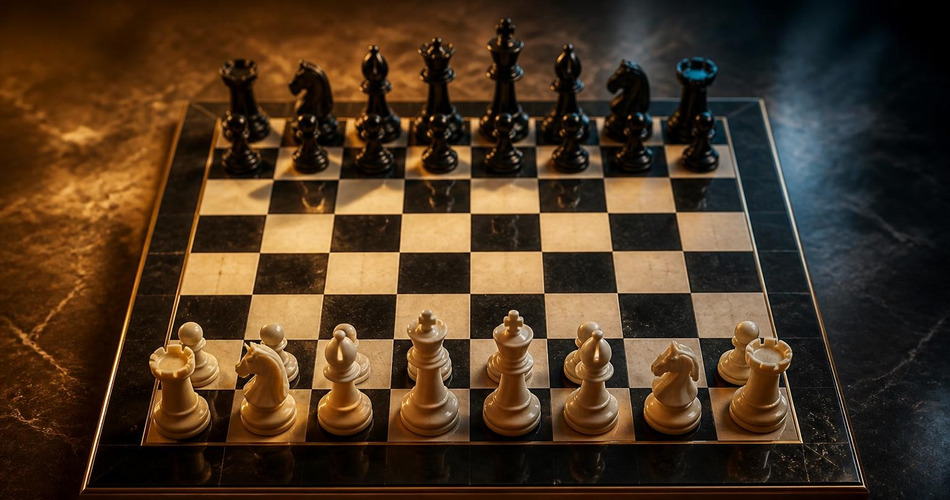
The chessboard is a powerful symbol of strategic conflict, intellectual challenge, and the dualistic nature of life. Its checkered pattern of black and white squares represents opposing forces such as light and dark, good and evil, or order and chaos. Beyond the game itself, the chessboard serves as a metaphor for the battlefield of life, where every move has consequences and success depends on foresight, planning, and adaptability.
What Does the Chessboard Symbolize?
The chessboard symbolizes strategy and the intellectual struggle between two opposing forces. Each square is a potential position in a larger plan, reflecting the idea that life is a game of calculated moves and countermoves. The board’s grid structure also represents order, logic, and the framework within which competition unfolds.
At a deeper level, the chessboard embodies duality — the eternal interplay of opposites. The alternating black and white squares are a visual reminder of the balance between light and darkness, creation and destruction, or peace and conflict. This duality is central to many philosophical and spiritual traditions, where the chessboard becomes a stage for the cosmic drama of opposing principles.
Additionally, the chessboard is a symbol of power and hierarchy. The pieces, each with distinct roles and movements, mirror social structures and the distribution of authority. The king, queen, bishops, knights, rooks, and pawns represent different levels of influence and responsibility, making the board a microcosm of society itself.
Positive and Negative Meanings
Positive associations: The chessboard is often linked to intellectual growth, discipline, and foresight. Playing chess requires patience, concentration, and the ability to think several steps ahead — qualities that are admired in many areas of life. The board also symbolizes fairness and equal opportunity, as both players begin with identical forces on a symmetrical field.
Negative meanings: On the negative side, the chessboard can represent manipulation, cold calculation, and the reduction of human experience to a series of tactical moves. It may evoke the idea of life as a ruthless game where only the most cunning survive. The checkered pattern can also symbolize confusion or moral ambiguity, where it becomes difficult to distinguish right from wrong.
History and Origins of Chessboard Symbolism
The chessboard as we know it originated in India around the 6th century AD, where the game was called chaturanga — a Sanskrit term meaning “four limbs” or “four divisions,” referring to the four branches of the Indian army: infantry, cavalry, elephants, and chariots. The board itself was an 8×8 grid, a format that has remained largely unchanged for over a thousand years.
From India, the game spread to Persia, where it became known as shatranj, and later to the Islamic world and Europe. In medieval Europe, the chessboard took on rich symbolic meanings. It was seen as a model of the feudal system, with the king and queen at the top and pawns representing the common people. The board also appeared in moral and allegorical literature, where chess was used to teach lessons about virtue, vice, and the unpredictability of fate.
The black-and-white checkered pattern itself has ancient roots, appearing in various cultures as a symbol of duality long before it was associated with chess. Mosaics and floor tiles in Roman and Byzantine buildings often featured checkered designs, representing the interplay of light and shadow or the cosmic order. The chessboard thus inherited these older symbolic associations, which have persisted into modern times.
Chessboard Symbolism in Different Cultures
In Indian culture, the chessboard was originally a battlefield simulation, reflecting the strategic thinking of ancient warfare. The game was also used as a tool for teaching military tactics and leadership.
In Persian and Islamic traditions, chess became a symbol of intellectual refinement and courtly culture. The board represented the ideal of rational thought and the pursuit of knowledge, and it was often included in the education of princes and nobles.
In medieval Europe, the chessboard was a moral allegory. The game was seen as a mirror of life’s struggles, with each piece representing a different social role. Chessboards were sometimes used in church decorations and illuminated manuscripts to illustrate the battle between good and evil, or the soul’s journey through the challenges of the world.
In modern contexts, the chessboard has become a global symbol of intellectual competition and strategic thinking. It appears in corporate logos, military strategy, and even in popular culture as a shorthand for complex decision-making and conflict.
Spiritual Meaning of the Chessboard
In spiritual terms, the chessboard represents the cosmic game or divine play, where the universe is seen as a vast chessboard and humans as pieces moved by higher forces. This idea appears in Hindu philosophy, where the concept of lila (divine play) suggests that the material world is a game played by the gods.
The checkered pattern also symbolizes the balance of opposites that is essential for spiritual growth. Light and dark, joy and sorrow, success and failure are all part of the journey, and the chessboard reminds us that we must navigate both to achieve wisdom. In some esoteric traditions, the board represents the field of consciousness on which the soul makes its moves, learning lessons through each experience.
Chessboard in Myths and Folklore
Chessboards appear in various myths and folk tales, often as magical objects or tests of wit. In Norse mythology, the gods are said to play chess in the hall of Valhalla, and the game is sometimes associated with fate and destiny. In Persian folklore, the invention of chess is attributed to a wise minister who created the game to distract a grieving king, teaching him that life’s battles require patience and strategy.
In European folk tales, chessboards are sometimes enchanted, with pieces that move on their own or reveal hidden truths. The game is often used as a metaphor for the struggle between good and evil, with the hero needing to outsmart a villain through clever play. These stories reinforce the idea that the chessboard is not just a game but a symbol of life’s deeper conflicts.
Chessboard in Dreams
Dreaming of a chessboard often reflects the dreamer’s feelings about control and decision-making in waking life. It may indicate that you are facing a situation that requires careful planning and strategic thinking. The state of the board — whether the pieces are set up, in mid-game, or scattered — can provide clues about your current challenges.
A chessboard in a dream can also symbolize a power struggle or a competitive relationship. You may feel that you are being manipulated or that you need to assert yourself more forcefully. Alternatively, the dream might be urging you to step back and see the bigger picture, rather than getting caught up in minor details.
Common Dream Scenarios
- Playing a game of chess: This suggests you are actively engaged in a strategic situation in your life, weighing options and anticipating outcomes.
- Watching a chess game: You may feel like a passive observer in a conflict or decision that affects you, unsure of how to intervene.
- An empty chessboard: This can represent a clean slate or a new beginning, where you have the opportunity to set up your pieces and make your own moves.
- Scattered or broken chess pieces: This may indicate chaos, loss of control, or the end of a strategic phase in your life.
- A giant chessboard: This can symbolize that the stakes are high and the decisions you make will have far-reaching consequences.
Chessboard in Superstitions and Omens
In some European traditions, a chessboard was considered a protective symbol when placed in the home, believed to ward off evil spirits by representing the balance of forces. However, in other contexts, the board was seen as a reminder of fate’s unpredictability, and losing a game could be interpreted as a bad omen for upcoming endeavors.
In certain folk beliefs, it was considered unlucky to leave a chessboard set up after a game, as it was thought to invite arguments or discord. Conversely, some cultures viewed the board as a tool for divination, where the positions of pieces could be read to predict future events or reveal hidden truths.
Chessboard in Art and Literature
The chessboard appears prominently in The Chess Players (1863) by Honore Daumier, a painting that satirizes the political maneuvering of the time. In literature, The Chessboard by the Persian poet Ferdowsi in the Shahnameh (Book of Kings) describes the invention of chess and its symbolic role in teaching a king about strategy and humility. More recently, the chessboard is central to the novel The Queen’s Gambit by Walter Tevis (adapted into a Netflix series), where it symbolizes the protagonist’s intellectual battles and personal struggles.
Chessboard Tattoo Meaning
A chessboard tattoo often signifies a love for the game and the values it represents: strategy, intellect, and the acceptance of life’s dualities. It can also be a personal emblem of overcoming challenges through careful planning and resilience. Some people choose a chessboard tattoo to represent the balance between opposing forces in their own lives, such as work and play, or logic and emotion.
Meanings of Different Types, Colors, or Variations
- Black and white chessboard: The classic pattern symbolizes duality, balance, and the eternal struggle between opposites.
- Red and black chessboard: This variation can emphasize passion, danger, or intensity, adding a layer of emotional or aggressive energy to the symbolism.
- Wooden chessboard: A natural wood board often represents tradition, craftsmanship, and a connection to the historical roots of the game.
- Giant or outdoor chessboard: This may symbolize the public nature of competition or the idea that life’s battles are played out on a grand stage.
Frequently Asked Questions
Q: What does a chessboard symbolize in life?
A: A chessboard symbolizes the strategic nature of life, where every decision has consequences and success requires foresight, balance, and adaptability.
Q: Is a chessboard a symbol of good or bad luck?
A: It is generally seen as a neutral symbol of conflict and strategy, but in some traditions it can be protective or, conversely, a reminder of fate’s unpredictability.
Q: What does a chessboard mean in a dream?
A: Dreaming of a chessboard often reflects feelings about control, decision-making, or a power struggle in your waking life.
Related Symbols
- Chess pieces: Each piece carries its own symbolism of power, movement, and role in the hierarchy.
- Checkered pattern: Represents duality, balance, and the interplay of opposites.
- Board games in general: Symbolize strategy, competition, and the rules of social interaction.
- Battlefield: The chessboard as a metaphor for military strategy and conflict.
- Yin-yang: A symbol of dualistic balance, similar to the black-and-white squares of the chessboard.