Briefly
The acacia tree carries a rich symbolism of immortality, renewal, and protection across many cultures. Its evergreen nature and ability to thrive in harsh conditions make it a universal emblem of endurance and spiritual strength. In ancient Egypt, it was sacred to Osiris and associated with resurrection, while in Hebrew tradition it was used to build the Tabernacle. Today, it still appears in rituals, art, and dreams as a reminder of purity, hope, and the cycle of life.
What Does the Acacia Tree Symbolize?
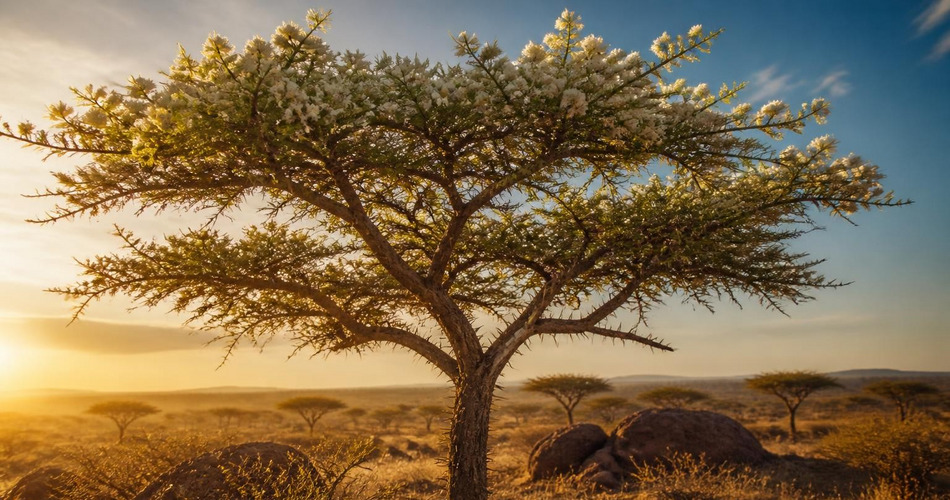
The acacia tree is one of the most layered symbols in the natural world. Because it remains green throughout the year, it has long been connected with immortality and eternal life. Its thorns also give it a protective quality, while its white or yellow blossoms suggest purity and new beginnings. In many traditions, the acacia is a symbol of friendship and secret love, its tough wood and delicate flowers representing both strength and fragility.
Beyond its physical attributes, the acacia is often seen as a bridge between the earthly and the divine. The tree’s ability to flourish in arid, unforgiving landscapes makes it a metaphor for resilience and spiritual perseverance. Its wood, which is dense and resistant to decay, has been used for sacred structures and objects, further cementing its role as a symbol of permanence and incorruptibility.
Positive and Negative Meanings
Positive associations: Acacia symbolizes immortality, resurrection, renewal, purity, protection, and enduring friendship. Its evergreen leaves represent the soul’s permanence, while its fragrant flowers evoke spiritual transcendence. The tree is also linked to fertility and abundance in some cultures, as its pods provide food for livestock and its blossoms attract pollinators.
Negative meanings: In some interpretations, the acacia’s thorns stand for danger, vigilance, or the pain that accompanies love. Because it grows in dry, harsh landscapes, it can also signify loneliness or struggle, and it is sometimes associated with mourning and death in funerary contexts. The tree’s very resilience can be read as a reminder of the hardships that create such strength, lending it a bittersweet connotation.
History and Origins of Acacia Symbolism
The acacia’s sacred status reaches back to ancient Egypt, where it was known as the ‘tree of life’ and the ‘tree of immortality.’ Egyptians used acacia wood to build ceremonial boats and to prepare mummies, believing it protected the deceased on their journey to the afterlife. The tree was dedicated to Osiris, the god of the afterlife, and to Isis, his consort. In the Book of the Dead, acacia appears as a symbol of resurrection.
In Hebrew tradition, acacia wood was used to construct the Ark of the Covenant and the Tabernacle, making it one of the most sacred materials in the Bible. The wood’s durability and fine grain made it ideal for these holy objects, and its symbolic meaning of purity and incorruptibility became deeply embedded in Judeo-Christian thought. The acacia’s presence in these foundational texts has ensured its enduring significance in Western religious symbolism.
Acacia Symbolism in Different Cultures
Egyptian culture, as mentioned, reveres the acacia for its links to resurrection and divine protection. In Hebrew and Christian contexts, acacia wood symbolizes purity and incorruptibility. In Africa, many communities see the acacia as a symbol of resilience; it provides shade, food, and medicine in challenging environments. The tree’s deep roots also make it a symbol of grounding and connection to ancestry in some African traditions.
The Australian golden wattle (Acacia pycnantha) is the national floral emblem, representing unity and endurance. In Japan, the acacia’s yellow flowers are associated with renewal and the arrival of spring. In India, the acacia (especially Acacia nilotica) is used in healing rituals and is considered a sacred tree in some regions. Across these diverse cultures, the acacia consistently carries themes of strength, protection, and spiritual vitality.
Spiritual Meaning of Acacia
Spiritually, the acacia encourages inner renewal and connection with the eternal. Its ability to survive in arid regions speaks to the soul’s persistence through trials. In Freemasonry, the sprig of acacia is a central symbol of the immortality of the soul; it is placed on symbolic graves to remind initiates that death is not the end. The evergreen nature of the acacia serves as a tangible reminder of the soul’s unending journey.
In Christian mysticism, the acacia’s thorns recall Christ’s crown, while its white blossoms symbolize the purity of the Virgin Mary. The tree’s presence in the Holy of Holies through the Ark of the Covenant further enhances its spiritual cachet. Meditating on the acacia can help one focus on themes of humility, endurance, and the promise of new life.
Acacia in Myths and Folklore
The most famous myth involving the acacia is the Egyptian story of Osiris and Isis. When Osiris was murdered and dismembered by his brother Set, Isis recovered his body parts and buried them. According to one version, the coffin holding Osiris became enclosed in a tamarisk or acacia tree at Byblos, so the tree came to represent the tomb and later the resurrection of the god. This myth established the acacia as a symbol of death and rebirth.
In Hebrew folklore, the acacia is sometimes identified with the burning bush of Moses, a fire that burns without consuming and signifies divine presence. Some African tales explain the acacia’s thorns as a gift from the sky god to protect the tree’s precious wood from harm. These stories highlight the acacia’s dual nature as both a sheltering and a sacred guardian.
Acacia in Dreams
Dreaming of an acacia tree often signals a time of renewal or a need for protection. Because the acacia is evergreen, it can indicate lasting friendships or a relationship that will endure. In psychological terms, the tree may represent a deep, rooted connection to your spiritual self. Seeing an acacia in a dream can also suggest that you are entering a phase of personal growth that is supported by unseen forces.
If the acacia is blooming, it suggests hidden feelings coming to light, while a bare or withered acacia may point to emotional drought. The dream’s context matters: a healthy acacia implies stability and hope, while a damaged one encourages self-reflection. Acacia dreams often appear during times of transition, serving as gentle guides toward resilience and inner peace.
Common Dream Scenarios
- Seeing a blooming acacia tree suggests a new beginning or the revelation of a secret.
- Climbing an acacia tree implies rising above difficulties or gaining a new perspective.
- Being pricked by its thorns warns of potential betrayal or a painful lesson.
- Receiving a bouquet of acacia flowers symbolizes admiration and secret affection.
- A withered acacia tree in a dream can indicate feelings of neglect or a need to reconnect with your inner strength.
Acacia in Superstitions and Omens
In some European traditions, carrying acacia leaves is believed to bring good luck and ward off evil spirits. The tree’s dense, protective canopy was thought to shelter people from negative energies, and placing acacia branches over doorways was a common folk charm. In other folk beliefs, the falling of acacia blossoms foreshadows a sudden change in fortune, while the wood’s use in incense is said to purify a space and drive away negativity.
Acacia itself has a history of being used in rituals for blessing homes and travelers. Some cultures believe that planting an acacia tree near a dwelling ensures longevity and peaceful relations among family members. These superstitions, while not widespread, reflect the tree’s enduring reputation as a protective and auspicious symbol.
Acacia in Art and Literature
The acacia is explicitly mentioned in the Bible, most notably in the Book of Exodus, where God commands the Israelites to use acacia wood for the Tabernacle and the Ark. In modern literature, the acacia appears in Colette’s novel ‘The Acacia’ (1921), where the tree embodies memories and the passage of time. The Australian poet Banjo Paterson wrote about the wattle in several poems, crafting it as a symbol of national identity and resilience.
In visual art, the acacia is featured in many ancient Egyptian murals and tomb paintings, where it is drawn as a slender tree with white flowers, representing resurrection and eternal life. The tree’s distinctive silhouette also appears in the backgrounds of Renaissance religious paintings, often serving as a subtle reference to the wood of the cross. These examples demonstrate how the acacia has been woven into the cultural fabric for millennia.
Acacia Tattoo Meaning
Acacia tree tattoos carry personal meanings of endurance, spiritual growth, and protection. People often choose an acacia branch with flowers to symbolize an eternal bond or a fresh start. The thorns in a tattoo can represent the idea that beauty and pain are intertwined, while the evergreen leaves are a reminder of resilience. For those with ties to Australia, the golden wattle tattoo is a proud sign of national belonging and strength.
The placement of an acacia tattoo can also alter its message. A delicate branch near the wrist might signify a new relationship, while a larger back piece could represent a lifetime of overcoming obstacles. Some individuals incorporate a small sprig of acacia into a larger memorial design, honoring a loved one’s memory with the promise of spiritual continuity.
Acacia Tree Variations and Their Meanings
Different species and flower colors deepen the tree’s symbolism. The golden wattle (Acacia pycnantha) is celebrated as Australia’s national flower, signifying unity and adaptability. The mimosa (Acacia dealbata) is given on International Women’s Day in parts of Europe as a token of respect and admiration. The white-flowered acacia (often Robinia pseudoacacia, though not a true acacia) is linked to purity and innocence.
The black acacia (Acacia melanoxylon) is valued for its hard wood and symbolizes strength and reliability. In some regions, the red-flowered acacia is associated with passion and courage. While the core meanings of endurance, renewal, and protection remain constant, the specific tone of the symbolism shifts with flower color and regional traditions. This variety allows individuals to choose the acacia variant that resonates most with their personal story.
Frequently Asked Questions
Q: What does the acacia tree symbolize?
A: The acacia tree symbolizes immortality, renewal, purity, protection, and enduring love across many cultures and spiritual traditions.
Q: Why is acacia wood considered sacred?
A: Acacia wood is sacred in Hebrew tradition because it was used to build the Tabernacle and the Ark of the Covenant, and in Egypt it was closely tied to resurrection and the afterlife.
Q: What does an acacia blossom mean in a dream?
A: An acacia blossom in a dream often indicates a hidden feeling or a secret admiration that is about to be revealed.
Q: Is the acacia tree mentioned in the Bible?
A: Yes, acacia wood is described in the Book of Exodus as the material for the Tabernacle and the Ark of the Covenant.
Q: What does a gold wattle symbol represent?
A: The golden wattle, Australia’s national floral emblem, symbolizes unity, resilience, and the Australian spirit.
Related Symbols
- Tree of Life – universal symbol of growth and connection, often linked with acacia in ancient cultures.
- Lotus – resurrection and purity, especially in Egyptian and Eastern traditions.
- Olive tree – peace and endurance, often compared to acacia in Mediterranean folklore.
- Palm tree – victory and eternal life, used alongside acacia in a spiritual sense.
- Burning Bush – the acacia is sometimes identified with the burning bush in Judeo-Christian tradition.