Briefly
Bread and salt together form a powerful cross-cultural symbol of hospitality, friendship, and mutual respect. Offering bread and salt to a guest is an ancient gesture of welcome, signifying that the host shares their sustenance and offers protection. The pairing also represents the essential elements of life—bread as the staff of life and salt as a preservative and flavor enhancer—making it a symbol of abundance, loyalty, and enduring bonds. In many traditions, this simple offering carries deep meaning, from sealing agreements to warding off evil.
What Does Bread And Salt Symbolize?
Bread and salt symbolize hospitality and the sacred duty of welcoming strangers. Across Slavic, Middle Eastern, and many European cultures, presenting bread and salt to a guest is a ritual that conveys the host’s goodwill and willingness to share what they have. The combination also represents friendship and loyalty, as sharing bread implies a bond of trust, while salt, a substance that preserves and purifies, suggests lasting commitment and protection. Together, they embody the core values of community: generosity, sustenance, and safety.
Positive and Negative Meanings
Positive associations: Bread and salt are overwhelmingly positive symbols, representing welcome, generosity, and the establishment of trust. The act of offering them is a universal sign of peace and a desire for harmonious relations. They also symbolize abundance and the basic necessities of life, reinforcing the idea of shared prosperity and mutual support.
Negative meanings: In some contexts, spilling salt is considered a bad omen, and bread that is stale or hard can symbolize hardship or scarcity. Refusing an offered piece of bread and salt can be seen as a grave insult, signaling rejection of friendship or even hostility. The negative meanings are less about the symbols themselves and more about the violation of the social contract they represent.
History and Origins of the Symbolism
The tradition of offering bread and salt dates back to ancient times. In Slavic cultures, the ritual of khleb-sol (bread and salt) was a formal greeting for honored guests, diplomats, and newlyweds. Historical records from medieval Russia describe how visiting dignitaries were met with bread and salt at the city gates. This custom likely originated from the practical need to ensure travelers were not enemies; sharing food disarmed suspicion and created a temporary bond. Salt, once a valuable commodity, was a sign of wealth and generosity, while bread represented the fundamental sustenance of life. Over centuries, this practice spread and evolved, becoming embedded in the folklore and social customs of many Eastern and Northern European nations.
Symbolism in Different Cultures
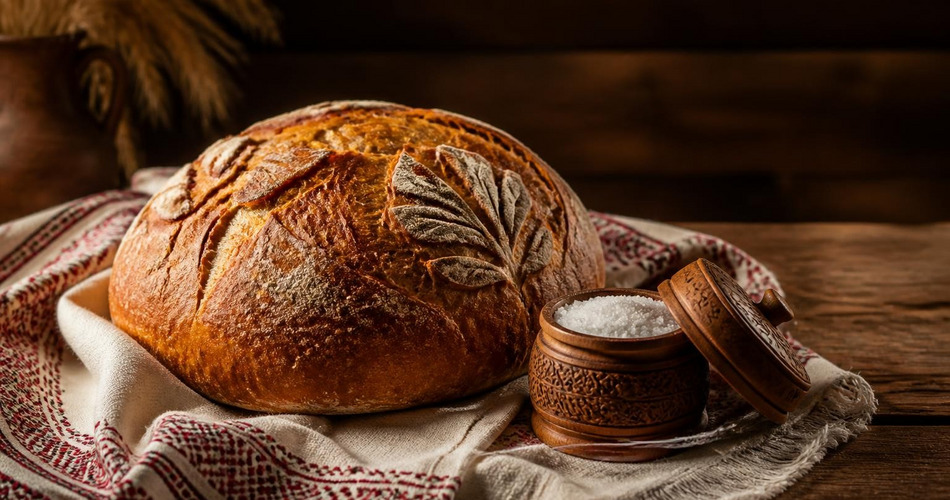
In Slavic cultures, bread and salt are central to hospitality. A traditional welcome for a guest involves a loaf of bread (often a round karavai) resting on an embroidered towel, with a salt cellar on top. The guest breaks off a piece of bread, dips it in salt, and eats it as a sign of acceptance. This ritual is also performed at weddings to bless the couple with prosperity and harmony. In Middle Eastern cultures, sharing bread and salt creates a sacred bond known as mellah wa khubz (salt and bread). Once someone has eaten salt with another, they are considered under that person’s protection, and betraying that trust is a serious offense. In Finnish and Baltic traditions, bread and salt are placed in a new home to ensure good fortune and to drive away evil spirits. The symbolism is remarkably consistent: bread and salt together signify a covenant of peace and mutual obligation.
Spiritual Meaning
Spiritually, bread and salt represent the essentials of life and the divine provision for humanity. In many religious traditions, bread is seen as a gift from God or the gods, while salt is a purifying and preserving agent. The combination can symbolize the balance of material and spiritual needs. In Christianity, bread is central to the Eucharist, representing the body of Christ, and salt is mentioned in the Bible as a symbol of covenant and purity (e.g., “You are the salt of the earth”). In pagan and folk spiritual practices, salt is used for cleansing and protection, and bread is offered to household spirits or deities as a token of gratitude and a request for blessings. Together, they create a powerful symbol of sacred hospitality and the sanctity of the home.
In Myths and Folklore
Bread and salt appear frequently in Slavic and Baltic folklore. One common folktale tells of a poor man who shares his last piece of bread and pinch of salt with a stranger, who is later revealed to be a god or a magical being in disguise. The man is rewarded for his generosity, reinforcing the moral that hospitality to strangers is a virtue. In Russian fairy tales, the phrase “bread and salt” is often used as a greeting or a blessing. There are also stories where salt is used to break a witch’s curse or to protect a home from evil spirits. The act of throwing salt over the left shoulder to ward off bad luck, a widespread superstition, has roots in these folk beliefs. The pairing is so ingrained that in some cultures, saying “bread and salt” to someone is a wish for their well-being.
In Superstitions and Omens
- Spilling salt is considered a bad omen in many cultures, often associated with bad luck or a quarrel. The remedy is to throw a pinch of the spilled salt over the left shoulder to blind the devil.
- Dreaming of bread can symbolize prosperity, hard work, or spiritual nourishment, while dreaming of salt may indicate preservation, tears, or wisdom.
- Giving bread and salt as a housewarming gift is believed to bring good luck, prosperity, and protection to the new home.
- If bread falls to the ground during a meal, it is sometimes seen as a sign that a hungry guest is approaching.
In Art and Literature
Bread and salt appear in several notable works of literature. In Russian literature, the offering of bread and salt is a recurring motif. For example, in Nikolai Gogol’s play The Government Inspector, the townspeople greet the mistaken official with bread and salt, highlighting their hypocrisy and desperation. In Fyodor Dostoevsky’s Crime and Punishment, the sharing of bread and salt between Raskolnikov and Sonya symbolizes a fragile bond of trust and redemption. In folk art, particularly in Russian and Ukrainian embroidery, the motif of bread and salt on a towel (rushnyk) is a common symbol of marriage and hospitality. The tradition is also depicted in numerous paintings, such as Ilya Repin’s The Zaporozhian Cossacks, where the offering of bread and salt is a gesture of defiance and welcome.
Frequently Asked Questions
Q: What does offering bread and salt mean?
A: Offering bread and salt is a traditional gesture of hospitality, friendship, and protection. It signifies that the host welcomes the guest and is willing to share their sustenance, creating a bond of trust and mutual respect.
Q: Why is salt considered a symbol of protection?
A: Salt has been used for centuries as a preservative and purifier. Its ability to prevent decay and its association with purity make it a symbol of protection against evil, negativity, and spiritual harm.
Q: Is the bread and salt tradition still practiced today?
A: Yes, the tradition is still alive in many cultures, especially in Slavic countries, where it is used to welcome official guests, at weddings, and during housewarming ceremonies. It remains a powerful symbol of goodwill.
Q: What is the origin of the phrase “bread and salt”?
A: The phrase originates from the ancient Slavic custom of khleb-sol, which was a formal greeting for honored guests. It has since become a proverbial expression of hospitality and friendship in many languages.
Related Symbols
- Bread – Sustenance, life, and community
- Salt – Purity, preservation, and protection
- Wine – Celebration, covenant, and joy
- Honey – Sweetness, abundance, and hospitality
- Olive Branch – Peace and reconciliation