Briefly
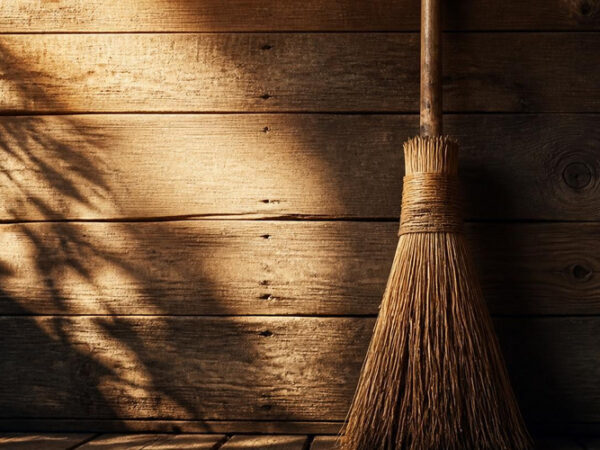
The broomstick is a powerful symbol that spans the ordinary and the magical. On one hand, it represents domesticity, cleanliness, and order — the humble tool used to sweep away dirt and clutter. On the other, it is deeply tied to witchcraft, flight, and the supernatural, serving as a vehicle for witches in folklore and a ritual object for purification and protection. Its dual nature makes the broomstick a symbol of transition, transformation, and the sweeping away of both physical and spiritual impurities.
What Does Broomstick Symbolize?
The broomstick symbolizes cleansing and renewal, both in the literal sense of sweeping floors and in the metaphorical sense of clearing away negative energy or bad influences. It is also a symbol of domestic labor and the feminine sphere, often associated with housewives and homemakers. At the same time, the broomstick represents magic, flight, and the ability to transcend ordinary boundaries — a key attribute of witches in folklore. This duality makes it a symbol of transition: the act of sweeping marks a boundary between the old and the new, the dirty and the clean, the mundane and the magical.
Positive and Negative Meanings
Positive associations: The broomstick is widely seen as a tool of purification and protection. In many traditions, sweeping the threshold or placing a broom near a doorway is believed to ward off evil spirits and negative energy. It also symbolizes order, diligence, and the ability to create a fresh start — sweeping away the old to make room for the new. In marriage ceremonies, such as the African American tradition of “jumping the broom,” the broomstick represents the sweeping away of past troubles and the beginning of a new life together.
Negative meanings: The broomstick is most famously linked to witchcraft and sorcery, often depicted as the flying vehicle of witches. This association can evoke fear, superstition, and the idea of dark magic. In some superstitions, dropping a broomstick or sweeping after dark is considered bad luck, and stepping over a broom is thought to bring misfortune. The broomstick can also symbolize the oppression of domestic labor when used as a metaphor for women’s confinement to household chores.
History and Origins of Broomstick Symbolism
The use of brooms for cleaning dates back thousands of years, with early brooms made from bundles of twigs or straw tied to a handle. The symbolic meaning of the broomstick, however, deepened during the Middle Ages in Europe. The association with witches likely arose from folk practices in which women would use brooms to sweep their homes and also to anoint themselves with flying ointments — hallucinogenic substances that gave the sensation of flight. The broomstick became a symbol of the witch’s ability to travel to sabbats and engage in magical practices. In the 15th and 16th centuries, witch trials cemented the broomstick as a key emblem of witchcraft in popular imagination.
Beyond witchcraft, the broomstick has been used in various cultural rituals. In ancient China, brooms were used to sweep away evil spirits during the New Year. In parts of Europe, a broom placed under the pillow was believed to protect against nightmares. The tradition of “jumping the broom” in African American weddings has roots in West African ceremonies and was also practiced by enslaved people in the United States as a way to formalize marriage when legal recognition was denied.
Symbolism in Different Cultures
In European folklore, the broomstick is almost exclusively tied to witches and the supernatural. It is depicted as a tool for flight, often with the witch riding it astride. This image has been reinforced by countless illustrations, stories, and films. In contrast, in many African and African American traditions, the broomstick symbolizes marriage and unity. The act of jumping over a broomstick together signifies the couple’s commitment to building a new home and sweeping away past hardships. In some Native American cultures, brooms made from sage or cedar are used in smudging ceremonies to cleanse spaces of negative energy. In Asian cultures, brooms are often associated with sweeping away bad luck, especially during lunar New Year celebrations.
Spiritual Meaning
Spiritually, the broomstick represents the act of purification — sweeping away not just physical dirt but also spiritual clutter, negative thoughts, and stagnant energy. Many modern pagan and Wiccan traditions use a broom (called a besom) in rituals to cleanse a sacred space before casting a circle. The broomstick is also seen as a symbol of the balance between the earthly and the spiritual, as it touches both the ground (the material world) and the air (the realm of spirit) when used in sweeping motions. In some practices, a broomstick is placed at the threshold of a home to protect the inhabitants and to welcome positive energy.
Broomstick in Myths and Folklore
The most enduring myth involving the broomstick is that of the flying witch. This image appears in European folklore from the late Middle Ages onward, with witches supposedly using broomsticks to travel to gatherings known as sabbats. The belief was so widespread that witch hunters often accused suspected witches of owning a broomstick as evidence of their pact with the devil. In some folktales, the broomstick is also a shape-shifting object — a witch could transform it into a horse or a staff. In Slavic folklore, the broom is used by the house spirit (domovoi) to protect the home, and sweeping must be done carefully to avoid angering the spirit. In Japanese folklore, a broom (hōki) is sometimes associated with the yōkai called “broom spirit” that can come to life and sweep on its own.
Broomstick in Dreams
Dreaming of a broomstick often relates to the need for cleansing or change in one’s life. It may indicate that the dreamer is trying to sweep away problems, bad habits, or negative influences. A broomstick in good condition suggests that the dreamer has the tools to make positive changes. A broken or worn broomstick can symbolize unfinished tasks or a sense of being unable to clean up a messy situation. Flying on a broomstick in a dream may reflect a desire for freedom, escape, or magical thinking. As with all dream symbols, context and personal associations are important for interpretation.
Common Dream Scenarios
- Sweeping with a broomstick: Indicates a need to clear away clutter, both physical and emotional. It suggests the dreamer is actively working to improve their life.
- Flying on a broomstick: Represents a desire for liberation, adventure, or a break from routine. It may also reflect feelings of empowerment or magical thinking.
- A broken broomstick: Suggests obstacles in the dreamer’s efforts to clean up a situation. It can symbolize unfinished business or a lack of resources to solve problems.
- Seeing a broomstick in a corner: May indicate neglected issues or something that has been swept aside and forgotten.
Broomstick in Superstitions and Omens
- Dropping a broomstick is considered bad luck in many European superstitions. It may mean that visitors are coming, or that misfortune is on the way.
- Sweeping after dark is thought to sweep away good luck or to invite spirits into the home. In some traditions, sweeping at night is believed to sweep the dead away.
- Stepping over a broomstick is said to bring bad luck or to invite quarrels. In some cultures, it is believed to cause a woman to have difficulty in childbirth.
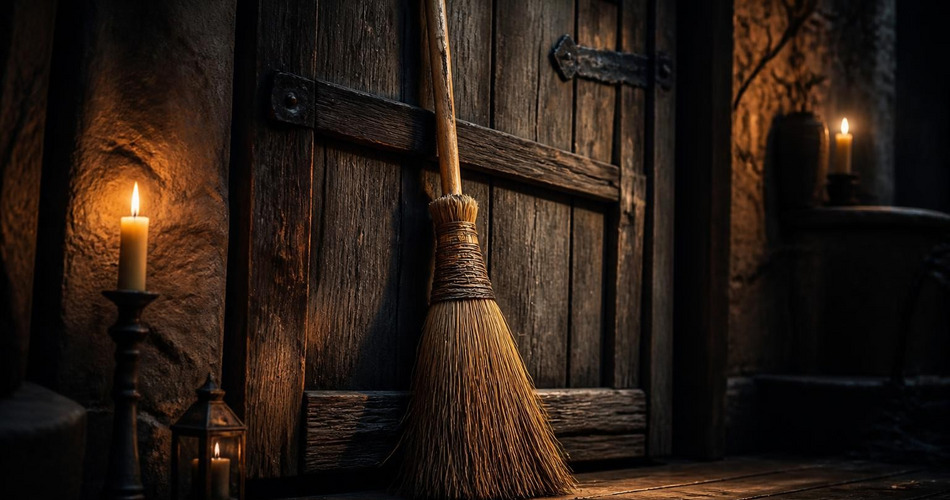
- Placing a broomstick across a doorway can be used to keep out evil spirits or unwanted guests. In some traditions, it is a sign that the home is protected.
- Buying a new broom is sometimes thought to bring good luck if done at the right phase of the moon, especially a new moon.
Broomstick in Art and Literature
The broomstick appears prominently in art and literature as a symbol of witchcraft and magic. In William Shakespeare’s Macbeth, the witches are associated with broomsticks in popular illustrations, though the play itself does not mention them. The most famous literary use is in J.K. Rowling’s Harry Potter series, where broomsticks are central to the sport of Quidditch and serve as the primary mode of magical transportation. In L. Frank Baum’s The Wonderful Wizard of Oz, the Wicked Witch of the West flies on a broomstick, and the image has been cemented in the 1939 film adaptation. In visual art, the broomstick is a staple of depictions of witches, from Albrecht Dürer’s engravings to modern Halloween imagery. In the Brothers Grimm fairy tale “The Sweep,” a broomstick plays a role in a magical transformation. The broomstick also appears in the classic children’s story The Little Sweep by Walter de la Mare.
Broomstick Tattoo Meaning
A broomstick tattoo often symbolizes a connection to witchcraft, magic, or the occult. It can represent independence, a free spirit, and a willingness to challenge societal norms. For some, it is a symbol of feminine power and the ability to create one’s own path. The broomstick may also be chosen as a symbol of domestic strength and the value of hard work. In tattoo art, the broomstick is frequently paired with a witch’s hat, a cauldron, or a crescent moon to emphasize its magical associations. A broomstick tattoo can also serve as a protective charm, warding off negative energy.
Meanings of Different Types of Broomsticks
- Besom (traditional birch broom): The besom is the classic witch’s broom, made from birch twigs bound to a handle. It symbolizes purification, protection, and the connection to nature. In Wicca, the besom is used in rituals to sweep away negative energy.
- Modern household broom: Represents domesticity, order, and the everyday act of cleaning. It can symbolize humility and the value of maintaining a clean home.
- Decorative or Halloween broomstick: Often used as a seasonal symbol of Halloween and witchcraft. It carries playful or spooky connotations and is associated with the holiday’s themes of magic and the supernatural.
Frequently Asked Questions
Q: What does a broomstick symbolize in witchcraft?
A: In witchcraft, the broomstick (or besom) symbolizes purification, protection, and the ability to travel between worlds. It is used in rituals to cleanse a space and to represent the union of the masculine (handle) and feminine (bristles) principles.
Q: Is it bad luck to drop a broomstick?
A: Yes, in many superstitions, dropping a broomstick is considered bad luck. It may signify that visitors are coming or that misfortune is near. Some traditions believe it can be remedied by immediately picking up the broom and kissing it.
Q: What does it mean to dream of flying on a broomstick?
A: Dreaming of flying on a broomstick often represents a desire for freedom, escape from routine, or a sense of empowerment. It can also indicate a connection to magical thinking or a need to rise above problems.
Q: Why do witches ride broomsticks?
A: The association likely comes from medieval folk beliefs that witches used broomsticks to fly to sabbats. Some historians suggest that women may have used hallucinogenic ointments applied to broomsticks, which gave the sensation of flight. The image was popularized through witch trials and later folklore.
Related Symbols
- Witch — the broomstick is the witch’s primary symbol of flight and magic
- Cauldron — another key tool of witchcraft, representing transformation
- Broom (household) — the everyday tool of cleaning and order
- Sweeping — the action of clearing away dirt and negativity
- Flight — the broomstick enables magical travel and transcendence
- Threshold — the broomstick is often placed at thresholds for protection