
Briefly
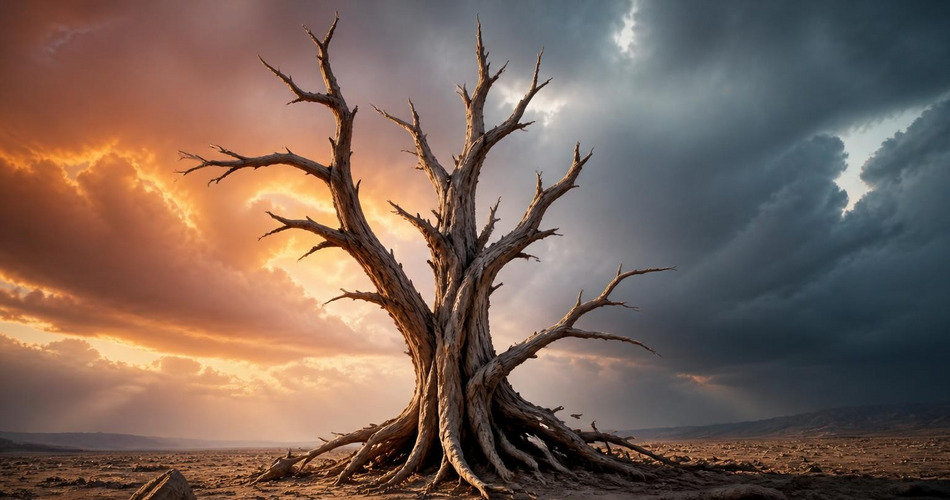
A dead tree is a powerful and universal symbol of death, endings, and the inevitable cycle of decay. However, its meaning is not purely negative; it also represents transition, the end of a chapter, and the stark beauty of impermanence. In many contexts, the dead tree stands as a silent witness to the passage of time, offering a space for reflection on mortality and the potential for renewal that follows complete stillness.
What Does a Dead Tree Symbolize?
The dead tree primarily symbolizes death and the conclusion of a life cycle. It is the physical manifestation of an ending, stripped of the vitality of leaves, fruit, and growth. Beyond simple death, it represents decay, the slow return of organic matter to the earth, and the process of dissolution that follows the end of life.
Simultaneously, the dead tree symbolizes endurance. Even in death, the tree often remains standing for years, its skeletal form a testament to its former strength. This duality makes it a potent symbol of resilience in the face of inevitable decline. It can also represent wisdom, as an ancient tree that has lived a long life and now stands in a state of profound stillness and knowledge.
Positive and Negative Meanings of the Dead Tree
Positive associations: The dead tree can symbolize a necessary ending that makes way for new growth, the clearing of the old to allow sunlight and space for new seeds. In this sense, it represents release, letting go of the past, and the peace that comes with acceptance of the natural cycle. Its stark form is often admired for its aesthetic beauty, representing the sublime and the raw truth of nature.
Negative meanings: More commonly, the dead tree evokes feelings of desolation, loneliness, and abandonment. A barren landscape with a single dead tree is a classic image of hopelessness and despair. It can symbolize infertility, blight, and a land that has been cursed or exhausted. In dreams and omens, it is often a harbinger of loss or the end of a relationship.
History and Origins of Dead Tree Symbolism
The symbolism of the dead tree is deeply rooted in the universal human experience of observing the natural world. In ancient agricultural societies, the death of a tree was a direct and tangible encounter with mortality, contrasting sharply with the life-giving vitality of a healthy tree. The Tree of Life is a ubiquitous symbol across cultures, and the dead tree naturally emerged as its opposite: the Tree of Death.
In Norse mythology, the World Tree Yggdrasil is an immense ash tree that connects the nine worlds. It is described as suffering, with its leaves eaten by deer and its trunk rotting from disease and the serpent Níðhöggr gnawing at its roots. This imagery of a dying or dead cosmic tree represents the fragility of existence and the constant struggle between order and decay. Similarly, in various shamanic traditions, the dead tree or a barren tree is seen as a threshold or a gateway to the underworld, a place where the veil between worlds is thin.
Dead Tree Symbolism in Different Cultures
In Celtic mythology, trees were revered as sacred beings. A dead tree could be seen as a portal to the Otherworld, a place where the spirits of the dead could pass through. The sight of a lone, dead tree in a field was often treated with a mix of reverence and fear.
In Buddhist and Hindu traditions, the dead tree is a powerful symbol of impermanence (anicca) and the cycle of samsara. The Buddha’s enlightenment occurred under the Bodhi tree, but the concept of the dead tree represents the opposite: the cessation of desire and the ego. The dead tree can symbolize the state of nirvana, where the fires of life have gone out, leaving a state of perfect peace and stillness.
In Native American cultures, a dead tree is often referred to as a “snag” or “wildlife tree.” While it represents death, it is also highly valued as a home for birds, insects, and small mammals. This practical observation gives the dead tree a positive symbolism of shelter and continued purpose even after its own life has ended.
In Western folklore, dead or barren trees were often associated with witches, gallows, and cursed lands. A dead tree in a garden was considered a bad omen, suggesting that the land or its inhabitants were blighted by some misfortune or curse.
Spiritual Meaning of Dead Trees
Spiritually, the dead tree represents the skeleton of the soul. It is a symbol of the core self that remains after all the distractions, attachments, and superficial layers of life have fallen away. It invites contemplation on what is truly essential.
Encountering a dead tree on a spiritual journey can signify a period of deep introspection and necessary solitude. It is a symbol of the dark night of the soul, a period of spiritual desolation that precedes a major breakthrough or transformation. The dead tree teaches that death is not an end but a transformation into another state of being, returning to the earth to nourish new life.
Dead Trees in Myths and Folklore
In Greek mythology, the Underworld was populated by asphodel meadows and barren, leafless trees. The poplar tree was associated with the underworld, and its pale, shimmering leaves were thought to represent the souls of the dead. The dead tree is a common feature of the landscape of the afterlife.
In Slavic folklore, the “World Tree” is a common motif. A dead or hollow tree is often a dwelling place for evil spirits or witches. Conversely, a specific type of dead tree, the “lightning-struck tree,” was considered powerful and sacred, believed to hold the power of the thunder god and capable of warding off evil.
In Japanese folklore, the kodama are spirits that live in trees. A tree that has died is believed to have lost its kodama. Cutting down a tree without proper ritual could bring a curse. A dead tree, therefore, is a place that has been abandoned by its spirit, a place of absence and potential danger.
Dead Trees in Dreams
In the language of dreams, a dead tree almost universally represents something that has ended or is no longer viable in the dreamer’s waking life. This could be a relationship, a career path, a creative project, or a phase of life. It is a symbol of stagnation and the need for change.
The context is crucial. A single dead tree in a lush landscape suggests a specific problem or loss, while a forest of dead trees indicates a more pervasive sense of hopelessness or environmental decay, either literal or metaphorical. The dream invites the dreamer to accept the ending and prepare for the new growth that must follow.
Common Dream Scenarios Involving Dead Trees
- A dead tree with a single green branch: This is a powerful symbol of hope and resilience. It signifies that while the majority of a situation or life phase is over, a spark of life, potential, or a new beginning remains.
- A dead tree falling: This represents the final collapse of an old structure or belief system. It can be frightening but signifies a necessary clearing of the way for something new.
- Cutting down a dead tree: This symbolizes a conscious decision to end something in your waking life. It is an act of agency and a step towards renewal.
- A dead tree with exposed roots: This points to the foundations of a situation being unstable or dead. It suggests that the problem is deep-seated and requires addressing the root cause.
- Standing under a dead tree: This can indicate seeking shelter from a storm in a place that offers no real protection, symbolizing a reliance on something that is no longer able to support you.
Dead Trees in Superstitions and Omens
- In many Western traditions, having a dead tree standing in your yard is considered bad luck. It is believed to attract negative energy, illness, or financial hardship to the household.
- A dead tree that suddenly falls without wind is considered a powerful omen of death or major change within the family.
- Conversely, in some rural traditions, leaving a dead tree (a “snag”) standing in a field is thought to bring good luck for the harvest, as it provides a home for insect-eating birds and beneficial wildlife.
- It is considered unlucky to use wood from a dead tree that was struck by lightning for building or firewood, as it is believed to carry the volatile energy of the storm.
- In Appalachian folklore, a dead tree near a house is an omen that a resident will soon die, especially if the tree is an evergreen or a fruit tree.
Dead Trees in Art and Literature
The dead tree is a potent and recurring motif in art and literature, almost always used to evoke a sense of desolation, existential dread, or the stark passage of time.
In literature, one of the most iconic uses is in Samuel Beckett’s play Waiting for Godot. The entire play revolves around a single, leafless tree on a barren road. The tree is a symbol of the utter hopelessness and absurdity of the human condition, yet the fact that it sprouts a few leaves in the second act hints at a fragile, almost mocking, possibility of renewal. Another powerful example is T.S. Eliot’s poem The Waste Land, which is filled with images of a barren, desiccated landscape: “Here is no water but only rock /… / and a dead tree.” The dead tree here symbolizes the spiritual and emotional sterility of the modern world.
In visual art, the dead tree is a central subject in Romantic painting. Caspar David Friedrich’s The Abbey in the Oakwood features a procession of monks walking past a grove of dead, gnarled oak trees towards the ruins of a church. The dead trees perfectly capture the mood of melancholy, transience, and the sublime power of nature. In modern photography, Ansel Adams’s stark images of dead trees in the Sierra Nevada, particularly the twisted bristlecone pines, elevate the dead tree to a symbol of ancient endurance and stark beauty.
In film, the dead tree often marks a threshold or a place of danger. In Ingmar Bergman’s The Seventh Seal, the knight Antonius Block plays chess with Death under a large, dead tree on the beach, a stark visual representation of the boundary between life and death. The dead tree in this context is a meeting place for the living and the dead.
Dead Tree Tattoo Meaning
A dead tree tattoo is a powerful choice for those who have experienced a profound loss or a major life transition. It symbolizes survival and the beauty that can be found in the aftermath of destruction. It is a mark of having weathered a storm and emerged changed.
The tattoo can represent a connection to the cycle of life, an acceptance of mortality, or a tribute to a person or thing that has passed. It is often chosen by those who identify with the gothic aesthetic or who have a deep appreciation for the stark, raw aspects of nature. It can also symbolize wisdom, gained through experience and loss.
Frequently Asked Questions
Q: Is a dead tree always a negative symbol?
A: No. While it commonly represents death, endings, and decay, it also symbolizes endurance, the beauty of impermanence, and the necessary clearing of the old to make way for new growth. In many cultures, it is seen as a vital part of the ecosystem, providing shelter and nutrients.
Q: What does a dead tree mean in a dream?
A: In dreams, a dead tree typically represents something in your waking life that has ended or is no longer viable, such as a relationship, career, or belief system. It is a symbol of stagnation and a call to accept the ending and prepare for renewal.
Q: Why is a dead tree a common symbol in art?
A: The dead tree is a powerful visual shorthand for themes of mortality, desolation, and the passage of time. Its stark, skeletal form creates a strong emotional impact, making it a favorite motif for artists exploring existential and sublime themes.
Q: What is the difference between a dead tree and a Tree of Life symbol?
A: The Tree of Life is a universal symbol of growth, connection, and vitality. The dead tree is its direct counterpart, symbolizing the end of growth, disconnection, and the stillness of death. Together, they represent the complete cycle of existence.
Related Symbols
- Tree of Life – The living counterpart, representing vitality and connection.
- Bare Branches – A symbol of winter, dormancy, and potential waiting to be realized.
- Stump – Represents what remains after a tree has been cut down, often symbolizing a foundation or a lingering presence.
- Fallen Tree – Symbolizes a completed cycle and the return to the earth.
- Driftwood – A dead tree that has been transformed by the water, symbolizing journeys and adaptation.


