Briefly
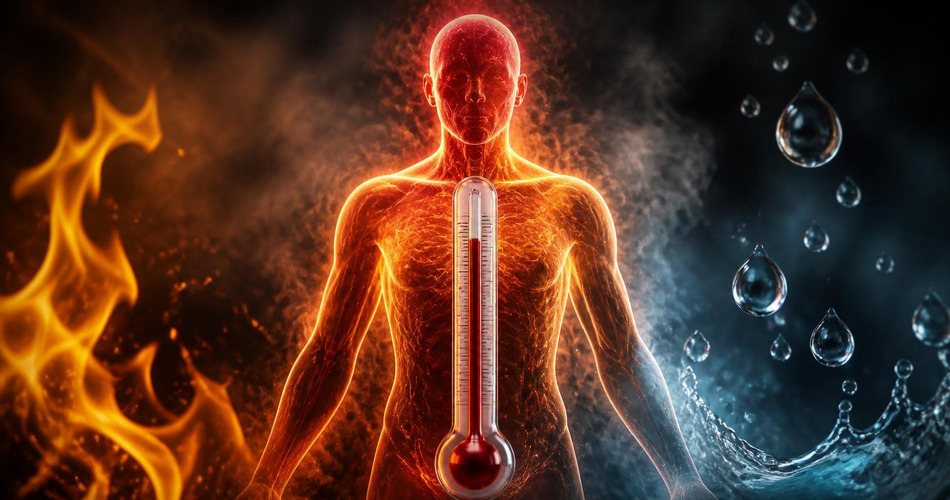
Fever is a natural bodily response to infection or illness, characterized by elevated temperature and often associated with a state of physical and mental intensity. Symbolically, fever represents a crisis point — a moment of intense heat that can either purify and transform or signal danger and decay. It appears in cultural traditions as a marker of spiritual cleansing, emotional passion, or a warning from the body. Whether seen as a destructive force or a necessary purging, fever carries layered meanings that connect the physical, emotional, and symbolic realms.
What Does Fever Symbolize?
Fever primarily symbolizes a state of crisis and transition. In the body, it indicates that something is wrong and that a reaction is underway. This crisis can be physical, emotional, or spiritual. Fever embodies the idea of heat as an agent of change — it burns away impurities, heats up latent emotions, and pushes a situation to a breaking point. Symbolically, fever is linked to the element of fire, representing both destruction and renewal.
Additionally, fever symbolizes passion — an intense, consuming emotion that can overwhelm reason. The flushed face, rapid pulse, and altered consciousness associated with fever mirror the experience of being consumed by love, anger, or desire. In many contexts, fever also represents a state of heightened awareness or altered perception, where ordinary reality gives way to a more intense, sometimes visionary experience.
Positive and Negative Meanings
Positive associations: Fever is often seen as a natural purification process, where the body increases its temperature to fight off pathogens and heal itself. Symbolically, this translates into the idea of cleansing — burning away what is harmful to make way for recovery and renewal. In spiritual traditions, a fever can represent a necessary trial that leads to greater clarity, strength, or transformation. It can also symbolize the heat of passion that fuels creative or romantic endeavors.
Negative meanings: Fever is first and foremost a sign of illness, danger, and imbalance. Uncontrolled fever can lead to delirium, convulsions, or death, making it a powerful symbol of vulnerability and mortality. It also represents emotional turmoil — being «consumed by fever» suggests being overtaken by uncontrollable feelings or obsessions. In some contexts, fever symbolizes a curse or punishment, a physical manifestation of inner turmoil or moral failing.
History and Origins of Fever Symbolism
The symbolic understanding of fever has deep roots in ancient medicine and philosophy. In Hippocratic and Galenic traditions, fever was explained by the humoral theory — an imbalance of the four bodily fluids (blood, phlegm, yellow bile, and black bile). Fever indicated an excess of yellow bile, associated with the element of fire and the season of summer. This model gave fever a natural place in the cycle of health and disease, making it a symbol of bodily and cosmic imbalance.
In medieval Europe, fever was often linked to divine punishment or demonic influence. Outbreaks of fever were interpreted as signs of God’s wrath or as attacks by evil spirits. The term «fever» itself comes from Latin febris, related to the idea of heat. Across many cultures, fever has been personified as a spirit or demon — for example, in some African and Caribbean traditions, fever is believed to be caused by malevolent forces that enter the body. These historical layers contribute to fever’s enduring symbolic weight as a marker of both physical and spiritual crisis.
Fever Symbolism in Different Cultures
In Traditional Chinese medicine, fever is understood as an excess of yang energy — heat that disrupts the balance of yin and yang. It symbolizes a state of internal fire that must be cooled and harmonized. Herbal remedies and acupuncture aim to restore equilibrium, reflecting the cultural view of fever as a sign of systemic imbalance rather than an isolated symptom.
In Western folk traditions, fever has been associated with the «burning out» of illness — a necessary evil that eventually leads to recovery. The phrase «sweating out a fever» embodies this idea of expulsion through heat. In some Native American healing practices, fever was seen as a purification ritual, where the body’s heat burned away spiritual impurities. Across many cultures, the hot-cold dichotomy plays a central role: fever represents the dangerous, consuming aspect of heat, while health is restored by cooling foods, water, or rest.
In African diaspora religions such as Vodou and Santería, fever can be associated with certain deities or spirits, especially those linked to fire, war, or heat. It may be interpreted as a sign of spiritual calling or attack, requiring ritual intervention. These cultural frameworks emphasize fever as a message from the spiritual realm, not merely a biological event.
Spiritual Meaning of Fever
Spiritually, fever is often interpreted as a process of purgation and refinement. Just as gold is refined by fire, a fever can be seen as a trial that burns away attachments, illusions, or toxins — both physical and spiritual. In Christian mysticism, fever and illness have sometimes been viewed as opportunities for spiritual growth, humility, and surrender to divine will. The intense heat of fever may correspond to the «fire of the spirit» that cleanses the soul.
In modern spiritual circles, fever is sometimes regarded as a healing crisis — a necessary step in releasing deep-seated emotional or energetic blockages. The rise in body temperature is thought to accelerate vibrational energy, helping to clear old patterns. While such interpretations lack empirical support, they reflect a persistent symbolic link between fever and transformation. Fever symbolizes a state of being pushed to one’s limits, after which a new equilibrium can emerge.
Fever in Myths and Folklore
In European folklore, fever was often attributed to malevolent spirits or to the «evil eye». In some traditions, a sudden fever in a child was believed to be caused by a witch’s curse or a fairy’s touch. Preventive measures included wearing amulets, reciting charms, or placing iron objects near the bed. The idea of «fever demons» appears in many cultures — for example, in ancient Mesopotamian religion, the demon Asakku was thought to cause fever and wasting diseases.
In Slavic folklore, fever was personified as a female spirit called «Likhomanka» or «Trakavitsa» — a shivering, feverish hag who would cling to a person and drain their vitality. She was often depicted as a pale, cold figure, contrasting with the heat of the fever itself. Offerings and protective rituals were used to drive her away. These stories underscore fever’s symbolic association with an intrusive, consuming force that must be expelled or appeased.
Fever in Superstitions and Omens
- Breaking a fever by sweating it out: A common superstition holds that inducing heavy sweating (by piling on blankets, drinking hot fluids, or staying in a warm room) will drive the fever away. This reflects the symbolic belief that fever is a poison that must be expelled through heat.
- Fever as a warning omen: In some folk traditions, a sudden fever that comes and goes without clear cause was seen as a warning from ancestors or spirits, alerting the person to a coming misfortune or a need for spiritual cleansing.
- Dreaming of fever: Some superstitions link fever dreams to prophetic visions or messages from the dead. A feverish dream was sometimes interpreted as a glimpse into the spirit world, with the heat of the fever lowering the barrier between worlds.
- Fever on certain days: In European folk medicine, the day on which a fever began could determine its severity or outcome. For example, a fever starting on a Sunday was considered particularly dangerous or unlucky.
Fever in Art and Literature
Fever appears as a potent symbol in literature, often representing mental or emotional crisis. In Thomas Mann’s novella Death in Venice, the protagonist Gustav von Aschenbach’s feverish obsession with the boy Tadzio mirrors a physical fever that eventually leads to his death — a symbol of consuming passion and artistic decay. The heat of the Venetian summer amplifies the sense of delirium and moral breakdown.
In Gabriel García Márquez’s novel Love in the Time of Cholera, fever serves as a metaphor for the irrational intensity of love. The character Florentino Ariza is struck by a fever-like ailment when he first meets Fermina Daza, linking romantic passion to a physical malady that is both debilitating and transformative.
In visual art, fever is rarely depicted directly but is often suggested through imagery of heat, flushed skin, and restless sleep. The Pre-Raphaelite painter John Everett Millais’s work The Death of Ophelia shows a figure consumed by water and madness, but the feverish quality of the greenery and the woman’s pallor evoke a sense of feverish dissolution. More explicitly, the German expressionist emphasis on distorted, fevered perspectives in paintings by Edvard Munch (such as The Sick Child) captures the emotional fever of illness and grief.
Frequently Asked Questions
Q: What does fever symbolize in a dream?
A: Fever in dreams often symbolizes emotional turmoil, stress, or a sense of being overwhelmed by inner heat. It may indicate a need to cool down or to address a hidden conflict that is «burning» inside. However, dream interpretations vary widely and depend on personal context; fever can also represent a breakthrough or awakening.
Q: Is fever always a negative symbol?
A: No, fever has both positive and negative symbolic dimensions. While it signals illness and danger, it can also represent purification, passion, and the transformative power of heat. Many cultures view fever as a natural healing process that ultimately leads to renewal.
Q: What does a fever tattoo symbolize?
A: Fever-related tattoos are uncommon but sometimes appear as symbols of passion, intensity, or a transformative life experience. A thermometer design or a flame incorporated into a tattoo may represent a «running hot» personality or a period of personal crisis that led to growth. The meaning is highly personal.
Q: How is fever used as a literary metaphor?
A: In literature, fever is often used to symbolize overwhelming emotion — especially love, obsession, or grief. It also represents social or moral decay, as in works where a fever epidemic mirrors a breakdown in society. Fever can signal a character’s internal conflict or a turning point in the narrative.
Related Symbols
- Fire — shares the element of heat, destruction, and purification
- Illness — fever as a specific type of illness with its own symbolism
- Passion — emotional heat associated with fever
- Transformation — the process of change that fever can represent
- Heat — the broader category of temperature-related symbolism
- Sweat — often linked to fever as a form of excretion and purification