Briefly
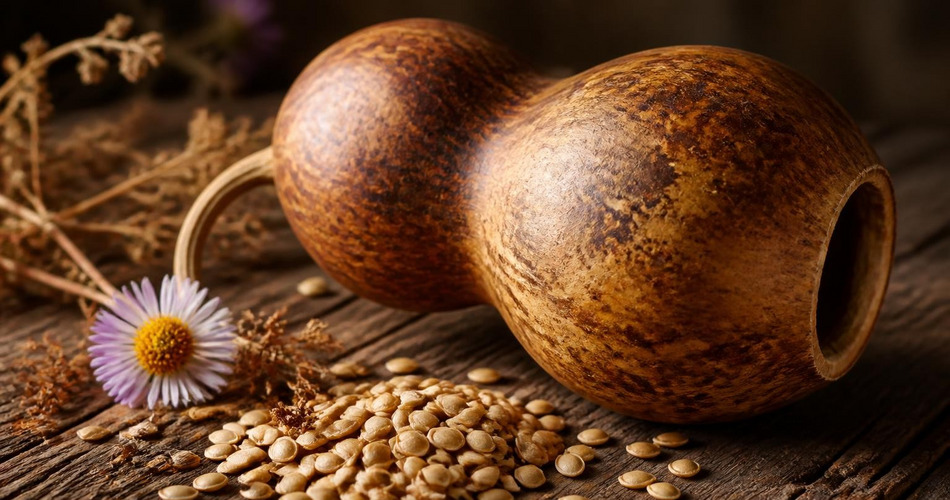
The gourd is one of humanity’s oldest cultivated plants, valued not as a food source but as a natural container, tool, and musical instrument. Its hard, hollow shell made it indispensable for storing water, grain, and other provisions, leading to strong associations with abundance, sustenance, and resourcefulness. Across the world, the gourd symbolizes protection, fertility, and the cycle of life, often appearing in rituals, folklore, and art as a vessel of transformation and renewal.
What Does Gourd Symbolize?
Gourds primarily symbolize abundance and prosperity. Their hollow interior, capable of holding liquids and food, makes them a natural emblem for storage, wealth, and provision. In many traditions, a gourd filled with water or grain represents a full pantry and a secure future.
Gourds also signify protection. Used as containers for medicines, talismans, or sacred objects, they are believed to safeguard their contents from harm. In some cultures, dried gourds are hung above doorways to ward off negative spirits.
Another core symbolic meaning is transformation. The gourd’s life cycle—from a soft, green fruit to a hard, durable shell—mirrors the journey of maturation and spiritual growth. This process of drying and hardening represents resilience and endurance through life’s challenges.
Positive and Negative Meanings
Positive associations: Gourds represent fertility, prosperity, and protection. They are seen as symbols of the earth’s generosity, providing sustenance and shelter. Their use in musical instruments, such as the African kora or the Chinese sheng, gives them a joyful connotation of celebration and communication.
Negative meanings: In some contexts, a hollow gourd can symbolize emptiness or a lack of substance. Its impermanence after drying can remind one of decay and mortality. Additionally, in certain folklore, a gourd may be associated with trickery or deception when used as a disguise or false container.
History and Origins of Gourd Symbolism
Gourds are among the earliest domesticated plants, with evidence of their use dating back over 10,000 years in both Asia and the Americas. Their hard, waterproof shells were essential for storing water, seeds, and fermented beverages long before pottery was developed. This practical utility ingrained the gourd as a symbol of survival and resourcefulness.
In ancient China, gourds were believed to have protective powers and were often carried as amulets. The gourd’s shape—a narrow neck and round body—was seen as an ideal container for capturing and holding good fortune. It became an emblem of longevity and was associated with the Eight Immortals, who were depicted carrying gourds.
In the Americas, pre-Columbian cultures used gourds as containers for pigments, medicines, and ceremonial objects. The gourd’s role in daily life made it a natural symbol of abundance and community sharing.
Gourd Symbolism in Different Cultures
In Chinese culture, the gourd is deeply auspicious. It is called “hulu” and is associated with the legendary healer Li Tieguai, one of the Eight Immortals, who used a gourd to contain powerful medicines. The gourd is thought to absorb evil spirits and bring good health, and it is often given as a gift to wish someone longevity.
Among Native American tribes, gourds were used as rattles in ceremonies and as containers for sacred items. The sound of the gourd shaker was believed to summon spirits and invoke protection. In the Pueblo tradition, gourd rattles are still used in rain dances to bring fertility to the land.
In African cultures, the calabash gourd is versatile: it holds water, serves as a bowl, and is crafted into musical instruments like the kora and balafon. It symbolizes community and hospitality, as sharing a calabash of water is a gesture of welcome. The gourd’s ability to produce sound also links it to communication and storytelling.
Spiritual Meaning of Gourds
Spiritually, the gourd represents containment and preservation. Its hollow interior is seen as a sacred space that can hold prayers, intentions, or healing energy. In some shamanic traditions, a gourd filled with stones or seeds is used as a rattle to clear negative energy and restore balance.
The gourd’s transformation from a living plant to a dry vessel mirrors the spiritual journey of shedding the physical and embracing the eternal. It is a reminder that what is hollow can be filled with purpose and that emptiness is not a void but a potential.
Gourd in Myths and Folklore
In Chinese mythology, the gourd of Li Tieguai is a central artifact. This magical gourd could produce medicines and even transport the immortal. It symbolizes the power to heal and transcend earthly limitations.
In West African folklore, the calabash bridge is a common motif: a gourd connects the human world to the spirit world. Stories tell of heroes using a gourd to cross rivers or to carry messages to the ancestors.
In Japanese folklore, the gourd is a symbol of good luck: the kappa, a river imp, is said to be compelled to bow when shown a gourd, making it a tool of protection. This belief gave rise to the practice of carrying small gourds as amulets against drowning.
Gourd in Superstitions and Omens
Many cultures attach superstitious significance to gourds:
- Hanging a dried gourd above the door is believed to protect the home from evil spirits and bring good fortune.
- Finding a gourd in a field is considered an omen of a bountiful harvest.
- A broken gourd might be seen as a warning of misfortune or loss of resources.
- In some traditions, offering a gourd of water to a stranger ensures safe travels for the giver.
Gourd in Art and Literature
In literature, the gourd appears as a symbol of humility and transformation. In the Chinese classic Journey to the West, the magical gourd of the immortal Li Tieguai is used to swallow demons, highlighting its protective and transformative power. In Japanese poetry, particularly haiku, the gourd is a seasonal symbol of autumn and the harvest.
In visual art, gourds are frequently depicted in still-life paintings from the Renaissance, where they represent the bounty of nature and the transience of life. Their textured shapes and warm colors made them a favorite subject for artists exploring light and shadow.
Frequently Asked Questions
Q: What does a gourd symbolize in Chinese culture?
A: In China, the gourd symbolizes longevity, good health, and protection from evil spirits. It is often associated with the Eight Immortals and used as a talisman for attracting good fortune.
Q: Are gourds considered lucky?
A: Yes, in many cultures, such as Chinese, Japanese, and West African, gourds are considered lucky objects that bring protection, abundance, and fertility.
Q: How are gourds used in spiritual rituals?
A: Gourds are used as containers for sacred objects, as rattles in ceremonies to clear energy, and as vessels for offerings. Their hollow form is seen as a receptacle for spiritual power.
Related Symbols
- Cornucopia – symbol of abundance and harvest
- Calabash – West African gourd symbol of fertility and protection
- Bottle – container symbolizing preservation and secrets
- Hollow log – similar transformation from living to durable object
- Pumpkin – related gourd symbol of harvest and Halloween