Briefly
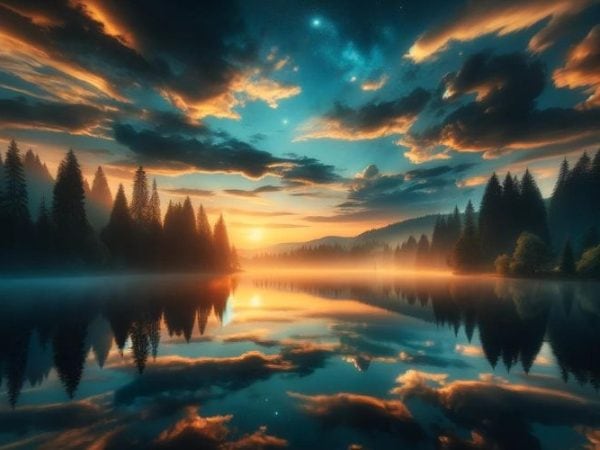
Half-light refers to the soft, ambiguous illumination that occurs at dawn, dusk, or in dim interiors—a state between full daylight and complete darkness. Symbolically, it represents transition, uncertainty, and the threshold between known and unknown realms. This quality of light often evokes a mood of mystery, introspection, or quiet anticipation, and has been used in spiritual practices, art, and literature to signal a shift in awareness or a liminal space where ordinary rules may not apply.
What Does Half-Light Symbolize?
Half-light is primarily a symbol of liminality—the in-between state that is neither fully light nor fully dark. It embodies transition, whether from day to night, waking to dreaming, or the conscious to the subconscious. Because it blurs boundaries, half-light also symbolizes ambiguity, uncertainty, and the potential for both revelation and concealment. In many traditions, it is a time when the veil between worlds is thin, making it a symbol of spiritual openness and heightened intuition.
Additionally, half-light can represent mystery and the unknown. Objects and shapes become indistinct, forcing the observer to rely on imagination or inner knowing. This quality makes half-light a powerful symbol for introspection, hidden truths, and the parts of life that resist clear definition.
Positive and Negative Meanings
Positive associations: Half-light is often linked to peace, calm, and quiet reflection. The soft illumination of dawn or dusk can inspire creativity, contemplation, and a sense of sacred stillness. It is a time for gentle transitions, such as waking slowly or winding down, and can symbolize hope (the first light of dawn) or rest (the fading light of evening). In spiritual contexts, half-light is valued as a conducive atmosphere for prayer, meditation, and ritual, as it encourages inward focus.
Negative meanings: On the darker side, half-light can evoke confusion, fear, and disorientation. When visibility is poor, threats may go unseen, and the inability to distinguish details can create anxiety. Symbolically, half-light may represent deception, half-truths, or moral ambiguity—a state where right and wrong are not clearly defined. It can also signify a lingering uncertainty or a period of waiting that feels uncomfortable or ominous.
Spiritual Meaning of Half-Light
In spiritual traditions, half-light is often regarded as a threshold between the material and the divine. Because it is neither fully light nor fully dark, it is considered a time when spiritual activity is heightened. The Khlysts, a Russian Christian sect, reportedly held rituals in half-light, lighting candles in a dry cellar and singing sacred verses from the Easter canon. This practice illustrates how half-light can be used to create an atmosphere of reverence and otherworldliness, separating participants from the ordinary world.
Half-light also appears in the concept of the “liminal zone” in shamanic and mystical practices—a space where the soul can travel between realms. The dim, diffuse light of twilight or a candlelit room helps quiet the mind and open the senses to subtle impressions, making it a favored condition for divination, vision quests, and meditative states.
Half-Light in Myths and Folklore
Twilight—the most familiar form of half-light—has long been regarded in folklore as a time when supernatural beings are active. In many European traditions, dusk is known as the “witching hour” or “between dog and wolf,” a moment when the boundary between the human world and the spirit world grows thin. Creatures such as fairies, ghosts, and shape-shifters are said to emerge at twilight, and it is considered unwise to wander alone at this hour. Similarly, dawn half-light is sometimes seen as a time of renewal but also of vulnerability, as spirits may linger from the night.
In Japanese folklore, the twilight hour (tasogare) is associated with encounters with supernatural beings like yōkai. The word itself is said to derive from “who is that?”—reflecting the uncertainty of seeing figures in dim light. These beliefs underscore half-light’s symbolic role as a space where the ordinary rules of reality are suspended.
Half-Light in Art and Literature
Artists and writers have long used half-light to create mood, suggest depth, and convey psychological states. In painting, the technique of chiaroscuro—strong contrasts between light and dark—often relies on half-light to model forms and evoke drama. Renaissance masters like Leonardo da Vinci employed sfumato, a soft, smoky transition between light and shadow that mimics the quality of half-light, to give their figures an enigmatic, lifelike presence.
In literature, half-light frequently sets the scene for introspection or mystery. For example, in T.S. Eliot’s poem “The Love Song of J. Alfred Prufrock,” the “half-deserted streets” and “restless nights in one-night cheap hotels” evoke the half-light of dusk or dawn, reflecting the speaker’s indecision and alienation. In film noir, the use of low-key lighting and deep shadows creates a world of moral ambiguity, where characters operate in a perpetual half-light that mirrors their uncertain motives.
Photographers also prize half-light, particularly the “golden hour” just after sunrise or before sunset, when the soft, warm illumination flatters subjects and adds a dreamlike quality to images. This widespread artistic use reinforces half-light’s symbolic connection to beauty, transience, and the fleeting nature of moments.
Frequently Asked Questions
Q: What does half-light symbolize in dreams?
A: While dream interpretation is highly personal, half-light in dreams often represents a transitional phase in life, uncertainty about a situation, or a need to look more closely at something that is not fully revealed. It may also indicate a period of introspection or spiritual awakening.
Q: Is half-light the same as twilight?
A: Twilight is a specific type of half-light that occurs at dawn and dusk. Half-light is a broader term that includes any dim, diffuse illumination, such as that found in shaded interiors, under cloudy skies, or in candlelit rooms.
Q: Why is half-light used in spiritual rituals?
A: Half-light helps create a boundary between ordinary and sacred space. It reduces visual distractions, encourages inward focus, and is often associated with times when the veil between worlds is thin, making it favorable for prayer, meditation, and ceremonial practices.
Related Symbols
- Twilight – the transitional light at dawn and dusk, often symbolizing change and mystery.
- Dawn – half-light of morning, representing hope, new beginnings, and awakening.
- Dusk – evening half-light, associated with endings, reflection, and the approach of night.
- Chiaroscuro – artistic technique using strong contrasts of light and shadow, often employing half-light for dramatic effect.
- Liminality – the concept of being in between states, of which half-light is a physical manifestation.
- Shadow – the absence of light, often paired with half-light to symbolize hidden aspects or duality.