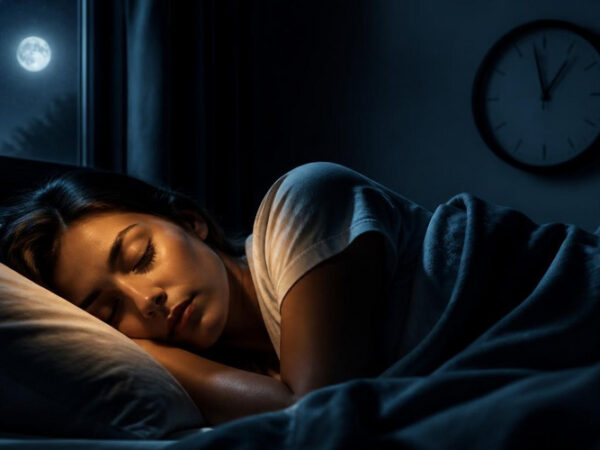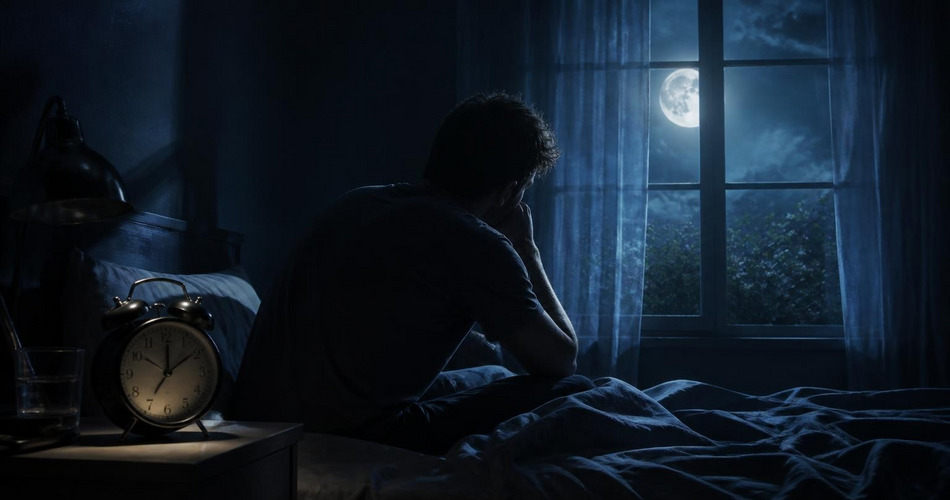
Briefly
Insomnia is far more than an inability to sleep. Historically and culturally, it has been read as a state of heightened vigilance, a restless dialogue between the conscious mind and the unconscious, and a punishment or purification of the soul. The sleepless night carries both negative meanings of anxiety, guilt and exhaustion and positive ones of creativity, spiritual wakefulness and protection. From ancient poetry to modern cinema, insomnia has served as a powerful symbol of inner turmoil, awakening and the relentless passage of time.
What Does Insomnia Symbolize?
At its core, insomnia symbolizes the restless mind — a consciousness that refuses to switch off when the world around it falls silent. In this sense, the sleepless night is a mirror of unresolved thoughts, worries or desires that surface when external distractions disappear.
Insomnia also symbolizes a threshold state. The insomniac remains suspended between day and night, between wakefulness and sleep, between the rational and the irrational. This in-between quality gives insomnia its rich symbolic charge in stories and spiritual traditions, where the night is usually the dominion of dreams, spirits and the unconscious.
Sleeplessness can also represent vigilance and responsibility. The guard, the shepherd and the sentinel stay awake while others sleep; insomnia, in that reading, is the price of care and watchfulness. Finally, insomnia is linked to the experience of time: the wakeful person experiences the night minute by minute, making insomnia a symbol of mortality and time that cannot be escaped or paused.
Positive and Negative Meanings of Insomnia
Positive associations: Insomnia has often been linked to creative inspiration and intellectual productivity. Many writers, artists and thinkers have described the night as a time of unusual clarity, when the absence of noise reveals new ideas or solutions. In spiritual traditions, sleeplessness can be a sign of divine watchfulness, prayer or a soul preparing for a revelation. Insomnia may also be understood as heightened sensitivity — the body and mind staying alert to danger, inspiration or inner truth.
Negative meanings: Far more commonly, insomnia is seen as a curse or affliction. It is associated with anxiety, depression, guilt and an inability to rest, and sleepless nights have historically been portrayed as punishments for wrongdoers or as the torment of those haunted by memories. In folklore and religious narratives, insomnia appears as a form of spiritual suffering, while in modern life it is treated as a disorder that drains energy, weakens judgment and leaves a person alienated from the natural rhythm of day and night.
History and Origins of Insomnia Symbolism
The experience of insomnia is as old as humanity, but its symbolic meanings have shifted across time. In ancient Greece and Rome, sleeplessness was closely associated with anxiety and love. In Greek poetry, the sleepless lover tossing in bed became a standard theme — the night magnifying desire and longing. The Greek word «agrypnia» meant both wakefulness and vigilance, reflecting the idea that staying awake could be a heroic or protective act as well as a torment.
In the Middle Ages, insomnia was frequently interpreted in religious terms. Sleeplessness was connected to spiritual trials: the devil was said to disturb sleep, while monks and ascetics voluntarily practiced night vigils as a way of drawing closer to God. The inability to sleep could be read as a sign of sin, demonic temptation or, conversely, of holy devotion.
During the Romantic era, the long sleepless night became a favorite motif in literature. Poets described insomnia as the hour of truth, when the self is stripped of everyday illusions. In the nineteenth century, with the rise of modern medicine, insomnia began to be classified as a medical condition, yet it retained its deep symbolic association with mental suffering and modernity — a symptom of the anxious, over-stimulated mind in an industrial and urban world.
Insomnia Symbolism in Different Cultures
Across cultures, insomnia has been explained in various ways. In traditional Chinese understanding of health and the body, sleep is linked to the balance of yin and yang; insomnia is seen as a disruption of that harmony, often caused by excess heat, worry, or emotional strain. Western European folklore, by contrast, often connected sleeplessness to supernatural influences — a spell, a restless spirit, or the «nightmare» that was literally imagined as a demon or hag who sat on the sleeper’s chest.
In many folk traditions, staying awake held practical and protective meaning. During wakes, vigils and certain festive nights, people deliberately stayed awake to guard the dead, protect the living from evil or mark important thresholds in the year. These customs show that wakefulness, especially at night, is not always a negative sign: it can be an act of courage, respect or community duty.
Spiritual Meaning of Insomnia
In spiritual contexts, insomnia is often understood as a call to pay attention. The sleepless hour is treated as a time when the soul can hear what is usually drowned out — whether that is understood as the voice of God, the prompting of conscience, or the quiet stirring of inner wisdom. Mystical literature in both Christianity and Islam describes night prayer and wakefulness as practices that purify the heart and bring the believer closer to the divine.
Insomnia can also be seen as a form of spiritual trial. The person who cannot sleep may be facing unresolved inner conflict or a testing of faith. In that light, the sleepless night is not merely a physical condition, but a period of inner wrestling — a dark passage that may eventually lead to greater self-awareness or a deeper sense of purpose.
Insomnia in Myths and Folklore
Insomnia appears in myths and legends in indirect but significant ways. In Greek mythology, Hypnos (Sleep) was a god, and disturbing the natural order of sleep could provoke divine displeasure. The Latin word «insomnia» itself comes from the idea of the absence of sleep, but older mythologies treated sleeplessness as a state that made people vulnerable to spirits, visions and otherworldly encounters.
Folk beliefs across Europe often warned that staying awake in certain places or at certain hours could expose a person to danger. The «witching hour» — traditionally the deepest part of the night — was considered a time when supernatural forces were strongest, and those who could not sleep might find themselves caught between the ordinary world and the spirit world. In some traditions, the sleepless were advised to count sheep, a custom whose origins are unclear but which points to the old folk belief that focusing the mind on simple, repetitive things could lure sleep back.
Insomnia in Dreams
Insomnia itself is not a dream but the absence of one, yet it appears in the dream world through images of restlessness, missed sleep and the inability to find a safe place to rest. In dream interpretation traditions, dreaming that you cannot sleep is usually understood not as a literal prediction but as a reflection of waking anxieties. It suggests a mind that feels overburdened, a life situation that leaves the dreamer feeling ungrounded, or an inner conflict that must be resolved before true rest is possible.
Dreams about sleeplessness often press the dreamer to look at the cause of their unease. Rather than treating the dream literally, dream interpreters tend to ask what is keeping the dreamer awake in life: what worry, decision or emotion has not been allowed to settle. Thus the symbol of insomnia in dreams can be a gate to self-examination.
Common Dream Scenarios Related to Insomnia
- Lying awake in a familiar room: often represents unresolved worries from daily life that follow the dreamer into the night.
- Being awake while others sleep: a sign of isolation, a burden, or a unique responsibility that separates the dreamer from others.
- Watching a clock that will not advance: feeling stuck in a difficult period or sensing that a decision has been postponed for too long.
- Searching for a quiet place to sleep: the mind seeking peace, safety or an escape from overstimulation.
- Waking suddenly with no memory of having slept: a sense of life passing by unnoticed, or an emotional truth that has not been consciously faced.
Insomnia in Superstitions and Omens
Traditional superstitions around Europe and the Mediterranean treated disturbed sleep not merely as a medical condition but as a warning. A sudden spell of sleeplessness could be interpreted as a sign that a household was under the influence of envy or maleficent magic, or that the sleeper had been «ridden» by a supernatural night creature. To counter this, people used amulets, herbs and protective charms placed under the pillow.
Other superstitions focused on specific causes of sleeplessness. Sleeping under an unlucky moon, leaving the window open to night air, or wearing a garment inside-out were all cited in folk belief as ways sleep might be stolen. While these ideas are not scientifically grounded, they show how deeply the experience of insomnia has been woven into explanations of fate, misfortune and unseen influences.
Insomnia in Art and Literature
Insomnia has a long literary history, and the sleepless night is one of the most persistent motifs in world literature. Perhaps the most famous example is William Shakespeare’s Macbeth, where Macbeth reports that he has «murdered sleep» and will sleep no more — a brilliant symbolic use of insomnia as the internal torment of guilt.
The Romantic poets elevated sleeplessness to an artistic condition. William Wordsworth’s sonnet «To Sleep» pleads for the return of sleep as a gentle, healing presence, expressing the misery of the wakeful mind. Perceived in some traditions as a sign of melancholy sensitivity, insomnia was also taken up by the American writer Edgar Allan Poe, whose story «The Tell-Tale Heart» dramatizes the state of a sleepless murderer tormented by guilt and hypersensitive hearing.
In twentieth-century literature, insomnia became a symbol of modernity’s anxious consciousness. The most famous example is the opening line of Gabriel García Márquez’s «One Hundred Years of Solitude», which begins with Colonel Aureliano Buendía remembering the day his father took him to see ice — a memory that rises from a life of long, restless nights. The Brazilian writer Machado de Assis also gave his narrator in «Dom Casmurro» a restless, night-bound temperament that mirrors his obsessive mental world.
Frequently Asked Questions About Insomnia Symbolism
Q: What does insomnia symbolize?
A: Insomnia generally symbolizes a restless mind, unresolved worries, anxiety, or a heightened state of vigilance. It can also represent creative sensitivity, spiritual wakefulness and the painful awareness of time.
Q: Can insomnia have a positive meaning?
A: In some contexts, yes. Sleeplessness has been linked to creative inspiration, clarity of thought and spiritual vigils, where staying awake is seen as an act of devotion or alertness rather than an affliction.
Q: What is the meaning of insomnia in dreams?
A: Dreams about sleeplessness usually reflect waking anxiety, overwork, or an inner conflict. They may also be invitations to address whatever is keeping the dreamer from feeling settled and at peace.
Q: Why did old cultures fear sleeplessness?
A: In older cultures, sleeplessness was often attributed to supernatural causes such as spirits, curses, or the devil. Because the night was believed to be a time of invisible powers, being unable to sleep was considered a sign of vulnerability to malevolent influences.
Related Symbols
- Sleep — the natural opposite of insomnia, associated with rest, healing and the unconscious.
- Night — the time in which insomnia unfolds, often symbolizing mystery, fear and the realm of dreams.
- Dreams — the inner world that remains out of reach for the insomniac.
- Moon — the night light commonly associated with wakefulness, madness and emotional intensity.
- Candle — an image of keeping watch through the dark hours, tied to vigils and sleepless nights.