Briefly
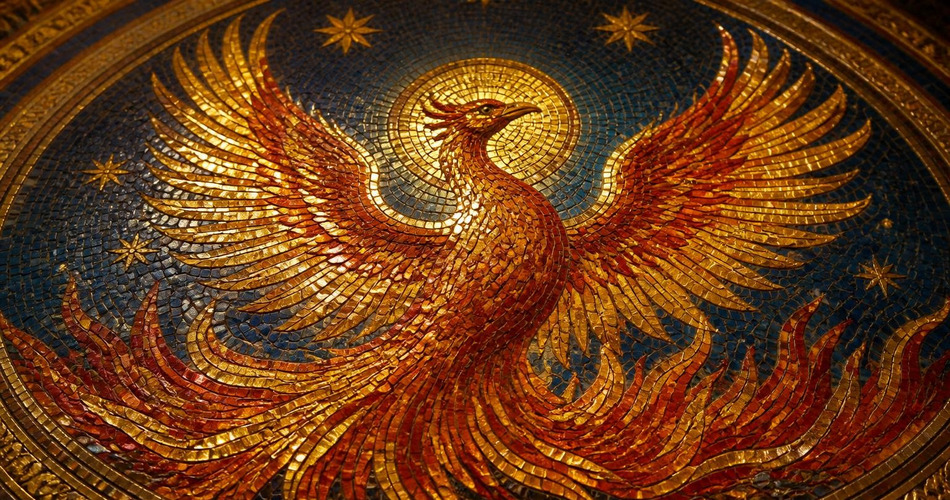
A mosaic is an artistic composition created from assembling small pieces of colored glass, stone, or other materials, known as tesserae. Its most profound symbolism lies in the concept of unity from diversity, demonstrating how individual fragments can come together to form a cohesive and beautiful whole. Mosaics often represent resilience, collaboration, and the intricate nature of existence, serving as a powerful metaphor for community, memory, and the construction of identity.
What Does Mosaic Symbolize?
At its core, the mosaic symbolizes wholeness emerging from fragmentation. Each individual tessera is incomplete on its own, yet when placed with intention and skill, it contributes to a larger, unified image. This makes the mosaic a potent symbol of community, where diverse individuals come together for a common purpose.
Mosaics also embody permanence and endurance. Made from durable materials like stone and glass, many ancient mosaics have survived for millennia, symbolizing the lasting power of art and history. The intricate patterns often found in mosaics, particularly in Islamic art, represent the infinite and the divine order of the universe.
Positive and Negative Meanings of Mosaic
Positive associations: Mosaics are strongly linked to harmony, collaboration, and the creation of beauty from disparate parts. They symbolize patience, meticulous craftsmanship, and the value of every small piece contributing to a greater whole. In a spiritual context, they represent the unity of the cosmos or the body of a community.
Negative meanings: Conversely, a mosaic can symbolize brokenness, fragmentation, or a life that has been shattered and painstakingly pieced back together. The visible seams and cracks can represent trauma, imperfection, or the scars of experience. A poorly made or decaying mosaic can symbolize decay, neglect, and the fragility of even the most durable creations.
History and Origins of Mosaic Symbolism
The earliest known mosaics date back to Mesopotamia, where colored cones were pressed into walls. The ancient Greeks advanced the art form with pebble mosaics, often depicting mythological scenes. For the Romans, mosaics became a widespread symbol of wealth, status, and cultural sophistication, adorning the floors of villas with intricate geometric patterns and scenes of daily life.
The symbolism of the mosaic underwent a profound transformation in the Byzantine Empire. Mosaics were elevated to a primary form of religious art, covering the walls and ceilings of churches. The use of gold and bright glass tesserae was not merely decorative; it was intended to symbolize the divine light of heaven, creating a shimmering, otherworldly atmosphere for worshippers. This tradition cemented the mosaic’s association with the spiritual and the eternal.
In the Islamic world, mosaics (particularly Zellige) became a highly refined art form. Due to religious restrictions on figural imagery, Islamic mosaics focused on complex geometric patterns and arabesques. These designs symbolize the infinite nature of God and the underlying mathematical order of creation, representing a universe that is both unified and endlessly diverse.
Mosaic Symbolism in Different Cultures
Roman Culture: In ancient Rome, mosaics symbolized domestic prosperity and cultural identity. They were a medium for displaying wealth, education (through mythological references), and a connection to the broader Roman world.
Byzantine and Orthodox Christian Culture: Here, mosaics are deeply spiritual. The iconic mosaics of Ravenna and Hagia Sophia are not just art; they are a form of theology in image, symbolizing the presence of saints, emperors as God’s representatives, and the radiant glory of the divine realm.
Islamic Culture: Islamic mosaic art, such as the stunning Zellige tilework of Morocco and the Alhambra, symbolizes the transcendence of God. The repetitive, infinite patterns are a form of meditation, reminding the viewer of the boundless and unified nature of creation.
Modern and Contemporary Culture: Today, mosaics often symbolize community, public art, and social cohesion. Community mosaic projects are used to beautify public spaces, commemorate local history, and bring people together. They can also symbolize recycling and renewal, as seen in art made from found objects or broken ceramics.
Spiritual Meaning of Mosaics
The spiritual meaning of a mosaic is deeply tied to the concept of unity. In many traditions, it represents the soul’s journey toward wholeness, integrating different experiences and aspects of the self. The process of creating a mosaic can be a meditative practice, requiring focus, patience, and a vision for the final, unified form.
In Christianity, the mosaic has a specific theological resonance. The individual tesserae can represent individual believers, and the complete image represents the unified body of the Church. The use of gold backgrounds in Byzantine mosaics symbolizes the heavenly kingdom, a space outside of normal time and space, filled with divine light.
Mosaic in Dreams
In the realm of dreams, a mosaic can be a powerful symbol of the psyche. Dreaming of a mosaic often represents the need to integrate different parts of one’s personality or life experiences. It can indicate a process of healing, where broken or fragmented memories are being pieced together to form a coherent narrative.
Common Dream Scenarios Involving a Mosaic
- Creating a mosaic: Symbolizes actively building your life, working on a complex project, or integrating different aspects of your identity.
- Seeing a broken or incomplete mosaic: May represent feelings of fragmentation, unresolved trauma, or a sense that something in your life is missing or needs repair.
- Admiring a beautiful mosaic: Could signify a sense of harmony, accomplishment, and the appreciation of the complex beauty in your life or relationships.
- Finding a piece of a mosaic: Represents a recovered memory, a new insight, or a small but crucial piece of a larger puzzle in your life.
Mosaic in Art and Literature
Mosaics have been a central art form for millennia. One of the most famous ancient examples is the Alexander Mosaic from the House of the Faun in Pompeii, which depicts the Battle of Issus. This masterpiece uses thousands of tesserae to create a dynamic and highly expressive historical narrative, symbolizing the power and drama of conquest.
The Byzantine mosaics in the Basilica of San Vitale in Ravenna, Italy, are among the most significant works of religious art in the world. The panels depicting Emperor Justinian and Empress Theodora are not just portraits; they are complex political and spiritual statements, symbolizing the emperor’s authority as deriving directly from God and his role as the head of both church and state.
In literature, the mosaic is frequently used as a metaphor. The phrase “mosaic of life” appears in countless works to describe the complex, fragmented, yet ultimately unified nature of human experience. The structure of some novels is described as “mosaic-like,” where multiple perspectives or storylines are woven together to create a complete picture, much like the tesserae of a mosaic.
Mosaic Tattoo Meaning
As a tattoo, the mosaic design carries rich personal symbolism. It is often chosen to represent the wearer’s journey of piecing their life back together after a difficult period. It can symbolize the beauty found in imperfection (wabi-sabi), the integration of diverse cultural or personal influences, or a commitment to building a complex, meaningful life.
Mosaic tattoos can also be used to cover scars, transforming a site of injury into a work of art. This act of covering a scar with a mosaic is a powerful symbol of healing, resilience, and reclaiming one’s body and story.
Meanings of Different Types of Mosaics
The materials and style of a mosaic can add layers to its meaning. Glass mosaics, especially those with gold or silver leaf, are strongly associated with the spiritual and the divine, as seen in Byzantine art. Their ability to catch and reflect light makes them symbols of enlightenment and transcendence.
Stone mosaics (opus sectile or pebble mosaics) are connected to the earth, permanence, and natural strength. They often symbolize the grounding of spiritual or intellectual concepts into the physical world. Geometric mosaics, prevalent in Islamic art, symbolize the infinite, the cosmos, and the logical structure of the universe.
Frequently Asked Questions
Q: What does a mosaic symbolize in life?
A: In life, a mosaic often symbolizes the idea that our experiences, both good and bad, come together to form a unique and beautiful whole. It represents resilience, integration, and the value of every part of our journey.
Q: What is the spiritual meaning of a broken mosaic?
A: A broken mosaic can spiritually symbolize a period of fragmentation, loss, or transition. However, it also carries the implicit promise of repair and renewal, suggesting that what is broken can be reassembled into a new, perhaps even more meaningful, form.
Q: Why are mosaics used in churches?
A: Mosaics are used in churches, particularly in the Byzantine tradition, to symbolize the heavenly realm. The shimmering gold and bright colors are meant to represent divine light, creating a sacred space that feels removed from the earthly world and focused on spiritual reality.
Related Symbols
- Tessera: The individual piece of a mosaic, symbolizing the small elements that make up a greater whole.
- Stained Glass: Like mosaics, stained glass assembles colored pieces to form an image, often with strong spiritual and narrative symbolism.
- Collage: A modern artistic equivalent, assembling disparate materials to create a unified composition.
- Patchwork Quilt: A textile mosaic, symbolizing domesticity, community, and the piecing together of history and memory.
- Kaleidoscope: Represents the ever-changing but symmetrical patterns of life, reflecting the mosaic’s theme of order from fragments.