Briefly
The pen is a universal symbol of communication, authority, creativity, and permanence. As the primary tool for writing, it represents the power to record thoughts, sign agreements, and leave a lasting mark on the world. Throughout history, the pen has been associated with knowledge, expression, and the ability to shape ideas into tangible form. Its symbolism ranges from the positive ideals of literacy and self-expression to more negative connotations of bureaucracy, finality, and the weight of irreversible decisions.
What Does a Pen Symbolize?
The pen primarily symbolizes communication – the ability to transmit thoughts, ideas, and emotions across time and space. It stands for the written word, which has been the foundation of record-keeping, law, literature, and personal correspondence. The pen also represents authority: signing a document with a pen signifies consent, commitment, and legal binding. In many contexts, the pen is a symbol of creativity, as writers, poets, and artists use it to bring imagination to life. Additionally, the pen embodies permanence – unlike spoken words, ink on paper creates a lasting record that can endure for generations.
Beyond these core meanings, the pen can symbolize education and knowledge, as it is the essential tool of students and scholars. It also represents personal identity, as handwriting is unique to each individual. In a broader sense, the pen is a symbol of power – the phrase “the pen is mightier than the sword” captures its ability to influence, persuade, and change society without physical force.
Positive and Negative Meanings
Positive associations: The pen is widely seen as a tool of empowerment. It enables self-expression, literacy, and the sharing of ideas. It symbolizes the freedom to write, create, and communicate across barriers. In professional settings, the pen represents competence, authority, and the ability to formalize agreements. For writers and artists, it is a symbol of inspiration and the creative process.
Negative meanings: On the darker side, the pen can symbolize bureaucracy and impersonal authority – the “red tape” of official documents and signatures. It can also represent the finality of decisions, such as signing a contract or a death warrant. The pen is sometimes associated with deceit, as in “poison pen letters” that spread malice anonymously. Additionally, the permanence of ink can symbolize the weight of irreversible mistakes or the burden of recorded history.
History and Origins of Pen Symbolism
The symbolic meaning of the pen is deeply rooted in the history of writing instruments. The earliest pens were reed pens used by ancient Egyptians and Mesopotamians for writing on papyrus and clay. The quill pen, made from bird feathers, became the dominant writing tool in the Western world from the 6th to the 19th century. The quill itself carried symbolic weight – feathers were associated with flight, freedom, and divine inspiration, linking the pen to higher thought and spirituality.
The invention of the fountain pen in the 19th century and the ballpoint pen in the 20th century democratized writing, making it accessible to the masses. This shift reinforced the pen’s symbolism of literacy and education. Throughout history, the pen has been a marker of status: fine pens made from precious metals or adorned with jewels were owned by the wealthy and powerful, while the common person used simpler instruments. The act of signing with a pen became a ritual of authority and trust, a tradition that continues today in legal and diplomatic contexts.
Pen Symbolism in Different Cultures
In Western culture, the pen is most strongly associated with the written word, law, and literature. The quill pen is a historical symbol of scholarship and the Enlightenment. In East Asian cultures, the brush pen (used in calligraphy) holds deep symbolic meaning. The brush is considered an extension of the artist’s spirit, and calligraphy is a form of meditation and self-cultivation. The brush pen symbolizes harmony, discipline, and the flow of energy (qi).
In Islamic culture, the pen (qalam) is mentioned in the Quran as a symbol of divine knowledge and creation. The first revelation to the Prophet Muhammad included the command to “read” and the mention of the pen as a tool for teaching humanity. Thus, the pen carries a sacred significance as a means of transmitting God’s word. In African cultures, the pen can symbolize the transition from oral to written traditions, representing education, progress, and the preservation of history.
Spiritual Meaning of a Pen
Spiritually, the pen is often seen as a conduit for divine or inspired communication. In many traditions, writing is considered a sacred act – the pen records prayers, scriptures, and wisdom. The pen symbolizes the ability to manifest thoughts into reality, aligning with the creative power of the universe. In esoteric traditions, the pen represents the element of air (thought and communication) combined with earth (the physical ink), bridging the mental and material worlds.
The pen also appears in spiritual symbolism as the “pen of destiny” – the idea that one’s fate is written by a higher power. This concept is found in various cultures, from the Greek Moirai (Fates) spinning and cutting the thread of life, to the Islamic belief that God’s pen has recorded all that will happen. In this sense, the pen symbolizes the unchangeable nature of destiny and the acceptance of divine will.
Pen in Myths and Folklore
In Greek mythology, the god Hermes is often depicted with a writing stylus, linking the pen to communication and commerce. The Egyptian god Thoth, the scribe of the gods, is shown with a reed pen and papyrus, recording the deeds of souls in the afterlife. Thoth’s pen symbolizes divine judgment and the recording of truth. In Norse mythology, the runes were believed to have been discovered by Odin, and the act of carving them with a tool (akin to a pen) was a magical act of shaping reality.
In European folklore, the quill pen was sometimes associated with witches and magic. It was believed that writing someone’s name with a special ink could cast a spell or bind a person’s will. The “pen of the devil” appears in tales where a contract signed in blood seals a pact with dark forces. These stories reflect the pen’s power to create binding agreements, both good and evil.
Pen in Dreams
Dreaming of a pen often relates to communication, self-expression, and decision-making. The pen in a dream can symbolize the dreamer’s desire to write their own story or to make a lasting impression. It may also indicate a need to sign documents or formalize agreements in waking life. The condition of the pen – whether it writes smoothly, runs out of ink, or breaks – provides additional insight into the dreamer’s state of mind.
A pen in a dream can also represent authority and responsibility. If the dreamer is using a pen to sign something, it may reflect a commitment or a life-changing decision. Alternatively, a pen that cannot write may symbolize frustration with communication or a feeling of powerlessness.
Common Dream Scenarios
- Writing with a pen: Indicates a need to express thoughts or record important information. It may also symbolize creativity and the flow of ideas.
- Pen running out of ink: Suggests a loss of inspiration, difficulty communicating, or a sense of being stuck in a situation.
- Finding a pen: Represents a new opportunity for expression or a solution to a problem. It can also symbolize receiving important news.
- Losing a pen: Reflects a fear of losing one’s voice, authority, or ability to influence a situation.
- Broken pen: Signifies a breakdown in communication or an inability to complete a task. It may also indicate a broken promise or contract.
- Receiving a pen as a gift: Suggests that the dreamer is being entrusted with responsibility or that their creative abilities are being recognized.
Pen in Superstitions and Omens
In some superstitions, giving a pen as a gift is considered bad luck because it can “cut” the relationship – the pen is sharp and can symbolize separation. However, in other traditions, a pen given as a gift is a sign of respect and a wish for success in writing or business. In the workplace, finding a pen on the ground is often seen as a good omen, indicating that a new idea or opportunity is coming.
There is a superstition that writing someone’s name in red ink is unlucky or disrespectful, as red is associated with blood and danger. In many cultures, signing a document with a pen that skips or leaks is considered an omen of future disputes or misunderstandings. The pen’s ink color also carries meaning: black ink is formal and authoritative, blue ink is trustworthy, and red ink is for corrections or warnings.
Pen in Art and Literature
The pen has been a powerful symbol in art and literature for centuries. The most famous literary reference is Edward Bulwer-Lytton’s 1839 play Richelieu, which contains the line “the pen is mightier than the sword.” This phrase has become a universal symbol of the power of writing over武力. In visual art, the pen is often depicted in still lifes alongside books and inkwells, representing scholarship and the life of the mind.
In literature, the pen appears as a motif in works about writers and authorship. For example, in The Name of the Rose by Umberto Eco, the monastery’s scriptorium is filled with pens and ink, symbolizing the preservation and corruption of knowledge. In Fahrenheit 451 by Ray Bradbury, the pen represents the forbidden act of writing and remembering in a society that burns books. The pen also features prominently in poetry, such as in “The Pen” by Paul Laurence Dunbar, where it symbolizes the poet’s voice and struggle.
Pen Tattoo Meaning
Pen tattoos are relatively uncommon but carry strong personal symbolism. A pen tattoo often represents a love of writing, journalism, or literature. It can symbolize the wearer’s commitment to self-expression, creativity, and the power of words. Some people get a pen tattoo to commemorate a career as a writer or to honor the act of storytelling. The pen may be depicted alone, crossed with a sword (to represent the “pen vs. sword” dichotomy), or as part of a larger design with ink, paper, or a quill.
For those who value education or have overcome illiteracy, a pen tattoo can symbolize knowledge and personal growth. It can also represent the idea of “writing one’s own destiny” – a reminder that the individual has the power to shape their life through choices and words.
Meanings of Different Types of Pens
- Quill pen: Symbolizes tradition, history, and the art of calligraphy. It is often associated with elegance, scholarship, and the Enlightenment era.
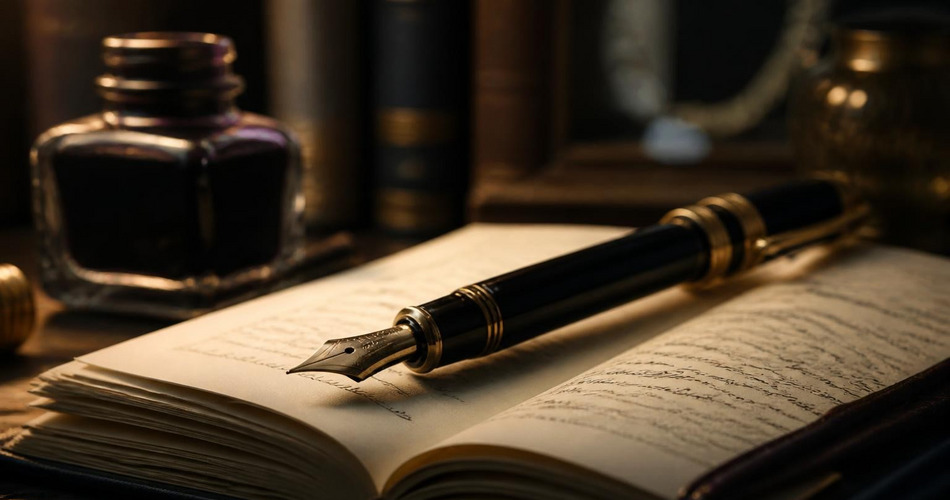
- Fountain pen: Represents sophistication, permanence, and the ritual of writing. Fountain pens are often given as gifts for graduations or promotions, symbolizing achievement and status.
- Ballpoint pen: Symbolizes practicality, modernity, and accessibility. It is the everyday tool of the common person, representing efficiency and mass communication.
- Brush pen: In East Asian cultures, the brush pen symbolizes harmony, discipline, and the flow of energy. It is used in calligraphy and ink painting, representing artistic mastery and spiritual cultivation.
- Digital pen / stylus: Represents the fusion of traditional writing with modern technology. It symbolizes innovation, digital creativity, and the evolution of communication.
Frequently Asked Questions
Q: What does it mean when you dream about a pen?
A: Dreaming about a pen often relates to communication, self-expression, and decision-making. It may indicate a need to write something down, sign a document, or take control of your narrative.
Q: Is a pen a good luck symbol?
A: In many cultures, the pen is considered a positive symbol of knowledge and authority. However, some superstitions warn against giving a pen as a gift, as it may “cut” a relationship. Overall, the pen is seen as a tool of empowerment.
Q: What does a pen symbolize in the Bible?
A: While the Bible does not specifically mention pens, the concept of writing is significant. The “finger of God” writing the Ten Commandments on stone tablets is a powerful image of divine authority. In the New Testament, the pen is implied in the letters of the apostles, symbolizing teaching and doctrine.
Q: What is the spiritual meaning of a pen?
A: Spiritually, the pen represents the ability to manifest thoughts into reality. It is a tool for recording prayers, sacred texts, and personal intentions. The pen also symbolizes the divine act of creation and the recording of one’s destiny.
Related Symbols
- Book: The pen and book together symbolize knowledge, education, and the written word.
- Inkwell: Represents the source of writing material, often paired with the pen in historical contexts.
- Quill: A specific type of pen, symbolizing tradition, flight, and inspiration.
- Scroll: An ancient writing surface, symbolizing history, law, and prophecy.
- Typewriter: A mechanical writing tool, symbolizing the industrial age of communication.
- Keyboard: The modern equivalent of the pen, representing digital communication and speed.