Briefly
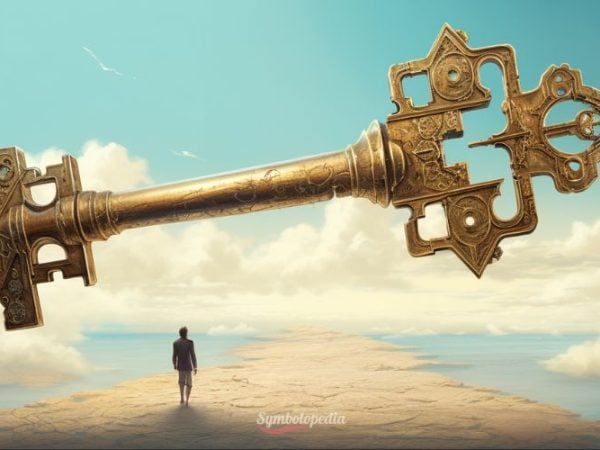
The skeleton key is a type of key with a simple, often ornate bit that can open multiple locks. Symbolically, it represents access, authority, and the power to unlock hidden knowledge or opportunities. Because it is associated with old locks and forgotten doors, it also carries connotations of secrecy, mystery, and nostalgia. In dreams and folklore, the skeleton key often appears as a tool of discovery or a sign of impending change.
What Does a Skeleton Key Symbolize?
The skeleton key is a potent symbol of access. Unlike modern keys that are unique to a single lock, a skeleton key is designed to open many locks, making it a metaphor for universal access or the ability to overcome barriers. This quality links it to ideas of freedom and opportunity—the chance to open doors that are otherwise closed to others.
In addition, the skeleton key often symbolizes authority and control. Historically, keys were carried by those in positions of power, such as jailers, castle keepers, or heads of households, who alone had the right to grant or deny entry. The skeleton key thus became an emblem of trust and responsibility, as well as a tool of surveillance and control.
Another layer of meaning is secrecy. Skeleton keys are frequently associated with old, mysterious places—attics, cellars, locked chests—where secrets are kept. They evoke curiosity and the thrill of discovery, representing the key to hidden knowledge or forgotten memories. This makes them popular in mystery and fantasy genres, where they often unlock secret passages or enchanted realms.
Positive and Negative Meanings
Positive associations: The skeleton key is often seen as a symbol of opportunity, opening doors to new possibilities and personal growth. It can represent resourcefulness—finding a way where others see only obstacles—and the power to unlock one’s potential. In spiritual contexts, it may signify enlightenment or the unlocking of higher consciousness.
Negative meanings: On the flip side, the skeleton key can symbolize unauthorized access, intrusion, and violation of privacy. Its ability to open many locks can be seen as a threat to security, making it a symbol of vulnerability. In some contexts, it may represent manipulation or the abuse of power, as when someone uses a master key to trespass on others’ secrets.
History and Origins of Skeleton Key Symbolism
The skeleton key, also known as a master key, has its roots in ancient lock mechanisms. The earliest known locks date back to ancient Egypt and Mesopotamia, around 4000 BCE, and were made of wood. The Romans developed metal locks and keys, introducing the warded lock design that remained in use for centuries. The skeleton key, with its simple bit that can bypass wards, emerged as a practical tool for locksmiths and homeowners.
Over time, the skeleton key became associated with status and authority. In medieval Europe, large, ornate keys were carried by nobles and clergy as symbols of their power over estates and churches. The key to the city, a ceremonial version, was presented to honored individuals. The skeleton key’s ability to open multiple locks made it a valuable tool for those in charge of large households or institutions, reinforcing its link to control and trust.
With the Industrial Revolution and the advent of more sophisticated lock systems, the skeleton key gradually became obsolete for security purposes. However, its symbolic power endured, and it became a nostalgic emblem of a bygone era, often romanticized in literature and art as a relic of mystery and adventure.
Skeleton Key Symbolism in Different Cultures
In many Western cultures, the skeleton key is associated with opportunity and success. The phrase “key to success” reflects the idea that certain actions or knowledge can unlock a bright future. In folklore, skeleton keys are often depicted as magical objects that open enchanted doors or reveal hidden treasures.
In Japanese culture, keys (including skeleton keys) can symbolize protection and the safeguarding of one’s home and family. They are sometimes used as charms to ward off evil spirits. In some traditions, a key placed under a pillow is believed to bring prophetic dreams.
In ancient Greek and Roman mythology, keys were attributes of gods like Janus (the god of beginnings and endings) and Hecate (goddess of crossroads and magic), who held the keys to the underworld. This association with the afterlife gives the skeleton key a spiritual dimension, representing the ability to unlock the mysteries of life and death.
Spiritual Meaning of the Skeleton Key
Spiritually, the skeleton key is often seen as a symbol of enlightenment and inner discovery. It represents the quest for hidden knowledge and the unlocking of one’s true potential. In esoteric traditions, keys are linked to the idea of initiation—passing through gates of wisdom to reach higher states of consciousness.
The skeleton key can also symbolize freedom from limitations. By opening multiple locks, it suggests the ability to transcend obstacles and move freely between different realms or states of being. This makes it a powerful metaphor for personal transformation and spiritual growth.
In some New Age and metaphysical circles, skeleton keys are used as talismans for manifestation, believed to help unlock opportunities and remove blockages in one’s life. However, such beliefs are not universally accepted and should be approached with an open mind.
Skeleton Key in Myths and Folklore
In folklore, skeleton keys frequently appear as magical artifacts. In European fairy tales, a key may be given to a hero as a reward for kindness, unlocking a hidden chamber or treasure. The Brothers Grimm tale “The Golden Key” tells of a boy who finds a golden key and uses it to unlock a mysterious box, though the story ends before revealing its contents—a classic example of the key as a symbol of potential and mystery.
In some traditions, skeleton keys are associated with ghosts and the supernatural. It is said that a skeleton key can open doors to haunted rooms or reveal hidden spirits. In others, the key is a protective charm, kept on a person to ward off evil.
In American folklore, the skeleton key is linked to the Underground Railroad, where it is said that escaped slaves used skeleton keys to unlock doors and gates along their journey to freedom. While the historical accuracy of such stories is debated, the key has become a symbol of liberation and resistance.
Skeleton Key in Dreams
Dreaming of a skeleton key often points to a desire for access or opportunity. It may indicate that the dreamer is seeking a way to overcome a problem or gain entry to a situation that has been closed off. The key can also represent hidden knowledge or a secret that the dreamer is trying to uncover.
In dream interpretation, the condition of the key matters. A shiny, new skeleton key may suggest a promising opportunity, while a rusty or broken key might indicate missed chances or obstacles. The act of using the key—whether it turns smoothly or gets stuck—can reflect the dreamer’s sense of ease or difficulty in achieving their goals.
Because skeleton keys are old-fashioned, they may also evoke nostalgia or a connection to the past. The dream might be urging the dreamer to revisit old memories or to learn from past experiences.
Common Dream Scenarios with a Skeleton Key
- Finding a skeleton key: suggests the discovery of a new opportunity or hidden talent.
- Using a skeleton key to open a door: indicates progress and the overcoming of obstacles.
- Losing a skeleton key: may reflect anxiety about missed chances or a sense of powerlessness.
- A skeleton key that doesn’t fit: represents frustration or a feeling that the solution is out of reach.
- Receiving a skeleton key as a gift: symbolizes trust and the granting of responsibility.
- A skeleton key that breaks in the lock: warns of potential setbacks or the consequences of forcing a situation.
Skeleton Key Superstitions and Omens
In some superstitions, a skeleton key is considered a lucky charm. Carrying one is believed to open doors to opportunities and protect against misfortune. In other traditions, a skeleton key placed on a windowsill is thought to ward off evil spirits and bring good luck to the home.
There is also a superstition that a skeleton key should never be lost, as it may symbolize losing control over one’s life or secrets. Finding a skeleton key is often seen as a positive omen, indicating that a long-awaited opportunity will soon appear.
In maritime folklore, skeleton keys were sometimes kept on ships to ensure safe passage and to unlock the mysteries of the sea. While not widely documented, such beliefs highlight the key’s association with protection and discovery.
Skeleton Key in Art and Literature
In literature, the skeleton key appears in various works as a symbol of mystery and access. In Lewis Carroll’s “Alice’s Adventures in Wonderland,” a golden key unlocks the tiny door to the garden, representing Alice’s entry into a magical realm. While not explicitly a skeleton key, it shares the same symbolic function.
In the Harry Potter series, skeleton keys are among the enchanted keys guarding the Philosopher’s Stone, emphasizing their role as both tools and obstacles. In mystery novels, skeleton keys are often the means by which detectives gain entry to locked rooms, symbolizing the power of investigation and truth-seeking.
In art, skeleton keys are frequently depicted in still lifes and vanitas paintings, where they symbolize the fleeting nature of worldly possessions and the unlocking of spiritual truths. They also appear in surrealist works, such as those by René Magritte, where keys often challenge perceptions of reality and access.
Skeleton Key Tattoo Meaning
A skeleton key tattoo often symbolizes freedom, opportunity, and the ability to overcome obstacles. It can represent the wearer’s desire to unlock their potential or to access hidden aspects of themselves. The design may also signify a connection to the past, nostalgia, or a love for vintage aesthetics.
Some choose a skeleton key tattoo to commemorate a significant life change or to express a belief in destiny and the power to open new doors. The key can be combined with other elements, such as a heart (symbolizing love unlocked) or a lock (representing a secret or a bond).
Because of its association with secrecy, a skeleton key tattoo might also indicate a person who values privacy or who holds a secret close to their heart.
Frequently Asked Questions
Q: What does a skeleton key symbolize?
A: It commonly symbolizes access, opportunity, authority, and secrecy, representing the power to unlock doors and discover hidden knowledge.
Q: Is a skeleton key lucky?
A: In some superstitions, carrying a skeleton key is considered lucky and is believed to open doors to opportunities and protect against misfortune.
Q: What does it mean to dream of a skeleton key?
A: Dreaming of a skeleton key often indicates a desire for access, opportunity, or the uncovering of secrets. The condition and use of the key in the dream can provide further insight.
Q: What is the spiritual meaning of a skeleton key?
A: Spiritually, it can represent enlightenment, inner discovery, and the unlocking of one’s potential. It is also associated with initiation and the overcoming of limitations.
Related Symbols
- Key – general symbol of access, knowledge, and authority.
- Lock – represents security, secrecy, and barriers.
- Door – symbolizes transition, opportunity, and the unknown.
- Gate – a threshold between different realms or states.
- Labyrinth – represents a journey to the center, often requiring a key to navigate.