
Briefly
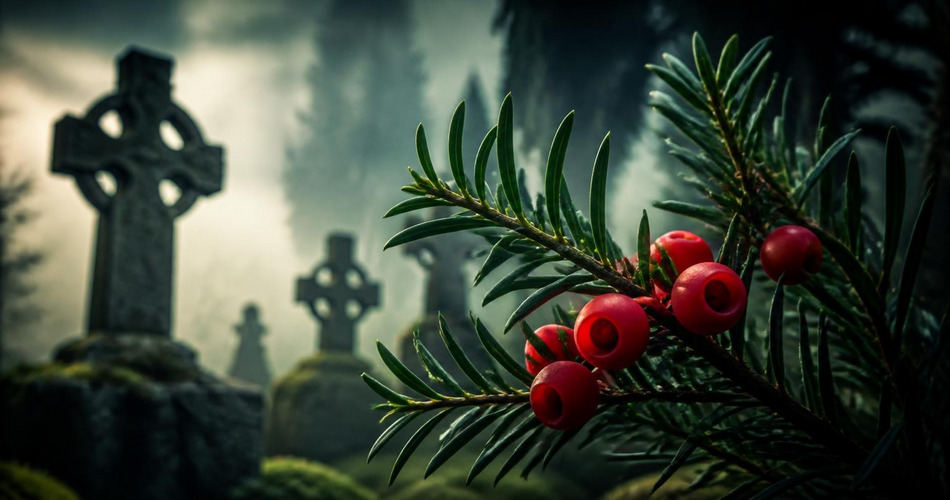
The yew sprig is a powerful symbol of death, rebirth, and eternity, deeply rooted in ancient traditions. Its evergreen needles and striking red berries represent the cycle of life, death, and regeneration. Often found in churchyards and associated with mourning, the yew sprig also carries meanings of protection and transformation. Its longevity—some yew trees live for thousands of years—makes it a potent emblem of endurance and the passage of time.
What Does the Yew Sprig Symbolize?
The yew sprig primarily symbolizes death and rebirth. Its evergreen nature, remaining green through winter, suggests life persisting beyond death. The tree’s toxic properties, especially in its needles and seeds, reinforce its connection to mortality, while its ability to regrow from old wood symbolizes resurrection and renewal. In many cultures, the yew is also a symbol of eternity, as individual trees can live for millennia, linking the past, present, and future.
Additionally, the yew sprig represents protection. In Celtic traditions, yew branches were hung over doorways to ward off evil spirits. The tree’s dense, dark foliage also made it a symbol of mystery and the underworld, often planted in graveyards to guard the dead and mark sacred ground. Its red arils (fleshy seed covers) are a rare splash of color, symbolizing the blood of Christ in Christian iconography or the life force within death.
Positive and Negative Meanings
Positive associations: The yew sprig is a symbol of eternal life, resilience, and protection. Its longevity and ability to regenerate after being cut down represent hope, continuity, and the triumph of life over death. In Christian symbolism, the yew is linked to the resurrection of Christ and the promise of everlasting life. It also signifies wisdom gained through time, as ancient yews are living witnesses to history.
Negative meanings: The yew sprig is also associated with death, mourning, and poison. Its toxic nature—all parts of the tree except the red aril are poisonous—makes it a symbol of danger and mortality. In folklore, yews were often seen as trees of doom, planted in graveyards to absorb the spirits of the dead. The tree’s dark, somber appearance can evoke sadness, loss, and the finality of death.
History and Origins of Yew Sprig Symbolism
The symbolism of the yew sprig dates back to prehistoric times. Yew trees are among the oldest living organisms in Europe, with some specimens estimated to be over 5,000 years old. Ancient Celts revered the yew as a sacred tree, associating it with the underworld and the cycle of death and rebirth. They planted yews in burial grounds and used their wood for making bows, such as the famous English longbow, which linked the tree to warfare and protection.
In Christian tradition, yews were often planted in churchyards to symbolize the resurrection of Christ and the promise of eternal life. The tree’s evergreen needles represented the soul’s immortality, while its red berries were seen as drops of Christ’s blood. This practice became widespread in medieval Europe, and many ancient yews still stand in churchyards across Britain and Ireland. The yew’s association with death and mourning also made it a common motif in funerary art and literature.
Yew Sprig Symbolism in Different Cultures
In Celtic culture, the yew was one of the five sacred trees of Ireland, known as the “Tree of Life” and “Tree of Death.” It was believed to guard the entrance to the Otherworld and was often planted in sacred groves and burial sites. Druids used yew wood for divination and ritual staffs, and the tree’s longevity made it a symbol of ancestral wisdom.
In Christianity, the yew sprig is a symbol of resurrection and eternal life. Its presence in churchyards was intended to remind the faithful of the promise of life after death. The yew’s red berries are sometimes called “blood berries,” representing the blood of Christ. In some traditions, yew branches were carried in funeral processions or placed on graves as a sign of hope.
In Japanese culture, the yew (known as ichii) is used in traditional woodworking and is associated with longevity and protection. Its wood was used to make sacred objects and amulets, and the tree was planted near temples and shrines to ward off evil spirits. The yew’s resilience and slow growth also symbolize patience and endurance.
Spiritual Meaning of the Yew Sprig
Spiritually, the yew sprig represents the cycle of life, death, and rebirth. It is a symbol of the soul’s journey through different realms, from the physical world to the afterlife and back. Meditating with a yew sprig is thought to help one connect with ancestors and gain insight into the mysteries of existence. The yew’s ability to regenerate from its own wood—new shoots growing from the trunk even after the tree has fallen—symbolizes spiritual renewal and the persistence of the soul.
In some spiritual traditions, the yew is considered a guardian tree, protecting sacred spaces and individuals from negative energies. Its dark, dense foliage is seen as a veil between worlds, making it a powerful tool for divination and connecting with the spirit world. The yew sprig is also used in rituals for letting go of the past and embracing transformation, as it teaches that death is not an end but a transition.
Yew Sprig in Myths and Folklore
In Celtic mythology, the yew is closely linked to the goddesses of death and rebirth, such as the Morrigan and Cailleach. Yew trees were believed to be the dwelling places of spirits and were often used as landmarks for sacred sites. The story of the Yew of Ross, a legendary tree in Ireland, tells of a yew that grew from the grave of a saint and was said to have healing powers.
In English folklore, yews were considered trees of doom and were often associated with witches and dark magic. It was believed that cutting down a yew would bring bad luck or even death. Some tales say that yews grow from the bodies of the dead, absorbing their souls and preventing them from haunting the living. This belief led to the practice of planting yews in graveyards to keep the dead at rest.
In Welsh folklore, the yew is one of the “three sacred trees of the Isle of Britain,” along with the oak and the apple. It was said that a yew tree planted near a home would protect the inhabitants from harm and bring good fortune. The yew’s wood was also used to make magical wands and staffs, believed to have the power to communicate with the dead.
Yew Sprig in Dreams
Dreaming of a yew sprig often symbolizes death, transformation, or a major life change. It may indicate the end of a phase in your life, such as a relationship, job, or personal belief system, and the beginning of something new. The yew’s association with eternity can also suggest a need to reflect on your legacy or the passage of time.
Seeing a yew sprig in a dream can also represent protection or a message from the spirit world. If the sprig is green and healthy, it may signify resilience and the ability to overcome challenges. A withered or broken yew sprig could indicate grief, loss, or unresolved issues related to death. The context of the dream—such as the location of the yew or your emotional response—can provide further insight into its meaning.
Common Dream Scenarios Involving Yew Sprigs
- Planting a yew sprig: This may represent a new beginning or the start of a long-term project that will endure over time.
- Receiving a yew sprig as a gift: Could symbolize a message of protection or a reminder of mortality from someone who has passed away.
- Walking through a yew grove: May indicate a journey into the subconscious or a confrontation with fears about death and change.
- A yew sprig in a churchyard: Often reflects feelings of mourning, spirituality, or a connection to ancestors and tradition.
- Breaking a yew sprig: Might suggest a disruption in your life or the end of a protective influence.
Yew Sprig in Superstitions and Omens
In many European traditions, the yew sprig is considered both a protective charm and an omen of death. Carrying a yew sprig was believed to ward off evil spirits and witches, but bringing one into the home was thought to invite death or misfortune. Some superstitions held that a yew tree growing near a house would protect the inhabitants, but if the tree died, it foretold the death of a family member.
In parts of England, it was considered unlucky to cut down a yew tree, as it was believed to be inhabited by spirits. Farmers would avoid using yew wood for tools or fences, fearing it would bring bad luck to their livestock. Conversely, yew sprigs were sometimes placed under pillows to induce prophetic dreams or hung over doorways during funerals to guide the soul of the deceased.
Yew Sprig in Art and Literature
The yew sprig appears in several notable works of literature. In William Shakespeare’s Macbeth, the witches use “slips of yew” in their cauldron, linking the tree to dark magic and prophecy. The line “slips of yew, sliver’d in the moon’s eclipse” emphasizes the yew’s association with death and the supernatural.
In Alfred, Lord Tennyson’s poem The Passing of Arthur, the yew is described as a symbol of mourning and eternal rest. The poet uses the yew’s dark, somber imagery to reflect the death of King Arthur and the end of an era. Similarly, in Thomas Hardy’s novel Tess of the d’Urbervilles, yew trees are mentioned in churchyards, reinforcing themes of fate, death, and the passage of time.
In visual art, yew trees and sprigs are often depicted in Romantic and Gothic paintings, such as those by Caspar David Friedrich, where they symbolize the sublime and the eternal. The yew’s twisted, ancient forms have also inspired modern artists and photographers, who capture its haunting beauty as a symbol of endurance and mystery.
Frequently Asked Questions About Yew Sprig Symbolism
Q: What does a yew sprig symbolize in a funeral context?
A: In funerals, a yew sprig symbolizes the hope of resurrection and eternal life, as well as mourning and remembrance. It is often placed on graves or carried in processions to honor the deceased and comfort the living.
Q: Is the yew sprig considered lucky or unlucky?
A: The yew sprig has dual symbolism: it is considered protective and lucky when used as a charm, but bringing it indoors is often seen as unlucky and associated with death. Its meaning depends on cultural context and intention.
Q: Can the yew sprig be used in modern spiritual practices?
A: Yes, the yew sprig is used in modern pagan and spiritual practices for rituals involving death, rebirth, protection, and connecting with ancestors. It is also used in meditation to explore themes of eternity and transformation.
Q: What is the difference between a yew sprig and a yew tree in symbolism?
A: A yew sprig carries the same core symbolism as the yew tree—death, rebirth, and eternity—but is often used as a portable talisman or in smaller rituals. The sprig may emphasize protection and personal connection more than the tree’s broader, ancient presence.
Related Symbols
- Oak tree – strength, endurance, and sacredness in Celtic and Norse traditions
- Cypress tree – mourning, death, and eternal life in Mediterranean cultures
- Evergreen tree – immortality, resilience, and the cycle of seasons
- Willow tree – grief, flexibility, and the moon in folklore
- Holly sprig – protection, fertility, and the winter solstice


