Briefly
Ruins are the visible remains of once-thriving structures, cities, or civilizations. They symbolize the inevitable passage of time, the fragility of human achievement, and the beauty that can emerge from decay. Ruins evoke a complex mix of melancholy and awe, reminding us of both loss and endurance. In art, literature, and dreams, they often represent the boundary between past and present, inviting reflection on mortality, memory, and renewal.
What Do Ruins Symbolize?
Ruins primarily symbolize impermanence. They stand as physical evidence that all human creations eventually crumble. This makes them powerful metaphors for the transience of power, wealth, and life itself. At the same time, ruins also represent resilience: many ruins have survived for centuries, outlasting the societies that built them. They thus embody a paradox of destruction and endurance.
Ruins often symbolize the weight of history. They are tangible links to the past, carrying stories of former inhabitants. They can evoke nostalgia, a longing for a lost golden age, or a warning about the consequences of hubris. In romantic and picturesque traditions, ruins are seen as aesthetically pleasing, their broken forms blending with nature to create a sense of harmonious decay.
Positive and Negative Meanings
Positive associations: Ruins can symbolize the beauty of aging and the natural cycle of life. They represent the possibility of new growth emerging from destruction, as plants and animals reclaim abandoned structures. Ruins also inspire contemplation, creativity, and a deeper appreciation for history. They remind us that nothing lasts forever, encouraging mindfulness and humility.
Negative meanings: Ruins are often associated with loss, abandonment, and failure. They can signify the collapse of empires, the end of civilizations, or personal tragedy. Ruins evoke feelings of sadness, loneliness, and the fear of being forgotten. They may also represent the destructive consequences of war, natural disasters, or human negligence.
History and Origins of the Symbolism
The symbolic significance of ruins has evolved over time. In ancient Rome, ruins were seen as reminders of the republic’s former glory and as warnings against moral decay. During the Renaissance, artists and scholars began to appreciate ruins as sources of historical knowledge and aesthetic inspiration. The Romantic movement of the 18th and 19th centuries elevated ruins to central symbols of sublime beauty, melancholy, and the power of nature over human ambition.
In the 20th century, ruins took on new meanings in the wake of world wars and industrial decline. They became symbols of collective trauma, memory, and the need for reconciliation. Today, ruins are often preserved as heritage sites, representing both the achievements and the failures of the past.
Symbolism in Different Cultures
In Western culture, ruins are frequently linked to the concept of the “sublime”—a mixture of awe and terror in the face of vast, ancient decay. Gothic literature and painting often use ruins as settings for mystery and the supernatural. In East Asian traditions, ruins may be viewed through the lens of Buddhist impermanence (anicca), where decay is a natural part of existence. Japanese aesthetic concepts like wabi-sabi celebrate the beauty of imperfection and transience, which aligns closely with the symbolism of ruins.
In the Islamic world, ruins of ancient cities like Persepolis or Palmyra are seen as reminders of God’s power and the fleeting nature of earthly glory. In many indigenous cultures, ruins are sacred ancestral places, connecting the living to their forebears and to the land itself.
Spiritual Meaning
Spiritually, ruins invite contemplation of the cycle of creation and destruction. They can represent the soul’s journey through loss and renewal. Meditating on ruins may help individuals accept the impermanence of life and find peace in the knowledge that all things pass. Ruins also symbolize the presence of the past within the present, encouraging a deeper connection to history and to the generations that came before.
In Myths and Folklore
Ruins frequently appear in myths and folklore as haunted or cursed places. Stories of lost cities like Atlantis or El Dorado often involve ruins that hide great treasures or ancient knowledge. In European folklore, ruins of castles and abbeys are settings for ghostly encounters and legends of buried gold. The ruins of Pompeii, preserved by volcanic ash, have inspired tales of sudden catastrophe and frozen moments in time. In many traditions, ruins are considered thresholds between the human world and the spirit realm.
In Dreams
Dreaming of ruins often reflects feelings of loss, abandonment, or the end of a phase in life. Ruins in dreams can symbolize neglected aspects of the self, forgotten memories, or unresolved grief. They may also indicate a need to let go of the past and rebuild. The condition of the ruins—whether overgrown, crumbling, or partially restored—can provide clues about the dreamer’s emotional state.
Common Dream Scenarios
- Exploring ruins: Suggests a search for hidden knowledge or a desire to understand the past. It may indicate curiosity about family history or personal origins.
- Living in ruins: Reflects feelings of insecurity, poverty, or emotional desolation. It can also represent a temporary state of transition.
- Ruins suddenly collapsing: Warns of an impending breakdown or the end of a situation. It may signal a need to prepare for change.
- Finding treasure in ruins: Symbolizes discovering value in what seems lost or discarded. It can point to untapped potential or forgotten strengths.
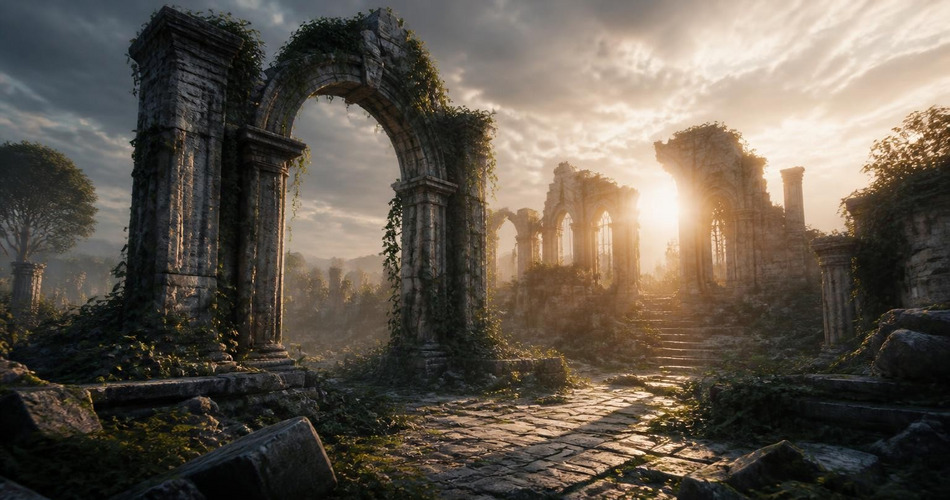
- Ruins overgrown with plants: Indicates that nature is reclaiming what was once built, suggesting acceptance of change and the possibility of new growth.
In Superstitions and Omens
In some folk traditions, ruins are considered unlucky places to visit after dark, as they are believed to be inhabited by restless spirits. Taking stones or artifacts from ruins is often thought to bring bad luck, a belief reinforced by stories of curses associated with archaeological sites. Conversely, ruins are sometimes seen as protective, as their ancient stones are thought to ward off evil. In certain cultures, ruins mark the boundaries between the living and the dead, and are treated with respect and caution.
In Art and Literature
Ruins have been a central motif in art and literature for centuries. In poetry, Percy Bysshe Shelley’s “Ozymandias” describes the shattered statue of a once-mighty king in a vast desert, using ruins to critique the vanity of power and the inevitability of decline. The painting series “The Course of Empire” by Thomas Cole depicts the rise and fall of a civilization, ending with ruins being reclaimed by nature. In literature, the novel The Ruins by Scott Smith uses an ancient Mayan ruin as a setting for horror, symbolizing the dangers of unchecked curiosity and the unknown. Ruins also appear in the works of Romantic poets like Lord Byron and in the paintings of J.M.W. Turner, who often portrayed crumbling abbeys and castles bathed in atmospheric light.
Tattoo Meaning
Ruins are a less common but meaningful tattoo motif. They can symbolize personal resilience, the beauty of imperfection, or a connection to history. A tattoo of ruins may represent overcoming a difficult period or honoring one’s heritage. The imagery often includes broken columns, overgrown arches, or crumbling walls, sometimes combined with natural elements like ivy or trees to emphasize the theme of rebirth. Ruins tattoos appeal to those who value introspection and the acceptance of life’s transience.
Meanings of Different Types, Colors, or Variations
- Ancient ruins (e.g., Greek, Roman): Emphasize themes of classical knowledge, democracy, and the fall of empires.
- Medieval ruins (castles, abbeys): Often evoke romance, chivalry, and the supernatural.
- Industrial ruins (factories, mills): Represent the decline of industry, economic change, and the loss of working-class communities.
- War ruins (bombed buildings, battlefields): Symbolize trauma, sacrifice, and the cost of conflict.
- Ruins overgrown with vegetation: Highlight nature’s resilience and the cycle of life and death.
Frequently Asked Questions
Q: What do ruins symbolize in dreams?
A: In dreams, ruins often symbolize feelings of loss, abandonment, or the end of a life phase. They can also represent forgotten memories or a need to rebuild.
Q: Are ruins always negative symbols?
A: No, ruins can also have positive meanings such as endurance, beauty in decay, and the possibility of renewal. They inspire reflection and creativity.
Q: Why are ruins popular in art and literature?
A: Ruins are powerful visual and narrative devices that evoke themes of time, mortality, and the sublime. They allow artists and writers to explore the relationship between humanity and nature, and between past and present.
Q: What is the spiritual significance of ruins?
A: Spiritually, ruins remind us of impermanence and encourage acceptance of life’s cycles. They can be sites for meditation on loss, memory, and renewal.
Related Symbols
- Abandoned buildings – similar themes of loss and neglect
- Ghost towns – deserted settlements with a sense of haunting
- Fossils – remnants of ancient life, symbolizing deep time
- Broken columns – a classic symbol of decay and fallen glory
- Overgrown gardens – nature reclaiming human works
- Archaeological sites – ruins as sources of knowledge and mystery