Briefly
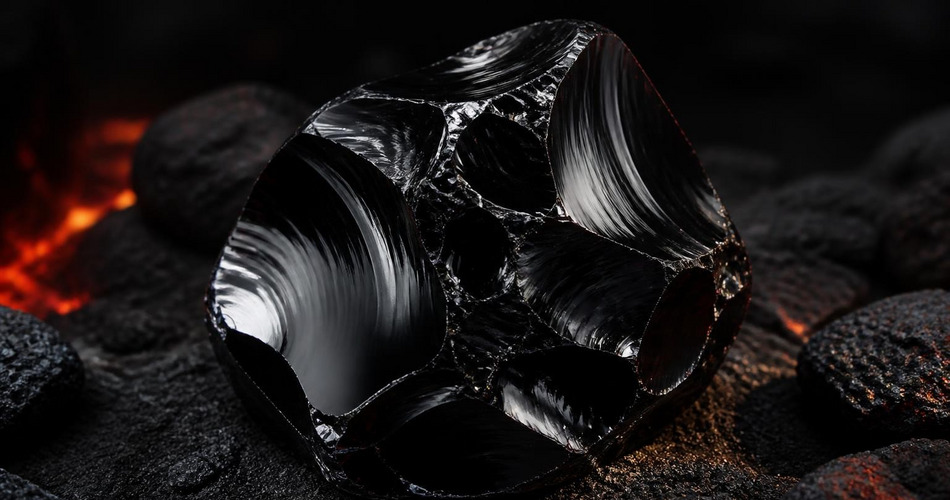
Obsidian is a naturally occurring volcanic glass formed when lava cools rapidly, and it has been valued by human societies for thousands of years. Its deep black color, sharp edges, and glassy texture have made it a symbol of protection, truth, and inner strength. Across different cultures, obsidian has been used for tools, weapons, mirrors, and ritual objects, and it continues to carry rich symbolic meaning in spiritual and metaphysical contexts today.
What Does Obsidian Symbolize?
Obsidian symbolizes protection, clarity, and transformation. Its formation from volcanic fire and rapid cooling gives it an association with raw, elemental power and the ability to bring about sudden change. In many traditions, obsidian is seen as a stone of truth that cuts through illusion, helping individuals see themselves and the world more clearly.
The stone’s reflective surface, especially when polished, has been used as a mirror, linking it to self-reflection and introspection. Obsidian is often considered a grounding stone that connects the user to the earth’s energy while also offering a shield against negativity. Its sharp edges, historically used for cutting tools and weapons, reinforce its symbolism of precision, decisiveness, and the ability to sever what no longer serves.
Positive and Negative Meanings
Positive associations: Obsidian is widely regarded as a protective stone that shields against negative energies, psychic attacks, and emotional harm. It is also associated with clarity, truth, and self-awareness, helping individuals confront uncomfortable realities and break free from self-deception. Many believe it promotes emotional healing by bringing buried issues to the surface, allowing for release and transformation.
Negative meanings: Because obsidian is linked to truth and confrontation, it can be seen as harsh or overwhelming, especially for those not ready to face their inner shadows. In some contexts, its black color is associated with darkness, mystery, or the unknown, which can evoke fear or discomfort. Historically, obsidian’s use in weapons and cutting tools also ties it to violence and aggression, and in spiritual practices, it is sometimes considered too intense for beginners or those with sensitive dispositions.
History and Origins of Obsidian Symbolism
Obsidian has been used by humans since the Stone Age, with evidence of its use for tools, weapons, and ceremonial objects dating back tens of thousands of years. Its sharp edges made it ideal for cutting, and ancient peoples across the globe, from the Aztecs to the ancient Greeks, valued it for both practical and symbolic purposes.
In Mesoamerica, obsidian was particularly significant. The Aztecs used it to create mirrors, knives, and ritual objects, and they associated it with their god Tezcatlipoca, whose name means “Smoking Mirror.” These obsidian mirrors were believed to reveal truths and were used in divination. In ancient Egypt, obsidian was used for amulets and jewelry, and it was believed to protect the wearer in the afterlife. The stone’s global use and reverence underscore its enduring symbolic power across cultures and eras.
Obsidian Symbolism in Different Cultures
In Mesoamerican cultures, obsidian was not only a practical material but also a sacred one. The Aztecs and Maya used it in religious ceremonies, and it was often associated with sacrifice and the underworld. Obsidian blades were used in ritual bloodletting and human sacrifice, and the stone was believed to have the power to communicate with the spirit world.
In Native American traditions, obsidian was used for arrowheads and tools, and it held symbolic meaning related to protection and survival. Some tribes considered it a stone of vision, used in ceremonies to enhance spiritual sight. In ancient Rome, obsidian was used for cameos and decorative objects, and it was sometimes called “obsidian stone” after a Roman explorer named Obsius who reportedly discovered it in Ethiopia.
In modern spiritual and New Age practices, obsidian is often used for grounding and protection. It is believed to absorb negative energy and help with emotional release. Different types of obsidian, such as snowflake obsidian and rainbow obsidian, are assigned specific meanings, with snowflake obsidian associated with purity and balance, and rainbow obsidian linked to seeing the beauty in all aspects of life.
Spiritual Meaning of Obsidian
In spiritual contexts, obsidian is considered a powerful stone for grounding and protection. It is thought to create a shield against negativity, both from external sources and from within oneself. Many practitioners use obsidian during meditation to help clear the mind and connect with the present moment.
Obsidian is also associated with the root chakra, which is believed to be the center of stability and survival. By grounding energy, obsidian is thought to help individuals feel more centered and secure. It is often used in crystal healing to release emotional blockages and promote spiritual growth, though these practices are based on metaphysical beliefs rather than scientific evidence.
Obsidian in Myths and Folklore
Obsidian appears in the myths and folklore of several cultures, often as a material with magical or divine properties. In Aztec mythology, the god Tezcatlipoca was associated with obsidian mirrors, which were used for divination and were believed to reveal the future or hidden truths. These mirrors were also used by rulers and priests to communicate with the gods.
In some Native American legends, obsidian is said to be the hardened blood of a great serpent or a gift from the gods, used to protect and provide for the people. In ancient Greek mythology, obsidian was sometimes linked to the goddess Athena, who was said to have used a mirror of obsidian to see the world clearly. These stories highlight the stone’s association with vision, truth, and divine power.
Obsidian in Dreams
Dreaming of obsidian can carry various meanings, often related to protection, clarity, or confrontation. The stone’s black color and reflective surface may symbolize the dreamer’s inner thoughts and emotions, encouraging self-reflection. Seeing obsidian in a dream might indicate a need to face a difficult truth or to protect oneself from negative influences.
Because obsidian is formed from volcanic activity, it can also represent transformation and change. A dream featuring obsidian might suggest that the dreamer is undergoing a period of intense personal growth or that they need to release old patterns to move forward. As with all dream interpretations, the context of the dream and the dreamer’s personal associations are important.
Common Dream Scenarios
- Finding obsidian: This may symbolize discovering hidden truths or gaining clarity about a situation.
- Cutting with obsidian: This could represent a need to sever ties with something harmful or to make a decisive change.
- Looking into an obsidian mirror: This often signifies self-reflection and the need to confront one’s own shadow self.
- Being protected by obsidian: This may indicate that the dreamer feels safe or is seeking protection from negative energies.
Obsidian in Superstitions and Omens
Obsidian has been surrounded by superstitions in various cultures. In some traditions, it is believed to ward off evil spirits and negative energies, making it a popular amulet for protection. Carrying a piece of obsidian is thought to shield the bearer from harm and to absorb negative thoughts or intentions directed at them.
In other beliefs, obsidian is seen as an omen of truth and clarity. Its reflective surface is said to reveal what is hidden, and it is sometimes used in divination practices, such as scrying, to gain insight into the future. However, these superstitions are not scientifically proven and are based on cultural and spiritual traditions.
Obsidian in Art and Literature
Obsidian has been used in art for centuries, particularly in Mesoamerica, where it was crafted into masks, figurines, and ceremonial objects. The Aztecs created intricate obsidian mirrors and ornaments, which were highly valued for their beauty and symbolic meaning. In modern times, obsidian is still used in jewelry and decorative pieces, appreciated for its deep black luster.
In literature, obsidian is often used as a symbol of darkness, mystery, or sharpness. For example, in J.R.R. Tolkien’s The Lord of the Rings, the black tower of Barad-dûr is described as being built of obsidian-like material, evoking a sense of menace and power. In George R.R. Martin’s A Song of Ice and Fire series, obsidian (called dragonglass) is a key substance used to fight the White Walkers, symbolizing both ancient knowledge and the ability to combat supernatural threats.
Obsidian Tattoo Meaning
Obsidian tattoos are not as common as other symbolic tattoos, but when they appear, they often represent protection, strength, and a connection to the earth. The deep black color of obsidian can be used in tattoo designs to symbolize the wearer’s resilience and ability to overcome challenges. Some people choose obsidian tattoos as a reminder of personal transformation, drawing on the stone’s volcanic origins to represent rebirth from fire.
In spiritual circles, an obsidian tattoo might be chosen to signify a commitment to truth and self-awareness, or as a talisman for protection against negativity. However, as with any tattoo, the meaning is deeply personal and can vary widely from person to person.
Meanings of Different Types of Obsidian
Obsidian comes in several varieties, each with its own distinct appearance and symbolic associations.
- Black obsidian: The most common type, symbolizing protection, grounding, and truth.
- Snowflake obsidian: Contains white inclusions that resemble snowflakes, representing purity, balance, and the ability to find light in darkness.
- Rainbow obsidian: Shows iridescent colors when polished, symbolizing hope, joy, and the beauty of life’s complexities.
- Mahogany obsidian: Has brown and black bands, associated with strength, stability, and nurturing energy.
- Apache tears: A rounded form of obsidian, often linked to grief, healing, and letting go of sorrow.
Frequently Asked Questions
Q: What does obsidian symbolize?
A: Obsidian symbolizes protection, truth, clarity, and transformation. It is often associated with grounding and self-reflection.
Q: Is obsidian a protective stone?
A: Yes, in many spiritual and metaphysical traditions, obsidian is considered a powerful protective stone that shields against negative energies and psychic attacks.
Q: What is the spiritual meaning of black obsidian?
A: Black obsidian is often linked to grounding, protection, and confronting one’s inner truth. It is used in meditation to promote clarity and emotional release.
Q: Can obsidian be used in dream interpretation?
A: Yes, dreaming of obsidian may symbolize a need for self-reflection, protection, or facing a difficult truth. The context of the dream is important for a full interpretation.
Related Symbols
- Volcano – obsidian’s origin in volcanic fire symbolizes raw power and transformation.
- Mirror – obsidian’s reflective surface is linked to self-reflection and truth.
- Black color – represents mystery, protection, and the unknown.
- Knife – obsidian’s sharp edges connect it to cutting away negativity and decisive action.
- Crystal – as a mineral, obsidian shares associations with healing and spiritual energy.