Briefly
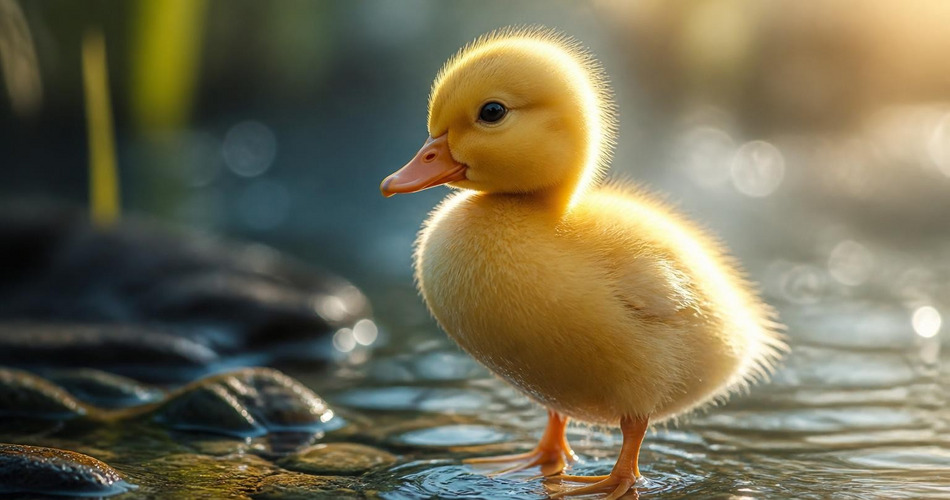
A duckling is a young duck associated with spring, new life and the journey from vulnerability to maturity. Across cultures, these tiny waterfowl symbolize innocence, the importance of family guidance, and the promise of transformation. The duckling’s story of growing into a swan has made it an emblem of personal growth and self-discovery. At the same time, its dependence on its mother highlights themes of protection and the need for nurturing in early life stages.
What Does Duckling Symbolize?
Ducklings primarily symbolize innocence and beginnings. Their emergence from the egg represents birth and the start of life’s journey. Following their mother in a line, they embody trust, familial bonds, and the instinct to follow guidance. The duckling’s ability to adapt to water soon after hatching also reflects a natural resilience and openness to change.
Ducklings are often seen as symbols of transformation. The most famous example—the “ugly duckling” story—uses the young bird’s growth into a swan to represent personal change and the discovery of one’s true identity. Ducklings also appear as symbols of spring and renewal, often linked to the seasonal cycle of growth and rebirth.
Positive and Negative Meanings
Positive associations: Ducklings are widely seen as adorable and endearing creatures, representing purity, hope, and the potential for growth. They evoke feelings of tenderness and the joy of new life. Their close-knit family structure symbolizes loyalty, cooperation, and the safety found in community.
Negative meanings: Conversely, ducklings can signify vulnerability, naivety and lack of independence. A duckling following the wrong leader may represent blind obedience or being led astray. Their fragile state in early life also underscores themes of helplessness and the dangers that accompany inexperience.
History and Origins of Duckling Symbolism
Ducks have been domesticated for thousands of years, and ducklings have naturally been part of agricultural life. In ancient Egypt, ducks were associated with fertility and the Nile’s life-giving waters, though ducklings themselves appear more specifically in later folklore. A key historical source of duckling symbolism is Hans Christian Andersen’s 1843 fairy tale “The Ugly Duckling,” which cemented the young bird as a metaphor for misunderstood potential and eventual transformation. This story, drawn from Andersen’s own experiences, has influenced how ducklings are perceived in Western culture ever since.
In medieval bestiaries, ducks were sometimes linked to adaptability and dual nature—living both on water and land—but ducklings were less frequently singled out. Their symbolism became more prominent in the 19th and 20th centuries through children’s literature and popular media, where they often represent the early stages of life’s journey.
Duckling Symbolism in Different Cultures
In Chinese culture, ducks are symbols of marital fidelity and happiness, often depicted in pairs. Ducklings, as their young, extend this symbolism to family unity and the nurturing of the next generation. The Mandarin duck is particularly revered, and its young represent the continuation of harmonious relationships.
In Native American traditions, ducks are associated with water and the ability to move between realms. Ducklings, being especially dependent on water, can symbolize emotional cleansing and the importance of staying connected to one’s origins. Some tribes view the duckling as a teacher of patience and the value of slow, steady growth.
In European folklore, ducklings appear in springtime rituals as harbingers of warmer days and agricultural abundance. Their downy yellow feathers are often linked to sunshine and the promise of a fruitful season. The widespread image of a mother duck leading her ducklings has become a universal symbol of protective parenting across many cultures.
Spiritual Meaning of Duckling
Spiritually, the duckling symbolizes new beginnings and the soul’s journey toward enlightenment. Its emergence from the egg mirrors spiritual rebirth and the shedding of old identities. The duckling’s natural progression from land to water represents a transition from the material to the emotional or spiritual realms.
Many spiritual traditions see the duckling as a reminder to trust the process of growth. Just as a duckling instinctively knows how to swim, humans are encouraged to trust their inner guidance during periods of change. The duckling’s reliance on its mother also symbolizes the need for divine or communal support in the early stages of spiritual development.
Duckling in Myths and Folklore
The best-known folkloric treatment of ducklings is Hans Christian Andersen’s “The Ugly Duckling,” a literary fairy tale that has entered global folklore. In this story, a duckling ridiculed for its appearance grows into a beautiful swan, symbolizing the idea that true worth is not always visible at first glance. The tale has inspired countless adaptations and remains a powerful allegory for self-acceptance.
In other folk traditions, ducklings appear in proverbs and sayings. For example, the phrase “like a duck to water” highlights natural ease and adaptability—a trait often first observed in ducklings. Some European folktales feature ducklings as helpers or messengers, guiding lost children back home or warning of danger. These stories emphasize the duckling’s role as a symbol of guidance and protection despite its small size.
Duckling in Dreams
Dreaming of ducklings often points to beginnings, family and vulnerability. The context of the dream—whether the ducklings are following, swimming, or in danger—can provide further insight. Ducklings in dreams may represent the dreamer’s own inner child or a new project that needs nurturing.
Common Dream Scenarios
- Ducklings following you: This may indicate that others look to you for guidance, or that you are accepting responsibility for something new in your life.
- Ducklings swimming alone: Could reflect feelings of independence emerging from a dependent phase, or conversely, a sense of being unprotected.
- A mother duck with ducklings: Often symbolizes family unity, maternal care, and the importance of sticking together through challenges.
- Lost or endangered ducklings: May point to anxieties about vulnerability, the need to protect something precious, or fears about failure in a new endeavor.
- Ducklings hatching from eggs: Represents new opportunities, creative projects, or personal transformation on the horizon.
Duckling in Art and Literature
Ducklings have a significant presence in art and literature, most famously in Hans Christian Andersen’s “The Ugly Duckling” (1843). This story has been illustrated by numerous artists, including Vilhelm Pedersen and later interpretations by Jerry Pinkney and others, and has been adapted into ballets, animated films, and stage plays. The narrative’s central image of a duckling growing into a swan has become a cultural shorthand for personal transformation.
In children’s literature, Robert McCloskey’s “Make Way for Ducklings” (1941) features a mother duck leading her ducklings through Boston. The book won the Caldecott Medal and has become a beloved classic, with a bronze sculpture of the ducklings installed in the Boston Public Garden. This work emphasizes themes of family, city life, and the kindness of strangers.
In visual art, ducklings appear in pastoral scenes and spring-themed works, often alongside ponds or farmyards. The Impressionist painter Claude Monet occasionally included ducklings in his water garden paintings, using them to convey tranquility and the cycle of life. Contemporary artists continue to use ducklings in works exploring innocence and growth.
Duckling Tattoo Meaning
A duckling tattoo is relatively rare and carries rich symbolic weight. It often represents a personal journey from awkwardness to confidence, inspired by the Ugly Duckling story. People may choose a duckling tattoo to commemorate a new phase in life, such as becoming a parent, starting a new career, or overcoming insecurity.
The tattoo can also symbolize family bonds, especially when depicted with a mother duck. In this context, it honors the protective relationship between parent and child. A single duckling might represent individuality and the courage to grow into one’s true self. Yellow ducklings are especially popular for their cheerful, innocent connotations.
Frequently Asked Questions
Q: What does it mean if I see a duckling in real life?
A: Seeing a duckling is often a positive omen associated with new beginnings, growth, and the arrival of spring. It may encourage you to embrace change and trust in the process of development.
Q: Is a duckling considered a good luck charm?
A: In some cultures, ducklings are seen as symbols of fertility and abundance, and their image may be used to attract good fortune, particularly in family or agricultural contexts.
Q: Why is the duckling a symbol of transformation?
A: Primarily due to the Ugly Duckling story, which uses the transformation of a duckling into a swan as a metaphor for personal change and the realization of one’s true potential.
Q: How is a duckling different from a duck in symbolism?
A: While ducks often symbolize adaptability, emotional depth, and fidelity, ducklings specifically emphasize vulnerability, dependence, and the early stages of life’s journey.
Related Symbols
- Duck – Adult counterpart; adaptability, emotional depth, fidelity
- Swan – Transformation, grace, the final form in the Ugly Duckling story
- Egg – Birth, potential, the beginning of life
- Chick – Similar themes of innocence and new life in poultry
- Water – Emotions, purification, the duckling’s natural element