Briefly
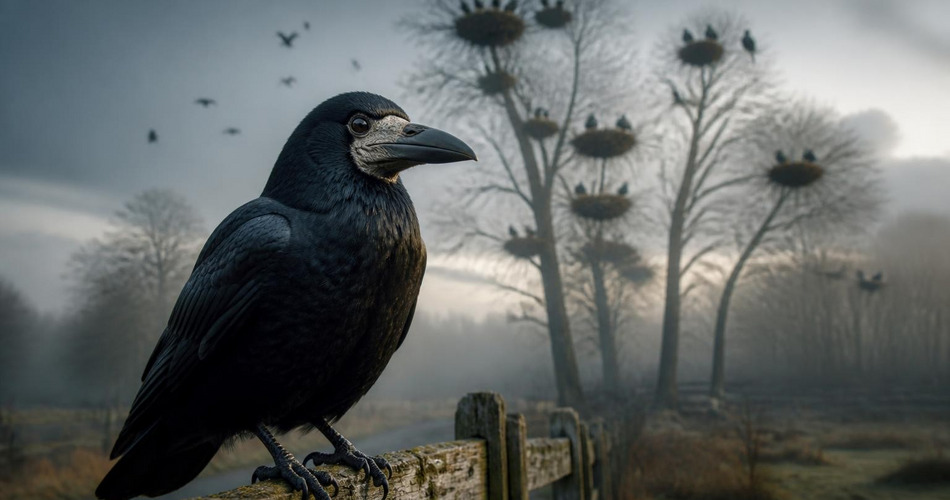
The rook (Corvus frugilegus) is a member of the crow family, distinguished by its bare, pale face and highly social nature. In symbolism, the rook represents intelligence, communication, and adaptability, reflecting its complex social structures and problem-solving abilities. At the same time, it has historically been linked to trickery, theft, and even death omens in various cultures. Its prominent role in folklore and mythology highlights the deep ambivalence humans feel toward this clever bird.
What Does the Rook Symbolize?
The rook is primarily a symbol of intelligence and social cooperation. Its ability to use tools, recognize individual human faces, and communicate with a wide range of calls has earned it a reputation as one of the most intelligent birds. In many traditions, the rook also symbolizes community and family, as rooks form large, long-lasting colonies called rookeries. This strong social bond extends to humans in symbolic ways, with rooks often seen as messengers or mediators between worlds.
Additionally, the rook represents adaptability. It thrives in a variety of environments, from rural farmland to urban parks, and has adapted its diet to include human refuse, insects, and grain. This adaptability is reflected in its symbolic association with resourcefulness and survival. The rook’s distinctive cawing has also led to connections with communication and warning.
Positive and Negative Meanings
Positive associations: The rook is celebrated for its remarkable intelligence and problem-solving skills. In Celtic and Norse traditions, rooks (and their corvid relatives) were seen as guides and bringers of wisdom. Their strong family bonds make them symbols of loyalty, cooperation, and community. Rooks are also associated with foresight and adaptability, as they can adjust to changing environments quickly.
Negative meanings: Rooks have a darker side in many cultures. Their scavenging habits and loud calls have led to associations with death, decay, and bad omens. In medieval Europe, rooks were sometimes viewed as harbingers of plague or famine because they often appeared on battlefields and in graveyards. Their habit of stealing shiny objects has also given them a reputation for trickery and untrustworthiness. In agricultural settings, rooks are sometimes seen as pests that damage crops, further reinforcing negative views.
History and Origins of the Rook’s Symbolism
The rook’s symbolic significance dates back to ancient times. In Celtic mythology, the god Bran the Blessed was associated with ravens and rooks, which were seen as prophetic birds. The word bron in Welsh means both “crow” and “raven,” indicating a deep cultural connection. In Norse mythology, Odin’s ravens Huginn and Muninn (thought and memory) are closely related corvids, while rooks themselves appear in later folklore as eerie messengers.
During the Roman period, the naturalist Pliny the Elder wrote about rooks’ intelligence, noting that they could learn to speak. In medieval Europe, rooks were often mentioned in bestiaries and were considered omens of change. Their presence in large numbers was believed to predict weather patterns, particularly storms. This practical observation mixed with superstition gave the rook a dual symbolic role: a practical weather prophet and a sinister portent.
Symbolism in Different Cultures
In British and Irish folklore, the rook is a common figure. The saying “a rook on the roof means a change in the house” reflects its role as a messenger of transition. Counting rooks was a traditional divination method: a single rook meant a secret, two meant a wedding, three meant a death, and so on. These folk beliefs persist in some rural areas.
In Japanese culture, the rook is not a native species, but the closely related jungle crow (Corvus macrorhynchos) holds similar symbolic meanings – intelligence and cunning, but also nuisance. In Chinese symbolism, the crow is often seen as a filial bird, representing respect for elders, though rooks are less prominent.
Among Native American tribes, especially those in the Pacific Northwest, the raven (a close relative) is a trickster and creator figure. While rooks themselves are not endemic to the Americas, the symbolic attributes often transfer to other corvids. In African folklore, rooks are less common, but crows generally are linked to wisdom and prophecy.
Spiritual Meaning of the Rook
In spiritual contexts, the rook is often seen as a guide for those seeking deeper knowledge. Its keen observation skills and ability to navigate both rural and urban landscapes make it a symbol of heightened awareness. The rook encourages people to pay attention to their environment and to communicate clearly with others. In some neo-pagan traditions, the rook is associated with the element of air and the powers of prophecy and insight.
Rook in Myths and Folklore
Rooks appear in several European myths. In Celtic mythology, the war goddess Morrigan often took the form of a crow or rook, and her appearance on the battlefield was an omen of death. The rook’s presence was considered a sign of divine intervention. In Welsh mythology, the hero Bran (meaning “raven”) is linked to rooks; his head was buried in London as a talisman to protect Britain from invasion, showing the bird’s protective symbolism.
In English folklore, rooks are central to the tradition of “rook shooting” or “rook pie” – young rooks were considered a delicacy, and their removal from rookeries was believed to protect crops. This practice blended hunting with agricultural necessity and generated many folk tales about the birds’ cunning escapes.
Rook in Dreams
Dreaming of a rook can have various interpretations depending on the context. A rook seen peacefully in a tree may symbolize wisdom and the need to trust one’s instincts. If the rook is cawing loudly, it may represent a warning or the need to express yourself more clearly. Dreaming of a rook flying towards you could indicate new information or a message from your subconscious.
In Superstitions and Omens
Many superstitions surround the rook:
- Seeing a single rook flying alone is considered a bad omen, often predicting disappointment or a death.
- A group of rooks gathering in a field is a sign of coming rain or storms.
- Building a nest on your house is believed to bring either good luck or a blessing, depending on the region.
- Hearing a rook cawing near a window is thought to herald a visitor or news.
These beliefs vary widely, but they all share the idea that rooks are sensitive to changes in the environment and can pass messages to humans.
Frequently Asked Questions About Rook Symbolism
Q: What does it mean when you see a rook?
A: Seeing a rook often symbolizes a need to pay attention to details or to communicate more openly. It can also be a reminder of the importance of community and social bonds.
Q: Is a rook a good omen?
A: Not consistently. In many cultures, rooks are seen as neutral or even negative omens, especially if they appear alone. However, in Celtic tradition, they could be guides or protectors.
Q: What is the difference in symbolism between a rook and a crow?
A: Both are corvids and share many symbolic meanings, such as intelligence and trickery. However, rooks are more strongly associated with community and social structures, while crows often symbolize solitude and mystery.
Q: Can a rook be a spirit animal?
A: Yes, in some modern spiritual paths, the rook is considered a spirit animal that encourages clear communication, adaptability, and keen observation.
Related Symbols
- Crow – similar intelligence and omens; more solitary
- Raven – larger corvid associated with prophecy and Odin
- Jackdaw – smaller corvid linked to trickery and thievery
- Magpie – known for talkativeness and superstitions (counting magpies)
- Blackbird – sometimes confused but belongs to thrush family; song symbolism