Briefly
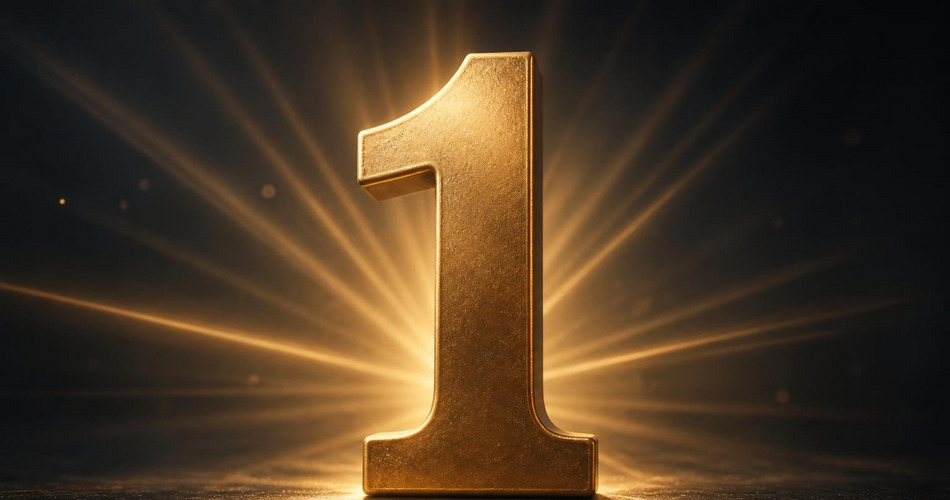
The number one is the most fundamental numeral in mathematics and a powerful symbol across human thought. It represents unity, the self, independence, and the starting point of all things. As the first positive integer, it carries connotations of primacy, leadership, and originality. In many spiritual and philosophical systems, the number one symbolizes the source, the divine, or the indivisible whole. Its meaning can be both positive—emphasizing strength and initiative—and negative, when taken to extremes of isolation or egotism.
What Does Number One Symbolize?
The number one is universally recognized as a symbol of unity and wholeness. It represents the singular, undivided entity from which all multiplicity arises. In mathematics, it is the multiplicative identity, meaning any number multiplied by one remains unchanged—a property that reinforces its association with constancy and essence. Beyond arithmetic, the number one symbolizes the individual self, personal identity, and the power of independent action. It is often linked to new beginnings, fresh starts, and the first step in any journey. In leadership contexts, the number one signifies being first, whether in rank, achievement, or innovation.
Positive and Negative Meanings of Number One
Positive associations: The number one is celebrated for its representation of self-reliance, ambition, and pioneering spirit. It encourages individuality, confidence, and the courage to stand alone. In numerology, it is considered a number of leadership, originality, and creative force. People drawn to the number one are often seen as natural leaders who initiate projects and inspire others. It also symbolizes clarity, focus, and the ability to set goals and achieve them.
Negative meanings: When unbalanced, the energy of the number one can manifest as egotism, arrogance, and a tendency toward isolation. An excessive focus on the self may lead to loneliness, stubbornness, or an inability to collaborate. The number one can also represent a lack of flexibility or an overly competitive nature. In extreme cases, it may symbolize tyranny or the suppression of others in the pursuit of being first.
History and Origins of Number One Symbolism
The concept of the number one is as old as human counting itself. Early tally marks—single strokes on bone or stone—are among the oldest surviving records of numerical thought. In ancient Pythagorean philosophy, the number one (the monad) was considered the source of all numbers and the principle of unity. Pythagoreans believed that from the monad came the dyad (two), and then all other numbers, making the one the origin of existence. In many ancient cultures, the number one was associated with the first god or the primordial creator. In Egyptian mythology, the god Atum was the self-created being who brought forth the world. Similarly, in Chinese cosmology, the number one represents the Great Ultimate (Taiji) from which yin and yang arise. These early associations established the number one as a symbol of divine unity and creative power.
Number One Symbolism in Different Cultures
In Western culture, the number one is often linked to the concept of the individual—the “self-made man” or the lone hero. It appears in phrases like “number one” meaning the best or most important. In Christianity, the number one symbolizes the oneness of God, as expressed in the Shema: “Hear, O Israel: The Lord our God, the Lord is one.” In Chinese culture, the number one is associated with yang energy, masculinity, and the heavens. It is considered an auspicious number, especially in contexts of leadership and success. In Indian numerology, the number one is ruled by the Sun and represents royalty, authority, and the soul. In many indigenous traditions, the number one signifies the first ancestor or the original being from which the tribe descends. Across these diverse cultures, the number one consistently embodies primacy, unity, and creative origin.
Spiritual Meaning of Number One
In spiritual contexts, the number one is often seen as a symbol of the divine source or the universal consciousness. It represents the idea that all of existence is ultimately one unified whole. In meditation and mystical traditions, contemplating the number one can lead to a sense of oneness with the cosmos. The number one is also associated with the concept of the “still point” or the center from which all creation emanates. In angel number interpretations, seeing the number 1 repeatedly is considered a message to focus on your own path, trust your intuition, and take initiative. It is a reminder that you are a co-creator of your reality and that your thoughts and actions have power.
Number One in Myths and Folklore
The number one appears prominently in creation myths worldwide. In many traditions, the universe begins with a single being or a singular act of creation. For example, in the Norse myth of Ymir, the first giant emerges from the melting ice, and from his body the world is formed. In the Hindu tradition, the number one is embodied by Brahman, the ultimate reality from which all diversity springs. In the biblical Book of Genesis, God creates the heavens and the earth as a singular divine act. The number one also appears in folklore as the “first” of something—the first man, the first woman, or the first animal—often carrying special powers or responsibilities. In fairy tales, the number one can symbolize the unique hero who must undertake a solitary quest. These stories reinforce the idea that the number one is the starting point of all narrative and existence.
Number One in Dreams
Dreaming of the number one often reflects themes of individuality, self-reliance, and new beginnings. It may appear when the dreamer is facing a decision that requires independent thinking or when they are about to start a new chapter in life. In dream analysis, the number one can also represent the dreamer’s ego or sense of self. Seeing the number one clearly in a dream may be a call to take the lead in a situation or to assert your own identity. As with all dream symbols, context is crucial—the number one may carry different meanings depending on the dreamer’s personal associations and the events of the dream.
Common Dream Scenarios
- Seeing the number 1 alone: Often indicates a need for self-focus or a new beginning. It may be a sign to trust your own judgment.
- Dreaming of being number one: Can symbolize ambition, a desire for recognition, or confidence in your abilities. It may also reflect competitive feelings.
- Writing the number 1: Suggests you are asserting your identity or making a clear statement about who you are.
- Finding a single object (one coin, one key): May represent a unique opportunity or a singular solution to a problem.
- Repeatedly seeing the number 1 (e.g., 1:11): Often interpreted as a spiritual sign to pay attention to your thoughts and intentions, as they are manifesting quickly.
Number One in Superstitions and Omens
The number one is generally considered a lucky number in many cultures. In Chinese tradition, the number one is associated with winning and being first, and it is often used in auspicious contexts. In Western superstition, seeing the number 1:11 on a clock is thought to be a sign that your wishes are coming true or that you are aligned with your purpose. However, in some contexts, the number one can be seen as a symbol of loneliness or isolation—for example, the phrase “the loneliest number” (popularized by the song “One” by Three Dog Night) reflects a negative superstition about being alone. In gambling, the number one is often considered a lucky bet, especially in games like roulette where it is a single number. Overall, the number one is predominantly viewed as a positive omen for new ventures and leadership.
Number One in Art and Literature
The number one has inspired numerous works of art and literature. In film, the concept of “the One” is central to the science fiction movie The Matrix (1999), where the protagonist Neo is prophesied to be a singular being capable of reshaping reality. This narrative draws on the symbolic power of the number one as a unique savior or chosen one. In literature, the novel Number One by John Dos Passos (part of his U.S.A. trilogy) explores themes of individualism and success in America. The character “Number One” in the Star Trek franchise—first used for the first officer in the original pilot—represents the ideal of the capable second-in-command who is also a leader. In visual art, the number one appears in Jasper Johns’s painting Number 1 (1959), part of his series of numeral paintings that explore the boundary between representation and abstraction. These examples show how the number one continues to be a rich symbol for individuality, primacy, and creative power.
Number One Tattoo Meaning
Tattoos of the number one are popular for their personal and symbolic significance. They often represent a commitment to being true to oneself, embracing individuality, and taking the lead in one’s own life. A number one tattoo can also commemorate a fresh start or a major life change, such as a new career or the beginning of a relationship. In some cases, it symbolizes the wearer’s desire to be the best in their field or to achieve a “number one” status. The design can be simple—a single digit—or incorporated into larger compositions, such as a Roman numeral I or combined with other symbols like a crown or a star. The placement and style of the tattoo can further personalize its meaning, from a subtle wrist tattoo to a bold chest piece.
Meanings of Different Variations
- The digit 1: The most common representation, directly associated with unity, beginnings, and individuality.
- Roman numeral I: Often used in formal contexts, such as monarchs (King Henry I) or film sequels, symbolizing primacy and tradition.
- The word “one”: Emphasizes the concept of oneness and can be used in spiritual or philosophical contexts.
- Number 1 with a crown: Represents being the “king” or the best, often used in tattoos or logos to signify superiority.
- 01: The inclusion of a leading zero can suggest a binary or digital context, or simply a stylistic choice.
Frequently Asked Questions
Q: What does the number 1 symbolize in numerology?
A: In numerology, the number 1 represents independence, leadership, ambition, and new beginnings. It is associated with the Sun and the creative, assertive energy of the self.
Q: Is the number 1 lucky or unlucky?
A: The number 1 is generally considered lucky in many cultures, especially in relation to success and being first. However, in some contexts it can symbolize loneliness, so its luck depends on the situation.
Q: What does it mean when you keep seeing the number 1?
A: Repeatedly seeing the number 1, especially in sequences like 1:11, is often interpreted as a spiritual sign to focus on your own path, trust your intuition, and take action toward your goals.
Q: What is the spiritual meaning of the number 1?
A: Spiritually, the number 1 represents the divine source, unity, and the idea that all is one. It is a reminder of your own creative power and connection to the universe.
Q: How is the number 1 used in art?
A: The number 1 appears in various art forms, from Jasper Johns’s numeral paintings to films like The Matrix that explore the concept of “the One.” It often symbolizes individuality, primacy, and new beginnings.
Related Symbols
- 0 (Zero) – Represents the void or potential, complementing the number one as the start of counting.
- 2 (Two) – Symbolizes duality, partnership, and balance, contrasting with the unity of one.
- 3 (Three) – Represents synthesis, creativity, and the trinity, building upon the foundation of one.
- Monad – A philosophical term for the singular, indivisible unit, closely related to the number one.
- Unity Symbol – Various symbols (e.g., the circle, the point) that represent oneness and wholeness.