Briefly
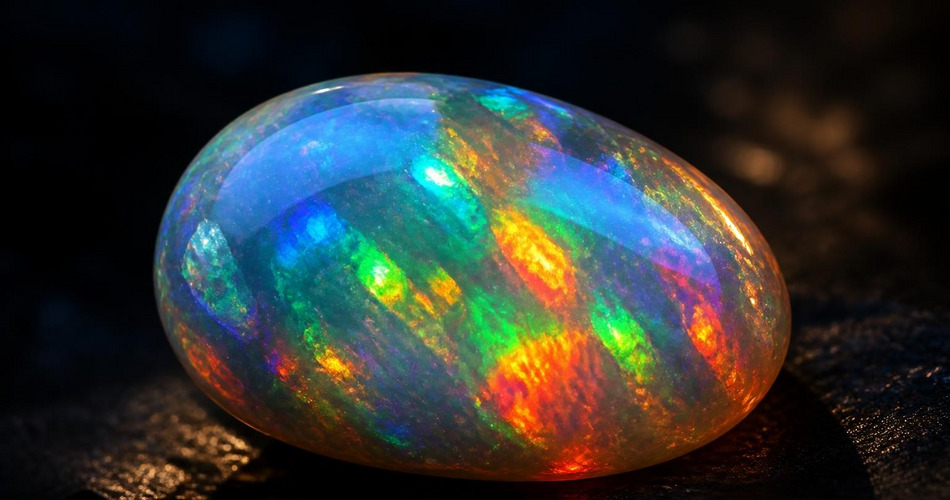
Opal is a gemstone renowned for its unique play of color, a phenomenon where flashes of different hues appear within the stone. It symbolizes creativity, inspiration, and emotional expression, often associated with the amplification of one’s feelings and desires. Opal is also linked to transformation and change, reflecting its ability to display a spectrum of colors. Its meanings can be both positive, such as fostering imagination and passion, and negative, including associations with instability and heightened emotional sensitivity.
What Does Opal Symbolize?
Opal primarily symbolizes creativity and emotional expression. Its shifting colors are seen as a reflection of the ever-changing nature of human emotions and artistic inspiration. The stone is believed to encourage spontaneity and a free flow of ideas, making it a popular gem for artists and writers.
Opal also represents transformation and personal growth. The way light interacts with its internal structure to produce color is often viewed as a metaphor for personal evolution—taking in light and reflecting it back in new, beautiful forms. This connects opal to themes of renewal and the ability to adapt to change.
Additionally, opal is associated with passion and desire. Its fiery flashes of red and orange can symbolize intense emotion, while its cooler blues and greens suggest calm and tranquility. This duality makes opal a stone of balance, representing the full spectrum of human experience.
Positive and Negative Meanings
Positive associations: Opal is widely regarded as a stone of inspiration and imagination. It is thought to enhance creative abilities, boost self-confidence, and help individuals express their true feelings. In many traditions, opal is also considered a protective stone, especially for travelers, and is believed to bring good fortune and loyalty to relationships.
Negative meanings: Historically, opal has been viewed with suspicion in some cultures. It has been associated with bad luck, particularly for those not born in October (its birthstone). Some superstitions claim that opal can amplify negative emotions or bring instability to a person’s life, especially if the stone is flawed or worn without proper intention. These negative associations are largely rooted in folklore rather than any inherent property of the gem.
History and Origins of Opal Symbolism
The name opal is believed to derive from the Sanskrit word upala, meaning «precious stone,» and later from the Greek opallios, meaning «to see a change of color.» This etymology reflects the stone’s most distinctive feature—its play of color—which has fascinated humans for millennia.
In ancient Rome, opal was highly prized and considered a symbol of purity and hope. The Roman scholar Pliny the Elder described opal as containing the fire of ruby, the purple of amethyst, and the green of emerald, all combined in an incredible union. It was believed to bring good luck and protect the wearer from harm.
During the Middle Ages, opal’s reputation shifted. It was sometimes called the «eye stone» because it was thought to improve eyesight and protect against eye diseases. However, by the 19th century, opal had acquired a reputation for bad luck in some European circles, partly due to a novel by Sir Walter Scott, Anne of Geierstein (1829), in which an opal worn by a character is associated with misfortune and death. This fictional portrayal contributed to a decline in opal’s popularity that lasted for decades.
Opal Symbolism in Different Cultures
In ancient Indian culture, opal was associated with the goddess of love and desire, and it was believed to help people connect with their higher selves. It was also used in traditional Ayurvedic medicine to balance emotions and promote physical healing.
Among the Aboriginal peoples of Australia, where the world’s largest opal deposits are found, the stone holds deep spiritual significance. According to Aboriginal mythology, the creator came down to Earth on a rainbow, and where his foot touched the ground, the rocks began to shimmer with all the colors of the rainbow—creating opal. This story positions opal as a sacred stone of creation and connection to the land.
In Arabic traditions, opal was believed to fall from the sky in flashes of lightning, giving it a celestial origin. It was thought to protect against the evil eye and bring good fortune to those who possessed it.
Spiritual Meaning of Opal
Spiritually, opal is considered a stone of emotional release and inner clarity. It is said to help individuals confront their deepest feelings and let go of past traumas, making way for new emotional growth. The stone’s play of color is seen as a representation of the aura, reflecting the wearer’s spiritual state.
Opal is also associated with the third eye and crown chakras, which are linked to intuition and higher consciousness. It is believed to enhance psychic abilities and open the mind to new spiritual insights. Meditating with opal is thought to facilitate a deeper connection to the universe and one’s own inner wisdom.
Because of its connection to transformation, opal is often used in spiritual practices aimed at personal development and self-discovery. It is seen as a tool for navigating periods of change with grace and understanding.
Opal in Myths and Folklore
One of the most enduring myths about opal comes from Australian Aboriginal folklore. The story tells of a time when the Earth was covered in darkness. The creator, in the form of a rainbow serpent, emerged from the ground and brought light and color to the world. Wherever the serpent’s body touched the earth, it left behind opals, embedding the rainbow’s colors into stone. This myth explains why opals are found in the arid regions of Australia and why they are considered sacred by many Indigenous groups.
In ancient Greek mythology, opal was said to be the tears of Zeus, shed after his victory over the Titans. These tears turned into opals when they hit the ground, symbolizing both sorrow and triumph. This origin story gave opal a dual meaning of joy and sadness, reflecting the stone’s complex nature.
European folklore from the Middle Ages sometimes portrayed opal as a stone of thieves, because it was believed to make the wearer invisible when used in a certain way. This association, while not widespread, contributed to opal’s mixed reputation in Western culture.
Opal in Dreams
Dreaming of opal can have various interpretations depending on the context and the dreamer’s personal associations. Generally, opal in dreams is seen as a symbol of emotional clarity or confusion, reflecting the stone’s shifting colors.
Seeing a bright, clear opal in a dream may indicate a period of creative inspiration or emotional breakthrough. It can suggest that the dreamer is about to experience a positive transformation or gain new insight into a personal situation.
A dull or cracked opal in a dream might warn of emotional instability or unresolved feelings. It could be a sign that the dreamer needs to address hidden anxieties or fears before they become overwhelming.
Common Dream Scenarios
- Finding an opal: Often symbolizes the discovery of hidden talents or new opportunities in waking life.
- Losing an opal: May represent a fear of losing one’s creative spark or emotional connection to others.
- Receiving an opal as a gift: Can indicate a deepening of a relationship or the arrival of unexpected support from a friend or loved one.
- An opal breaking: Might suggest that a situation or relationship is becoming unstable and requires careful attention.
Opal in Superstitions and Omens
Opal has a long history of superstition, particularly in European cultures. One of the most persistent beliefs is that opal is unlucky for anyone not born in October, the month for which it is the traditional birthstone. This superstition was reinforced by Sir Walter Scott’s novel, which portrayed opal as a harbinger of doom.
In contrast, many other cultures view opal as a powerful good luck charm. In ancient Rome, it was considered a symbol of hope and purity. In the Middle East, opal was believed to protect against the evil eye and bring prosperity to its owner.
Some superstitions hold that opal can change color in response to the wearer’s mood or health, acting as a kind of emotional barometer. While this is not scientifically accurate, the belief persists in some circles and adds to the stone’s mystique.
Opal in Art and Literature
Opal appears in several notable works of literature. The most famous example is Sir Walter Scott’s novel Anne of Geierstein (1829), where an opal worn by the character Hermione is said to have supernatural properties. In the story, the opal changes color with her emotions and ultimately leads to her death after being sprinkled with holy water. This fictional depiction had a real-world impact, contributing to a decline in opal sales in Europe during the 19th century.
Opal is also mentioned in Shakespeare’s play Twelfth Night, where the character Feste sings about «a opal that doth change his hue.» This reference highlights the stone’s association with change and inconstancy, themes that run throughout the play.
In visual art, opal has been used by jewelers and craftspeople for centuries. The Art Nouveau movement of the late 19th and early 20th centuries particularly favored opal for its organic, flowing colors. Artists like René Lalique incorporated opals into intricate jewelry designs that emphasized the stone’s natural beauty and symbolic connection to nature.
Meanings of Different Types and Colors of Opal
Opal comes in a wide variety of types and colors, each with its own symbolic associations.
- White or light opal: Symbolizes purity, innocence, and new beginnings. It is often associated with clarity of thought and emotional calm.
- Black opal: Considered the most valuable variety, black opal represents mystery, depth, and transformation. Its dark body tone makes the play of color more vivid, symbolizing the emergence of light from darkness.
- Fire opal: Ranging from yellow to red, fire opal is associated with passion, energy, and vitality. It is believed to stimulate creativity and drive.
- Boulder opal: Found in ironstone boulders, this type symbolizes resilience and connection to the earth. It is often seen as a stone of grounding and stability.
- Crystal opal: Transparent or semi-transparent, crystal opal represents clarity, vision, and spiritual insight. It is thought to enhance intuition and psychic abilities.
Frequently Asked Questions
Q: Is opal considered a lucky stone?
A: Opinions vary by culture. In many traditions, opal is considered a lucky stone that brings good fortune and protection. However, some European superstitions associate it with bad luck, especially for those not born in October.
Q: What is the spiritual meaning of opal?
A: Spiritually, opal is associated with emotional release, creativity, and transformation. It is believed to help individuals connect with their inner selves and navigate periods of change.
Q: Why did opal get a reputation for being unlucky?
A: The negative reputation largely stems from Sir Walter Scott’s 1829 novel Anne of Geierstein, in which an opal is linked to misfortune. This fictional portrayal influenced public perception for many years.
Q: What chakra is opal associated with?
A: Opal is commonly associated with the third eye and crown chakras, which are linked to intuition, wisdom, and spiritual connection.
Related Symbols
- Rainbow: Like opal, the rainbow symbolizes hope, promise, and the full spectrum of life’s experiences.
- Moonstone: A fellow gemstone associated with intuition, emotion, and cycles of change.
- Fire: Represents passion, transformation, and energy, similar to the fiery colors in opal.
- Water: Symbolizes emotion, flow, and adaptability, reflecting opal’s shifting colors and emotional associations.