Briefly
Spring water is one of the most enduring symbols of purity, life, and renewal in human culture. Because it rises naturally from the earth, it has often been understood as a gift from the ground itself — clean, fresh, and untouched by human hands. Across religions and folklore, springs appear as sacred places where healing, cleansing, and transformation can take place. Spring water also carries negative meanings in some traditions, especially when it is associated with dangerous spirits, forbidden wishes, or the unpredictable power of the natural world.
What Does Spring Water Symbolize?
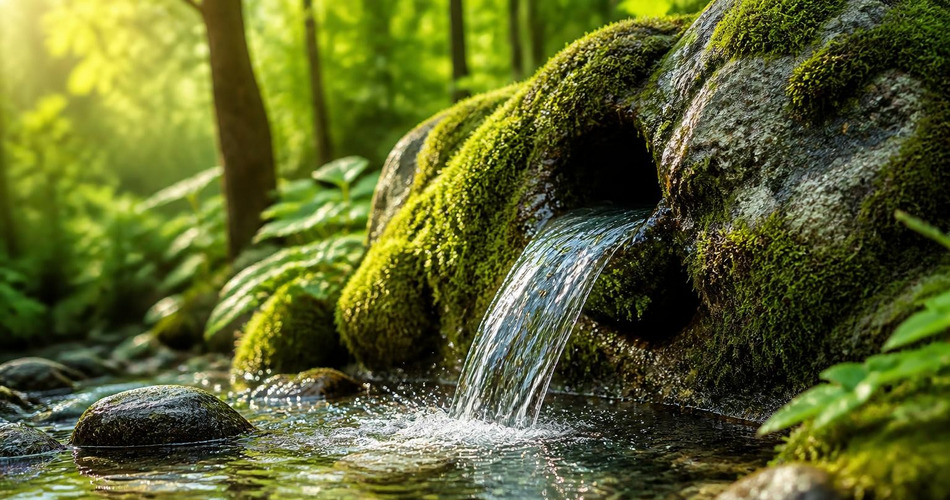
At its core, spring water symbolizes purity. Unlike water from rivers or lakes, spring water emerges from deep underground, where it has been naturally filtered through layers of stone and soil. In symbolic terms, this natural filtration makes it seem untainted by the surface world — a source of water that is clean before any human effort is applied to it.
Spring water is also closely tied to renewal and new beginnings. The word „spring” itself means both the season of new growth and the action of rising or leaping upward, and a spring of water embodies both ideas at once. Water that bursts forth from the earth suggests life emerging from hidden depths, which is why springs have been used as symbols of creation, birth, and fresh starts in many cultures.
Because springs provide water continuously and reliably, they also symbolize sustenance and abundance. In arid landscapes especially, a spring can be the difference between life and death, making it a natural emblem of provision and hope. Springs are also places of meeting — humans, animals, and travelers all come to the same water, so springs have become associated with hospitality and community.
Positive and Negative Meanings of Spring Water
Positive associations: Spring water is overwhelmingly seen as a positive symbol. It represents purity, clarity, and cleanliness in both a physical and moral sense. In religious traditions, spring water is often used for purification rituals because its natural freshness is believed to wash away impurity. It also symbolizes life, health, and vitality — drinking from a spring has historically been considered not just refreshing but restorative. Springs can also symbolize hope and renewal because they appear even in barren places, offering water where none seems possible.
Negative meanings: In some folklore, spring water has a darker side. Because springs were understood as openings into the earth, they were sometimes believed to be gateways to the underworld or to the realm of spirits. A spring could be home to a protective spirit, but it could also be guarded by something dangerous. In certain legends, drinking from the wrong spring or disturbing its waters could bring curses, madness, or misfortune. Springs could also symbolize the uncontrollable side of nature — a spring can flood, dry up, or change course without warning, reminding people that even the most life-giving forces are not entirely under human control.
History and Origins of Spring Water Symbolism
The symbolic importance of spring water reaches deep into human prehistory. Before human beings had the tools to dig wells or build aqueducts, natural springs were among the few reliable sources of fresh water. Early settlements were often established around springs, and many ancient cities grew up around a sacred spring that was believed to be the source of the community’s life.
In many ancient cultures, springs were seen as living things rather than mere geological features. The Greeks, for example, believed that springs were inhabited by nymphs called Naiads, and many springs were named after these spirits and treated as sacred places of offering. Similar traditions existed across Europe, the Middle East, and Asia, where springs were often dedicated to local deities or ancestral spirits.
The tradition of “holy wells” in the British Isles and continental Europe shows how deeply spring water symbolism became woven into religious life. Many pre-Christian sacred springs were later rededicated to Christian saints, and the belief that certain spring waters could heal illness persisted for centuries. Pilgrims traveled to these springs, drank the water, bathed in it, or left offerings beside it, carrying forward ancient ideas about the purifying power of naturally rising water.
Spring Water Symbolism in Different Cultures
Spring water symbolism is remarkably widespread, but different cultures have shaped it in different ways. In Celtic traditions, springs and wells were often seen as boundaries between this world and the Otherworld. They were places where the veil between worlds was thin, and offerings were commonly dropped into the water as gifts for the spirits believed to live below.
In ancient Greece and Rome, springs were associated with divine inspiration as well as healing. The spring of Castalia at Delphi was believed to inspire those who drank from it, and the cult of Asclepius, the god of medicine, often used spring water in healing rituals. This linked spring water not only to physical purity but also to prophecy, poetry, and wisdom.
In Hindu tradition, natural springs are often considered sacred sites where the divine touches the earth. Pilgrimage to holy springs and rivers — including places where water is believed to flow directly from the gods — remains an important spiritual practice. Similarly, in Japanese Shinto, springs and other natural water sources are associated with purification, and visitors to shrines often use water to cleanse themselves before approaching sacred spaces.
In Islamic culture, water is described throughout the Quran as a gift of life and mercy, and natural springs have long been associated with paradise. Descriptions of paradise in Islamic tradition include rivers and springs of pure water, connecting spring water with spiritual reward, abundance, and divine generosity.
Spiritual Meaning of Spring Water
Spiritually, spring water represents the point where the hidden becomes visible. It flows up from the dark, concealed interior of the earth and emerges into the light, which makes it a powerful metaphor for truth, revelation, and awakening. In many spiritual traditions, spring water is used in cleansing rituals before prayer, meditation, or entering a sacred space, signifying the washing away of stale energy and wrong intentions.
Spring water also symbolizes the source — the origin from which all other water flows. In symbolic terms, this makes it an image of spiritual life in its freshest, most direct form. Just as a spring is not harvested or manufactured but simply given, spring water can represent grace, divine generosity, or the spontaneous flow of spiritual energy.
Because it is believed to be naturally pure, spring water is often associated with the body’s own healing capacities. In many spiritual practices, the pure quality of spring water is used to restore balance, whether by drinking it as part of a cleansing ritual, bathing in it, or blessing a space with it. The symbolism of spring water ultimately points to the idea that renewal is not created by effort alone but comes from something deeper and more ancient.
Spring Water in Myths and Folklore
Spring water appears constantly in myths and folklore around the world. The concept of the “fountain of youth,” a spring whose waters restore youth or grant eternal life, appears in legends from many cultures, most famously in tales about the search for such a spring in the Americas. These stories treat spring water not just as physical water but as water that carries a special spiritual charge.
In European folklore, springs and wells are often linked to fairies, elves, and water spirits. Some springs were believed to be inhabited by entities who could bless or curse those who approached them. A common folk belief was that a spring must be kept clean and treated with respect — polluting a sacred spring could bring bad luck, sickness, or the anger of its spirit.
In Greek mythology, the spring of Pirene was said to have been created by the tears of a grieving woman, and the spring of Arethusa was connected to the story of a nymph transformed into water to escape a pursuer. Mythological springs are often born from transformation — tears, blood, or divine touch — which reinforces the idea that spring water is not ordinary water but water with a story and a spirit behind it.
Folklore also holds many stories of wishing springs and healing wells. People would drop coins, pins, or cloth into springs while making a wish or asking for healing, a practice that survived for centuries across the British Isles and Europe. Even where the original mythological meaning faded, the folk custom of leaving an offering at a spring treated the water as a living presence that could hear and respond to human requests.
Spring Water in Dreams
In dream symbolism, spring water generally carries a positive meaning. Dreaming of clear spring water is commonly understood as a sign of purification, emotional clarity, and renewed energy. Because springs flow from hidden depths, they can also appear in dreams when a dreamer is about to discover something new about themselves — an emotion, memory, or insight that was previously buried.
Water in dreams is often connected to emotion, and spring water specifically suggests emotions that are clean and uncomplicated. Unlike murky river water or overwhelming floodwater, clear spring water appears in dreams as a source of refreshment and healing. It may indicate that the dreamer is ready to let go of confusion or guilt and start again with a clear mind.
Common Spring Water Dream Scenarios
- Drinking from a spring: Drinking clear spring water in a dream is usually a positive sign, suggesting inner renewal, healing, and the satisfaction of a deep need.
- Seeing a spring of crystal-clear water: This often represents emotional clarity and a period of peace or fresh understanding in the dreamer’s life.
- Bathing in spring water: Bathing or washing in spring water is commonly associated with purification — the dreamer is cleansing themselves of past mistakes or difficult emotions.
- A spring that has dried up: A dry spring in a dream may symbolize exhaustion, loss of inspiration, or a feeling that emotional or spiritual resources have been depleted.
- Muddy or disturbed spring water: If the spring water in a dream is cloudy or contaminated, it may indicate confusion, unresolved emotions, or a situation in waking life that is not as clean as it appears.
Spring Water in Superstitions and Omens
Springs have long been associated with fortune-telling and omens. Because spring water moves, ripples, and reflects, people in many cultures believed it could reveal hidden truths. Gazing into a spring was sometimes considered a way to glimpse the future, especially at certain times of year such as midsummer or the start of the new year.
The behavior of a spring was also read as a sign. A spring that ran clear and strong was considered a good omen for a community; a spring that ran low or became muddy was thought to foretell difficult times. In agricultural regions, springs were sometimes watched as natural calendars — if a spring rose or fell at certain seasons, people interpreted it as a sign about the coming harvest.
Superstitions often centered on the respect owed to springs. In many places, it was considered bad luck to spit into a spring, throw rubbish into it, or take water from it without giving something in return. The belief behind these customs is simple: a spring is a living, generous presence, and those who use it rudely will find its blessing withdrawn.
Spring Water in Art and Literature
Springs appear widely in literature as places of meeting, revelation, and transformation. In classical literature, the spring of Castalia at Delphi became a poetic symbol of inspiration, and poets in the Greek and Roman world regularly invoked its water as a gift of the Muses. This image survived into later European poetry, where “drinking from the Castalian spring” remained a metaphor for poetic creativity and divine knowledge.
In the Bible, springs are frequently used as images of divine blessing and salvation. The book of Psalms declares that “with thee is the fountain of life,” and the prophet Isaiah describes drawing water from wells of salvation. These passages made spring water a lasting symbol in Christian art and writing, often appearing in hymns and devotional imagery as a picture of God’s grace.
In Arthurian legend, the Holy Grail is described in some versions as a vessel used at the Last Supper, but the quest for the Grail also borrows many images from older spring and well symbolism — including the wounding of a king that causes the land to become barren until the waters flow again. The Grail castle is often placed near water, and the healing of the land is closely tied to the restoration of its springs.
In English poetry, the Romantic poets used natural springs as images of authenticity and the pure origins of human feeling. William Wordsworth, who famously celebrated lakes and rivers, also wrote about the springs and wells of the English landscape as places of memory and spiritual refreshment. These literary uses all draw on the same core symbolism: spring water is original, uncorrupted, and life-giving, and therefore a perfect image for anything that restores the human spirit.
Frequently Asked Questions About Spring Water
Q: What does spring water symbolize?
A: Spring water symbolizes purity, life, renewal, and abundance. Because it rises naturally from the earth, it is also associated with hidden sources, truth, and spiritual revelation.
Q: Is spring water a positive or negative dream symbol?
A: Clear spring water in a dream is generally positive and is believed to represent emotional clarity, healing, and new beginnings, while a dried-up or muddy spring can suggest exhaustion or confusion.
Q: Why are springs considered sacred in many cultures?
A: Springs were sacred because they provided clean, reliable water that appeared to come directly from the earth. Since water is essential for life, people in many cultures understood springs as gifts from divine or spiritual powers.
Q: What is the difference between a spring and other water sources in symbolism?
A: Unlike rivers or rain, spring water comes from deep underground, passing through natural filters. This makes it a symbol of purity and origin — water that has not been mixed with the surface world.
Related Symbols
- Water — the broader element of life and emotion.
- Rivers — flowing water as a symbol of life’s journey and change.
- Wells — human-made openings to the same underground water source.
- Rain — water from above, associated with divine blessing and fertility.
- Fountains — controlled spring water, symbolizing abundance and public celebration.
- Purity — the moral quality most often associated with clean water.
- Renewal — the cycle of refreshment and rebirth represented by natural springs.