Briefly
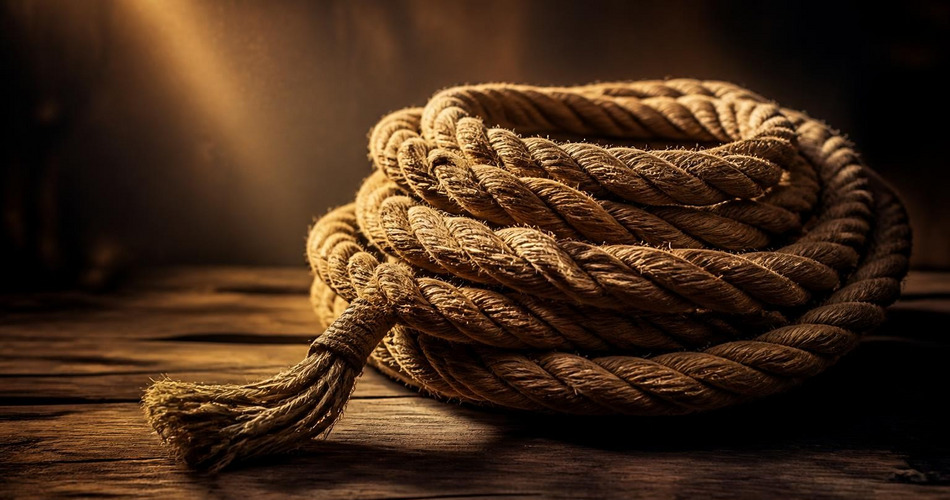
Rope is a powerful symbol of connection, binding together people, ideas, or physical objects. It represents strength, endurance, and the ability to hold fast under tension, but also carries connotations of restraint, limitation, and entrapment. Across cultures, rope appears in myths, rituals, and everyday life as a tool for building, climbing, and securing, making it a versatile emblem of both support and control.
What Does Rope Symbolize?
Rope primarily symbolizes connection and unity. By tying two ends together, rope creates a bond that can join separate entities into a cohesive whole. This makes it a metaphor for relationships, teamwork, and the ties that bind communities. At the same time, rope represents strength and resilience—its twisted fibers can bear heavy loads and withstand great force, reflecting human endurance in the face of adversity.
Rope also symbolizes restraint and limitation. Being tied up or bound by rope evokes feelings of captivity, powerlessness, or being held back. This dual nature—both constructive and constrictive—gives rope a rich symbolic range, from the lifeline that saves to the noose that kills.
Positive and Negative Meanings of Rope
Positive associations: Rope stands for support, safety, and cooperation. In climbing, a rope is a literal lifeline; in sailing, it controls the ship; in construction, it raises heavy materials. These uses translate into symbols of trust, teamwork, and the ability to overcome obstacles through collective effort. Rope also symbolizes unity, as in the phrase “pulling together” or “tying the knot” in marriage.
Negative meanings: Rope can represent bondage, oppression, and death. A noose is a symbol of execution and suicide, while being tied up suggests loss of freedom. In some contexts, rope signifies entrapment—being caught in a situation with no escape. The phrase “at the end of one’s rope” captures feelings of exhaustion and hopelessness.
History and Origins of Rope Symbolism
Rope is one of humanity’s oldest tools, dating back tens of thousands of years. Early ropes were made from twisted plant fibers, animal hair, or hide, and were essential for hunting, fishing, building, and transport. This practical importance naturally gave rise to symbolic meanings. In ancient Egypt, rope was used in construction and in religious ceremonies, often representing the binding of chaos or the connection between the earthly and divine. The Gordian knot—a legendary rope knot tied by King Gordius—became a symbol of an intractable problem, famously cut by Alexander the Great to symbolize decisive action.
In many cultures, the act of tying knots in rope was believed to hold magical power, either to bind evil spirits or to secure blessings. Sailors, for instance, tied special knots to control the wind or protect against storms. This blend of practical and magical use cemented rope’s symbolic role as a tool that can both create and destroy.
Rope Symbolism in Different Cultures
In Chinese culture, rope is associated with the concept of fate, as in the “red thread of destiny” that connects soulmates. This invisible rope is said to bind people who are destined to meet, regardless of time or place. In Hindu and Buddhist traditions, rope appears in the metaphor of the “rope of desire” that ties beings to the cycle of rebirth, representing attachment and the need for spiritual liberation.
In Norse mythology, the god Tyr’s hand was bitten off while binding the wolf Fenrir with a magical rope called Gleipnir, symbolizing the sacrifice required to maintain order. Among Native American tribes, rope was used in ceremonial weaving and binding, representing the interconnection of all life. In African cultures, rope knots are often used in rituals to seal agreements or to ward off evil.
Spiritual Meaning of Rope
Spiritually, rope symbolizes the connection between the physical and spiritual worlds. It can represent the thread of life that ties the soul to the body, or the path that leads to enlightenment. In meditation practices, visualizing a rope can help focus the mind on continuity and purpose. Rope also appears in the concept of the “silver cord” in esoteric traditions, which is said to connect the astral body to the physical body during out-of-body experiences.
In some spiritual beliefs, rope is a symbol of binding—both positive, as in binding oneself to a higher power, and negative, as in being bound by earthly attachments. The act of cutting a rope can symbolize liberation or a decisive break from the past.
Rope in Myths and Folklore
One of the most famous mythic uses of rope is the thread of Ariadne in Greek mythology. The hero Theseus used a ball of thread (often depicted as a rope or string) to navigate the Labyrinth and defeat the Minotaur. This rope symbolizes guidance, rescue, and the ability to find one’s way out of confusion. The Gordian knot is another key myth: an intricate rope knot that no one could untie until Alexander the Great cut it with his sword, symbolizing bold problem-solving.
In Norse mythology, the rope Gleipnir was crafted by the dwarves from six impossible things (such as the sound of a cat’s footfall and the beard of a woman) to bind the wolf Fenrir. This rope represents the power of seemingly fragile or paradoxical elements to hold great force. In folklore, ropes are often used in knot magic—tying knots to capture a lover’s affection or to bind a curse. The “witch’s ladder” is a knotted rope used in folk magic for spells.
Rope in Dreams
Dreams involving rope often reflect feelings of being connected or restricted in waking life. A rope can symbolize a relationship, a responsibility, or a path that the dreamer is following. The condition of the rope—strong, frayed, or broken—provides clues about the dreamer’s emotional state.
Common Rope Dream Scenarios
- Climbing a rope: Represents ambition, effort, and progress toward a goal. A strong rope suggests confidence; a frayed one indicates insecurity.
- Being tied up with rope: Symbolizes feeling trapped, controlled, or powerless in a situation or relationship.
- Cutting a rope: Indicates a desire to break free from limitations, end a connection, or make a decisive change.
- Holding a rope: Suggests that the dreamer has a lifeline or support system, or is in a position of control.
- A rope breaking: Warns of a sudden loss of support, a failed relationship, or a collapse of plans.
Rope in Superstitions and Omens
Rope features in many superstitions, often tied to knot magic. In some European traditions, tying a knot in a rope during a wedding ceremony was believed to bind the couple’s love and prevent infidelity. Sailors considered it bad luck to whistle on a ship because it might “whistle up a wind,” but they also tied special knots to calm storms. Finding a knotted rope on the road was sometimes seen as an omen of a tangled situation ahead.
A noose or hangman’s rope is widely regarded as an omen of death or misfortune. In some cultures, touching a rope used in an execution was thought to bring bad luck, while in others, carrying a piece of such rope was considered a protective charm. Rope left coiled in a certain way could be interpreted as a sign of completion or a cycle ending.
Rope in Art and Literature
In literature, rope often appears as a symbol of connection or confinement. In Homer’s Odyssey, Odysseus uses rope to bind himself to the mast to resist the Sirens’ song, symbolizing self-control and the struggle against temptation. In the Bible, Samson’s strength is tested when he breaks new ropes binding him, representing divine power overcoming human constraints. The Gordian knot story is frequently referenced in works about problem-solving and leadership.
In visual art, rope appears in still lifes and maritime paintings, often representing labor, trade, or the sea’s dangers. Contemporary artists like Mona Hatoum have used rope in installations to explore themes of displacement and confinement. In film, rope is a recurring motif in thrillers and horror, such as in The Rope (1948) by Alfred Hitchcock, where a rope is used as a murder weapon and later as a symbol of the killers’ twisted bond.
Rope Tattoo Meaning
Rope tattoos often symbolize strength, endurance, and connection. A rope wrapped around an anchor or a heart can represent steadfast love or loyalty. A broken rope tattoo may signify overcoming a difficult period or breaking free from addiction. Knot tattoos, such as Celtic knots, are popular and symbolize eternity, unity, or the interconnectedness of life. Sailors traditionally got rope tattoos as talismans for safe voyages, believing the rope would help them “hold fast” in storms.
Meanings of Different Types of Rope
The material and color of rope can alter its symbolic meaning. Natural fiber rope (hemp, sisal) often symbolizes tradition, simplicity, and connection to the earth. Synthetic rope (nylon, polypropylene) represents modernity, durability, and sometimes artificiality. Red rope is associated with love, fate, and protection—as in the red thread of destiny. White rope symbolizes purity, peace, or spiritual connection. Black rope can denote mourning, mystery, or the darker aspects of binding. Braided rope suggests unity and strength through diversity, while a single strand may represent fragility or individuality.
Frequently Asked Questions about Rope Symbolism
Q: What does it mean to dream of a rope breaking?
A: A rope breaking in a dream often symbolizes a loss of support, a failed relationship, or the collapse of a plan. It can also indicate a sudden release from a burden.
Q: Is rope a positive or negative symbol?
A: Rope is dual-natured. It can represent connection, strength, and support (positive) or bondage, restriction, and death (negative), depending on context.
Q: What does a rope knot symbolize?
A: A knot in rope often symbolizes a bond, commitment, or a complex problem. In many cultures, tying a knot is a ritual act to secure a promise or a blessing.
Q: Why is rope used in marriage ceremonies?
A: In some traditions, a rope or cord is placed around the couple’s shoulders or hands to symbolize their union and the binding of their lives together, as in the Hindu mangalsutra or the Celtic handfasting.
Related Symbols
- Knot – Represents binding, commitment, and complexity.
- Chain – Symbolizes connection, restraint, or continuity.
- Thread – Often denotes fate, guidance, or fragility.
- Noose – A specific rope form symbolizing death, execution, or a trap.
- Cord – Similar to rope, often used in spiritual contexts (e.g., silver cord).