Briefly
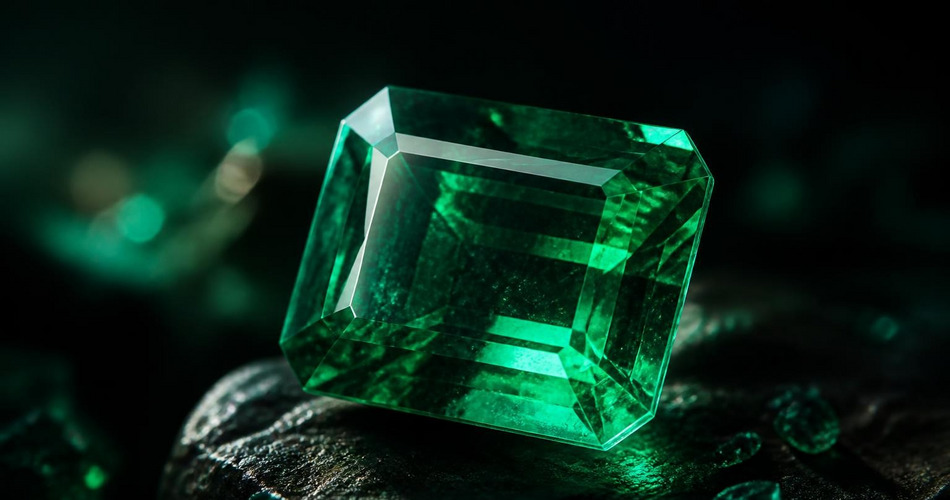
Emerald, the vivid green variety of beryl, has been treasured for millennia as a symbol of love, renewal, and wisdom. Its deep green hue evokes the vitality of spring and the enduring power of nature. Across many cultures, emerald is associated with fertility, rebirth, and the heart, making it a gemstone deeply connected to emotional and spiritual growth. It is also regarded as a stone of prophecy and protection, believed to reveal truth and guard against evil.
What Does Emerald Symbolize?
Emerald is most widely known as a symbol of romantic love, fidelity, and devotion. The rich green color links it to nature, growth, and the cycle of life, giving it strong associations with rebirth and renewal. In various traditions, emerald is also a symbol of wisdom, eloquence, and foresight. Because of its clarity and color, it has been thought to enhance memory and intelligence, and to bring the wearer harmony and patience. Additionally, emerald is often connected to prosperity and abundance, partly due to its historical use as a gemstone for royalty and the wealthy.
Positive and Negative Meanings
Positive associations: Emerald is overwhelmingly positive in its symbolism, representing unconditional love, fertility, and emotional balance. It is believed to promote compassion, patience, and the ability to see things clearly. In many cultures, carrying or wearing emerald is thought to attract loyalty in relationships, boost creativity, and support physical healing, especially of the heart and eyes.
Negative meanings: On the negative side, emerald has sometimes been linked to jealousy or envy, perhaps because of its intense green color (the phrase “green with envy”). In some folklore, it was said that if the stone lost its color or cracked, it could warn of impending infidelity or broken trust. However, these meanings are less common and often seen as cautionary rather than inherent to the stone.
History and Origins of Emerald Symbolism
The name emerald comes from the Greek word “smaragdos,” meaning green stone. Ancient Egyptians mined emerald as early as 1500 BCE, primarily in the mines of Upper Egypt. They associated the stone with the goddess Isis and believed it granted eternal youth and protection. The Romans held emerald in high regard as a symbol of Venus, the goddess of love, and believed it could soothe the eyes and cure diseases. The Spanish conquistadors encountered enormous emeralds in South America, where indigenous cultures like the Incas and Muzo people had long revered the gem as sacred. In medieval Europe, emerald was thought to reveal truth and protect against sorcery. Throughout history, emerald has been a gemstone of royalty, adorning crowns and ceremonial objects, reinforcing its connection to power and prestige.
Emerald Symbolism in Different Cultures
In ancient Egypt, emerald represented fertility and rebirth, and it was often placed in tombs to guide the deceased in the afterlife. The Greeks and Romans linked emerald to Aphrodite and Venus, using it in jewelry to enhance romantic love. In Hindu tradition, emerald (known as Panna) is associated with the planet Mercury and is believed to bestow intelligence, wealth, and a sharp mind. It is one of the nine sacred gemstones (Navaratna) worn for astrological benefits. In Islamic culture, green is the color of paradise, and emerald is sometimes seen as a stone of spiritual insight and connection to the divine. Among Native American tribes, green stones, including emerald, were used in rituals to honor the earth and promote healing. Modern cultures continue to value emerald as the birthstone for May, linking it to the renewal of spring and vitality.
Spiritual Meaning of Emerald
In spiritual practices, emerald is strongly connected to the heart chakra (Anahata). It is said to open the heart, encouraging unconditional love, forgiveness, and emotional healing. Meditating with emerald is believed to bring calm, balance, and a deeper awareness of one’s inner truth. The stone is also used by some to enhance psychic abilities and connect with nature spirits. Because of its green color, emerald symbolizes the growth of the soul and the journey toward enlightenment. It is thought to help release old emotional wounds and invite compassion into relationships.
Emerald in Myths and Folklore
One of the most famous legends involving emerald comes from the Emerald Tablet of Hermes Trismegistus, a foundational text of alchemy. According to the myth, the tablet contained the secrets of the universe and was made of emerald, giving the stone an aura of profound wisdom. In Hindu mythology, the god Krishna is sometimes associated with emerald, and in Buddhist tradition, the Emerald Buddha (actually made of jade) is a revered statue in Thailand. Ancient folklore also claimed that placing an emerald under the tongue could reveal hidden truths, and that the stone could protect travelers and prevent seizures. In some tales, emerald was believed to change color in the presence of poison, warning the wearer of danger.
Emerald in Superstitions and Omens
Throughout history, emerald has been thought to ward off evil spirits and protect against enchantment. In medieval Europe, it was common to wear emerald amulets to preserve chastity and marital fidelity. A popular superstitious belief held that if an emerald broke or lost its shine, it was a sign of forthcoming trouble or that a spouse was unfaithful. Some traditions consider emerald a stone of good luck, particularly in financial matters, and it is often given as a gift to newborns to bring health and happiness. In astrology, wearing emerald is said to strengthen Mercury’s influence, aiding communication and business success.
Emerald in Art and Literature
Emerald appears in numerous notable works. In L. Frank Baum’s The Wonderful Wizard of Oz, the Emerald City is a dazzling green utopia that represents hope and the fulfillment of dreams — though its greenness is later revealed to be an illusion created by the green-tinted glasses everyone must wear, adding a layer of commentary on perception and desire. In The Bible, the Book of Exodus describes the breastplate of Aaron as including an emerald representing the tribe of Levi, symbolizing purity and divine connection. Shakespeare referenced emerald in The Merchant of Venice when comparing a lady’s eyes to emeralds, emphasizing their beauty and value. In Hindu epics like the Ramayana, emerald is mentioned as a precious stone adorning the palaces and deities, underscoring its sacred status. In painting, Renaissance artists sometimes used green pigments derived from malachite (a related copper mineral) to depict emerald-like tones in robes and landscapes, symbolizing life and nature. More recently, emerald has been featured in films such as Romancing the Stone (1984), where a massive emerald serves as the central MacGuffin driving an adventure story about love, greed, and transformation.
Emerald Tattoo Meaning
Emerald tattoos are popular among those who want to symbolize love, renewal, or a connection to nature. Because emerald is the birthstone for May, many people get emerald tattoos to represent their birth month or a May-born loved one. The green color also conveys growth, balance, and hope. Some people incorporate emerald shapes into designs with hearts to emphasize romantic love, or with leaves or vines to highlight the natural world. In tattoo art, emeralds are often depicted in gemstone cuts or as part of jewelry motifs, symbolizing wealth, sophistication, and lasting commitment.
Meanings of Different Types of Emerald
The value and symbolism of emerald can vary depending on its origin and quality. Colombian emeralds are considered the finest, with a deep velvety green, and are highly prized for their intense color, symbolizing the utmost in luxury and spiritual depth. Zambian emeralds often have a slightly bluish-green tint, which some associate with calmness and clarity of thought. Brazilian emeralds tend to be lighter and more translucent, representing youthful energy and new beginnings. Inclusions (internal flaws), known as “jardin” (French for garden), are common in natural emeralds; rather than detracting from the stone, these inclusions are sometimes seen as fingerprints of nature, symbolizing uniqueness and imperfection as part of beauty. Lab-grown emeralds are chemically identical but lack the natural inclusions and historical aura; they represent modern innovation and accessibility of the stone’s symbolic qualities without the earthly rarity.
Frequently Asked Questions About Emerald
Q: What does emerald symbolize in relationships?
A: Emerald is primarily a symbol of romantic love, fidelity, and devotion, making it a popular gemstone for engagement rings and anniversary gifts representing deep, lasting commitment.
Q: Is emerald considered a lucky stone?
A: Yes, in many cultures emerald is believed to bring good luck, especially in business and financial matters, and is often worn as a protective amulet against negative energies.
Q: What chakra is emerald associated with?
A: Emerald is strongly connected to the heart chakra (Anahata), where it is used to promote love, emotional healing, and compassion.
Q: Why is emerald the birthstone for May?
A: Its green color reflects the renewal of spring, and it has historically been associated with rebirth and fertility, making it a fitting birthstone for the month of May.
Q: Can emerald help with mental clarity?
A: In traditional lore, emerald is thought to sharpen the mind, improve memory, and grant eloquence, which is why it has been associated with wisdom and communication.
Related Symbols
- Beryl (family mineral)
- Green (color symbolism)
- Diamond (birthstone for April)
- Peridot (another green gemstone)
- Malachite (green stone of transformation)
- Heart (love symbolism)
- Venus (planet and goddess of love)
- Mercury (planet associated with emerald in astrology)