Briefly
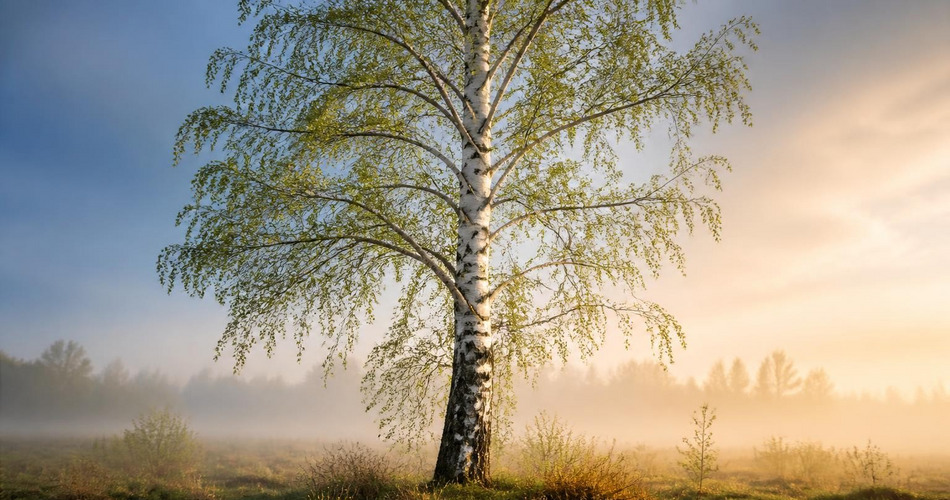
The birch tree is widely recognized as a symbol of renewal, purification, and new beginnings. Its distinctive white bark, which sheds in papery layers, suggests the ability to let go of the past and start fresh. Across different cultures, the birch is associated with cleansing, protection, and the return of light in spring. Its hardiness in northern climates also makes it a symbol of resilience and adaptability.
What Does Birch Tree Symbolize?
Birch trees carry a range of symbolic meanings, with the most prominent being renewal and purification. The peeling bark represents the act of shedding old habits or burdens, making way for growth and transformation. In many traditions, the birch is also associated with new beginnings, especially in spring when it is one of the first trees to leaf out. Its white trunk connects it to ideas of purity, innocence, and clarity.
Because birches often grow in clusters and thrive in harsh environments, they also symbolize community, support, and endurance. The tree’s flexibility makes it a symbol of adaptability — birches can bend in strong winds without breaking, an image of strength through yielding.
Positive and Negative Meanings
Positive associations: Birch is primarily positive, representing cleanliness, renewal, protection, and the promise of growth. It is often planted near homes as a protective charm or used in rituals for purification and healing. Its bright bark and early spring leaves symbolize hope and resilience after a long winter.
Negative meanings: In some contexts, the birch can carry a negative connotation of punishment or correction, stemming from the historical use of birch rods for flogging. The phrase “to birch” someone means to beat them, which has lent the tree a stern, disciplinary symbolism in some European cultures. Additionally, birches have short lifespans compared to other trees, which can also suggest transience or fragility.
History and Origins of the Symbolism
The birch’s symbolic reputation has deep roots in the folklore and daily life of northern peoples. In ancient Celtic and Germanic traditions, the birch was one of the first trees of the sacred grove. It was associated with the festival of Beltane (May Day), when birch branches were used to decorate homes and celebrate the return of summer. The Celtic Ogham alphabet had a letter for birch (Beth), which is the first letter in the alphabet, linking it to beginnings and renewal.
In Slavic cultures, the birch was seen as a protective tree, often planted near houses to ward off evil spirits. Its white bark was considered a symbol of purity, and birch brooms were used in ritual sweeping to cleanse spaces. Historically, birch bark was also used for writing and as a waterproof layer, making it a practical and symbolic bridge between nature and human craft.
Symbolism in Different Cultures
Celtic symbolism: In Celtic mythology, the birch was one of the most important trees, associated with birth, regeneration, and the goddess Brigid. Birch branches were used in May Day rituals to encourage fertility and growth. The birch’s ability to colonize bare ground after a fire or disturbance made it a symbol of renewal and pioneering spirit.
Slavic and Baltic traditions: Slavic folklore often treats the birch as a female, protective spirit. In some regions, birch trees were believed to house the souls of ancestors, and offerings were left at their roots. During spring festivals, young girls would decorate birches with ribbons and flowers to welcome the season. In Baltic mythology, the birch was the tree of the goddess Laima, associated with fate and prosperity.
Native American perspectives: Among some Native American tribes, particularly those in the Great Lakes region, the birch was an essential resource. The paper birch (Betula papyrifera) was used for canoes, shelter, and containers. Its symbolic meaning centered on practicality, adaptability, and the ability to travel and trade. Birch bark was also used to write messages and record stories, connecting the tree to communication and knowledge.
Norse and Germanic cultures: In Norse mythology, the birch was associated with the goddess Frigg and with healing. Birch twigs were used in saunas for purification and as switches to promote fertility. The birch’s white bark was seen as a symbol of the light returning after the dark winter, and birch wood was often used in the construction of cradles and other protective objects for children.
Spiritual Meaning
Spiritually, the birch tree represents purification, new beginnings, and the ability to release what no longer serves you. Its white bark is a visual reminder of cleansing and clarity, while its rapid growth encourages faith in one’s own potential for change. Meditating with birch imagery is thought to help let go of past regrets and open the mind to fresh opportunities. The birch also symbolizes the importance of community — its shallow root system often connects with other birches, showing how strength can come from interconnection.
In Myths and Folklore
In European folklore, the birch appears frequently as a protective and purifying tree. In parts of Scotland and Ireland, birch branches were hung over doorways and cradles to ward off the evil eye. In Russia and Eastern Europe, birch trees were used in divination — young women would bend a birch twig and ask about their future spouse; if the twig sprang back, it was a good omen, but if it broke, it foretold difficulty.
Another common belief was that birch groves were places of safety for women and children, and that spirits living within the trees would guide lost travelers. In some Baltic myths, the birch grew from the graves of unhappy maidens, giving it a bittersweet association with sorrow transformed into beauty.
Common Dream Scenarios
- Dreaming of a birch tree in full leaf: Symbolizes a fresh start, growth, or a period of renewal in your life.
- Peeling birch bark: Indicates the need to let go of old habits, past hurts, or outdated beliefs.
- Cutting down a birch tree: May represent removing obstacles or making a decisive change, but can also warn against acting too harshly.
- Planting a birch tree: Suggests planting the seeds for new projects, relationships, or spiritual growth.
- Being in a birch forest: Reflects a sense of community, support, or connection to a larger network of people or ideas.
Related Symbols
- Alder tree: Like birch, associated with purification and protection and often grows in similar wet environments.
- White color: The white bark of the birch directly ties it to purity, innocence, and clarity.
- Maypole: Traditionally made from birch wood, symbolizing fertility, spring, and community celebration.
- Broom (birch twigs): Historically used for cleansing rituals and sweeping away negative energy.
- Paper birch: The bark itself symbolizes communication, as it was used for writing and record-keeping by indigenous peoples.